Politics & Government
County Moves Ahead with Plan to Form Energy Purchasing Co-op
"Times are changing. The world is changing, and this is an exciting part of it," county Legislative Affairs Director Brian Nestande said.

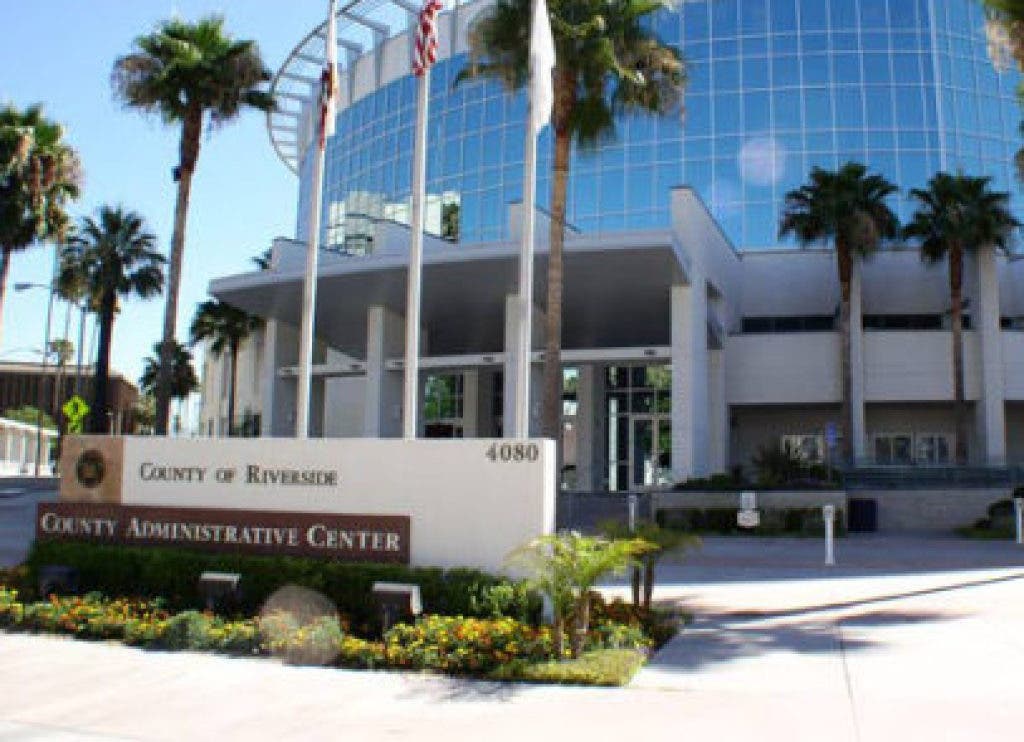
A plan to create an energy purchasing cooperative in Riverside County that could slash residents' electricity bills was given the go- ahead Tuesday by the Board of Supervisors.
"Times are changing. The world is changing, and this is an exciting part of it," county Legislative Affairs Director Brian Nestande told the board before its 5-0 vote in favor of drafting general provisions for the establishment of a "community choice aggregation" program.
The decision came after Nestande and a spokesman for New York City-based Good Energy, a retail commodity research firm, made a brief presentation regarding findings from a feasibility study commissioned by the board in January at a cost of $25,000.
Find out what's happening in Banning-Beaumontfor free with the latest updates from Patch.
The research suggested that by converting to a co-op, county residents could net a total $7.75 million in annual savings on electricity costs, or about 9 percent off each resident's power bill in the unincorporated communities. The study also indicated commercial customers could shave up to 10 percent off their bills, though figures tended to fluctuate depending on the nature of the enterprise.
According to the study, the co-op functions similar to a municipally owned and operated utility, giving the front-end buyer, in this case the county, the opportunity to tap a variety of energy sources for delivery to customers. The idea is for communities to form partnerships, making block purchases at preferred rates.
Find out what's happening in Banning-Beaumontfor free with the latest updates from Patch.
"This is a good concept, highly regarded," Supervisor Marion Ashley said. "I think we're on a great glide path. I like the way this looks."
Co-ops -- or CCAs -- have been formed in five locations statewide, the largest coming online in San Francisco, according to Good Energy. Cooperatives are also in use in parts of Illinois, Massachusetts, New York and Ohio.
In Riverside County, Good Energy mainly examined the service delivery and costs borne by Southern California Edison customers. SCE serves all of the unincorporated communities and most of the cities in the area.
Households consumed the highest volume of electricity -- 34 percent -- followed by large industrial operations at 28 percent, according to figures. The cumulative total electricity used in the unincorporated areas came to 2.1 billion kilowatt-hours in 2015, according to Good Energy.
The study found that shifting to a market-driven purchasing plan under a CCA would result in "clear savings" to a high number of customers. However, utility rate structures that rely on "load factor" to determine a customer's monthly bill might be more beneficial to some electricity consumers who tend to need greater wattage.
SCE currently uses "load profile" to calculate rates, though the investor-owned utility is migrating to "smart meters," according to Good Energy.
If the CCA were to go live in Riverside County, all customers would still have the freedom to "opt-out" and remain with their current provider, according to Nestande.
He noted that ratepayers currently served by municipalities with their own utility companies, like the city of Riverside, would not be able to participate in the CCA.
Wintec Energy President Fred Noble, whose eastern Riverside County projects include solar and wind energy farms, encouraged the board to make use of a CCA.
"It's an idea whose time has come," he said. "It protects against long-range compounding energy charges ... People in Palm Springs, Palm Desert -- they're getting beaten to death with utility bills."
When the issue was first broached, Supervisor Kevin Jeffries urged caution, reminding his colleagues of the state's misfortunes following partial deregulation of the energy markets in the late 1990s.
CCAs were partly a response to that, receiving legislative approval in 2002.
County staff are expected to draft a proposed ordinance containing CCA implementation language in the next two months. The board will hold multiple hearings before taking a final vote on whether to enact it.
— By City News Service.