Politics & Government
San Diego Region Has 3-Year Water Supply, New State Formula Shows
Initial calculations using the new formula were shared with the San Diego County Water Authority's Board of Directors Thursday.


San Diego County, CA — The San Diego County Water Authority and its member agencies that serve the region's cities and communities have enough water supplies to meet the region's demands for the next three years — even if the drought continues, the SDCWA announced Thursday.
That is according to initial calculations under a new state formula shared with the Water Authority's Board of Directors Thursday, according to James Palen, a Water Authority spokesman. The initial calculations also showed that the Water Authority and its members won’t be subject to state-mandated water-use reductions for at least the remainder of this year, Palen said.
Based on the projections, the Board voted unanimously during a special meeting Thursday to take a regional approach to the state’s recently approved process for certifying supply sufficiency for the Water Authority’s 24 member agencies and establishing a new long-term drought awareness initiative, Palen said.
Find out what's happening in Carlsbadfor free with the latest updates from Patch.
San Diego's regional supply sufficiency results from 25 years of strategic investments, including Colorado River water conservation-and-transfer agreements, the Claude “Bud” Lewis Carlsbad Desalination Plant and local water development projects such as water recycling facilities.
"This is a significant accomplishment for the San Diego region,” said Mark Weston, chair of the Water Authority’s Board. "We have invested in new sources of supply while improving our infrastructure to handle multi-year droughts, and our initial data confirms the region’s continued ability to meet demands even with the conservative assumptions required by the state.
Find out what's happening in Carlsbadfor free with the latest updates from Patch.
"I’m grateful to the State Water Board for adopting a drought-response regulation that not only rewards regions such as San Diego that have invested in drought-resilient water supplies, but also encourages more investments in drought resiliency statewide."
Weston also thanked the region’s residents and businesses who reduced water use by 21 percent since June 2015 in response to emergency state mandates, beating the state’s aggregate regional target of 13 percent. Conserved water has been stored locally for future use in case drought conditions worsen or an earthquake or other disaster interrupts imported water deliveries.
“Whether it’s drought or wildfires or some other emergency, our region always rises to the challenge,” Weston said. “It’s something we should be proud of as we continue to look for ways to become more efficient with our most precious natural resource.”
As the Water Authority finalizes the state’s self-sufficiency certification process, it is also developing a new campaign, WaterSmartSD.org, that will begin this summer to promote long-term water-use efficiency.
"Five years of drought have made it clear that we must keep our focus on discretionary outdoor water use by embracing low-water plants and high-efficiency irrigation," said Maureen Stapleton, general manager of the Water Authority. "Yard by yard, WaterSmart landscapes are becoming the norm in San Diego County, and we are committed to continuing this transformation through classes, technical assistance and other efforts."
While most of California remains in drought, significant rain and snow last winter helped refill major reservoirs in Northern California and boost projected deliveries from the State Water Project to 60 percent, the highest since 2012, according to SDCWA. That prompted the Metropolitan Water District of Southern California to end its supply allocations in May, setting the stage for the Water Authority Board to end allocations to its member agencies the same month.
Also in May, the State Water Board replaced state-mandated conservation targets with a supply-based approach that considers each agency’s specific situation and water supplies — an approach the Water Authority and others sought for more than a year, Palen said.
The State Water Board also approved allowing wholesalers such as the Water Authority to certify supply sufficiency for their regions if every retail agency they service agrees. Self-certification data is due to the state June 22, and the conservation standards under the new state approach will be retroactive to the start of June, according to Palen.
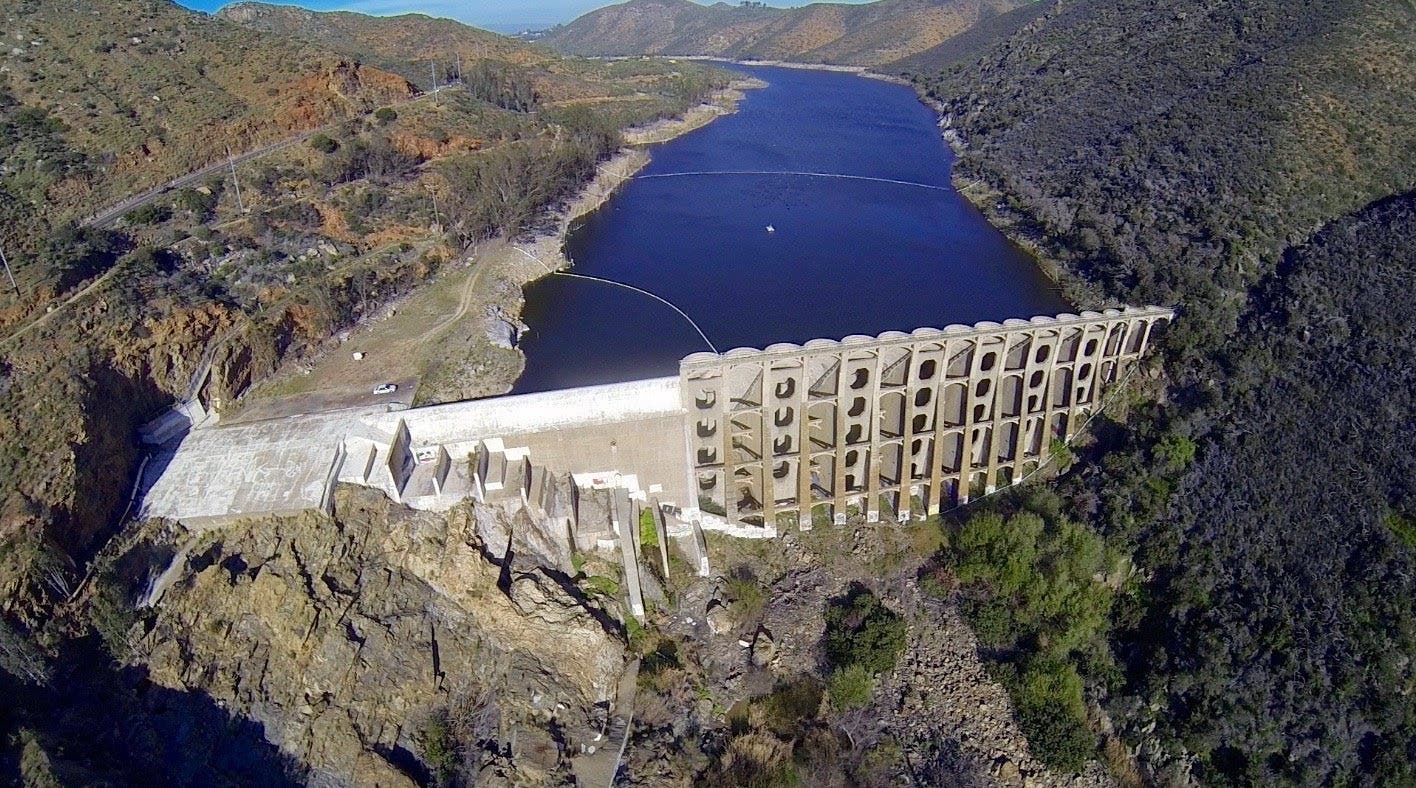
(Image of Lake Hodges dam via Steve Sheridan/YouTube)
Get more local news delivered straight to your inbox. Sign up for free Patch newsletters and alerts.