Politics & Government
Homeowners Could Be Held Responsible for Sidewalk Repairs
The city is considering making a permanent policy of its unofficial practice of having sellers pay for the fixes out of escrow fees.
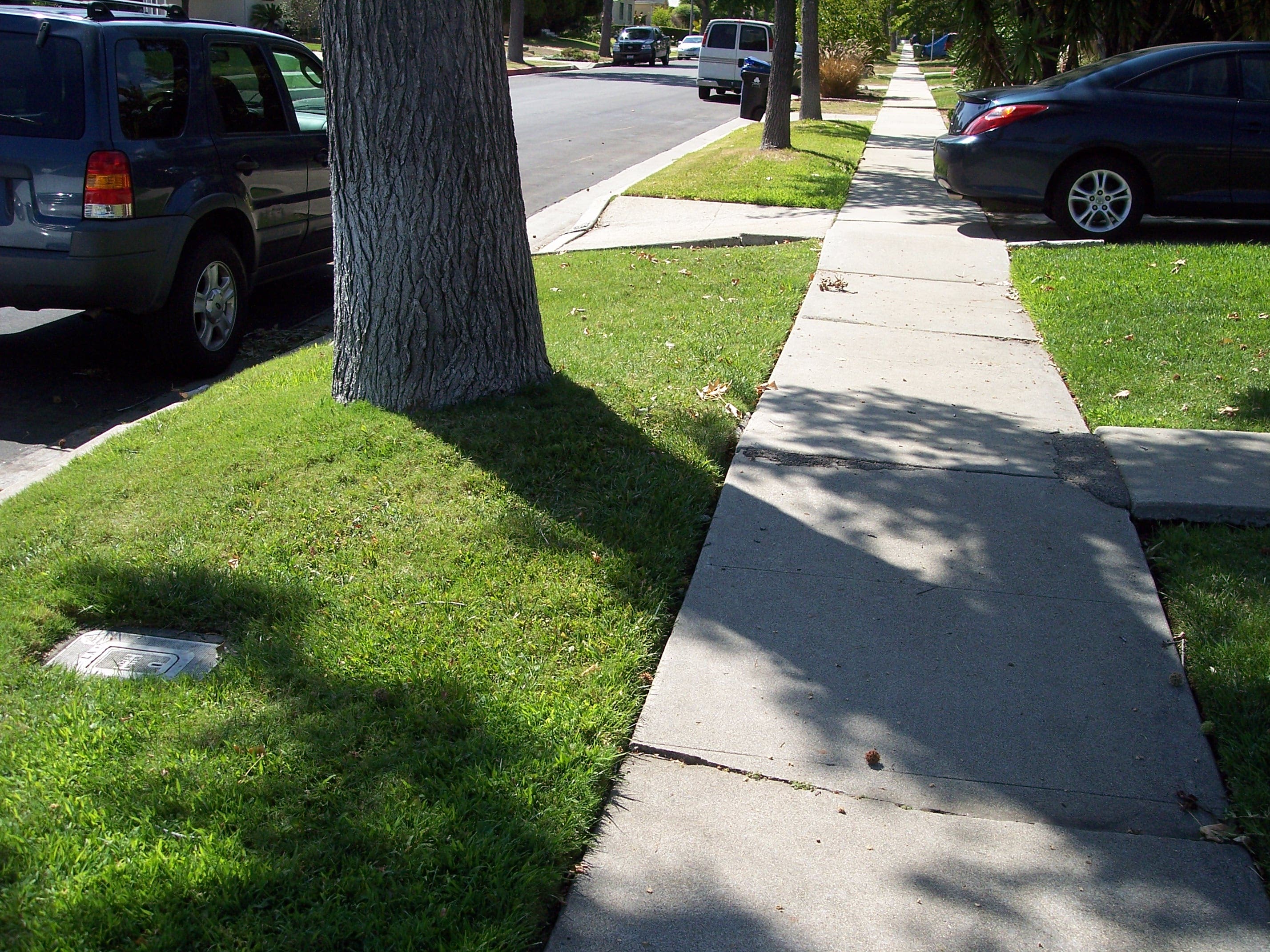


The city of Los Angeles has paid to repair residential sidewalks, curbs and driveways damaged by tree roots since 1973. However, in the midst of the budget crisis, city officials have proposed transferring total responsibility back to property owners.
In recent years, splitting the bill was an option, but L.A.'s 50-50 sidewalk repair program was killed in the last budget. The program incentivized residents to repair their sidewalks by giving them scheduling priority and covering half the cost.
The city developed the 50-50 Voluntary Sidewalk Reconstruction Program in 2005 as a pilot program to examine the outcomes of cost sharing. It proved successful and was adopted formally in that year's budget as a portion of the General Fund. By 2009, however, the city could no longer afford even half the repair costs, and formally ended the program July 1, 2009.
Find out what's happening in Encino-Tarzanafor free with the latest updates from Patch.
Lacking the resources to perform repairs and the staffing to cite property owners, the unofficial current policy is to repair at the time of sale. This means property sellers absorb the costs of repair and net a smaller profit when a home changes hands.
Since 1974 the city has taken responsibility for sidewalk and driveway repairs because of a clause in the Los Angeles Municipal Code. The law exempts property owners from responsibility for repairs that are specifically tree-root related. At that time, federal grant money was available, but was depleted in a few years.
Find out what's happening in Encino-Tarzanafor free with the latest updates from Patch.
By 2009, nearly 43 percent of L.A.'s 10,750 miles of sidewalks required repair. The projected cost to repair them all is $1.2 billion, not including annual legal costs related to injury lawsuits. The city has not yet released 2010 numbers.
With a $492 million deficit and a budget overdue from state legislators, the city has been forced to consider tough solutions, including layoffs.
The City Council is now considering a new ordinance that would target the tree root exception in the municipal code and would make homeowners responsible for repairs.
The specifics of the new ordinance were hammered out by a joint committee composed of the Public Safety and Budget and Finance committees, and presented to the council in 2009, but so far there has been no action. The probable outcome would be similar to the current unofficial policy: point-of-sale repair.
Point-of-sale payment has been advocated by urban planning and infrastructure experts including UCLA professor Donald Shoup. The author of The High Cost of Free Parking supports point-of-sale, which he sees as a win-win solution for the city, homeowners and all Los Angeles residents.
"One big advantage of a point-of-sale program is that the city does not require owners to pay or do anything until they sell a property," Shoup said via e-mail. "The sale then provides the cash to pay for required repairs. Sellers fix only the sidewalk fronting their own property, so they can see exactly where their money is going. In addition, sidewalk repairs made by absentee owners and residents who are leaving the city will leave the city in better shape for everyone who remains."
If point-of-sale funding were officially adopted the city would have to devise a system of escrow notification to the Bureau of Street Services, the agency likely to monitor repairs.
"If this direction is decided, [citations would probably come from] the BSS Investigation Enforcement Division, given the necessary resources," said Ron Olive, assistant director of the city's Bureau of Street Services division. "It's important to have a single entity responsible for consistency's sake and BSS is anticipated to get the responsibility if citing is chosen as an option."
Sidewalks in disrepair are not only an inconvenience or eyesore. They can present a liability for "slip and fall" injuries. The city pays out between $3 million and $5 million each year in legal costs and settlements.
A report to the City Council in May of this year estimated that the proposed program could repair 460 miles of sidewalk within the first year, which would significantly reduce legal costs from injury lawsuits and create jobs for contractors.
At that time, Councilman Bernard Parks filed a motion with a second by Councilman Greig Smith to reconsider the point-of-sale program and any other alternatives. The item was discussed, but no new ordinances were enacted.
Those wanting to perform repairs ahead of any sanctions or new incentives can do so at any time. The bureau keeps a set of instructions on do-it-yourself repair on its website and homeowners can choose their own contractor.
No opposition to a new ordinance has yet galvanized in Encino, although some residents are resistant to it, according to Encino Neighborhood Council member Glenn Bailey. "People are not happy about it," he said last month.
However, according to Encino Neighborhood Council president and longtime local property developer Louis Krokover, sidewalk repair is not a salient issue. The CEO and president of Newday Development estimates that it's not even a blip on the radar of many homeowners and won't be until they're forced to pay out of pocket for repairs.
"Throughout Los Angeles, maybe 1 percent of people are following it. And of those, maybe 1 percent are upset. They're not going to deal with it. It's just going to come right out of the escrow fees. It's not going to come right out of their pocket," Krokover said.
He also noted that from his experience in both residential and property development, sidewalks are part of the public right of way, falling under the liability of the city.
Under any payment strategy, Krokover believes that property owners are shielded from personal injury suits. He recommended that property owners photograph broken pavement and notify the city as soon as they notice disrepair, shifting the obligation to the Bureau of Street Services to remedy the problem in advance of an injury.
To sound off on sidewalk repair, contact Encino's Councilman Paul Koretz. Koretz sits on the Budget and Finance Committee, and discussed sidewalk repair during his campaign. Parks chairs the Budget and Finance Committee. Smith is vice chair of Budget and Finance, and chairs the Public Safety Committee.