Neighbor News
Three Tips to Protect Against Skin Cancer
Melanoma is one of the most common cancers to strike young people

By Hubert Greenway, Jr., M.D.
Skin cancer is more common than many people may think. An estimated one in five Americans will develop skin cancer in their lifetime, according to the American Academy of Dermatology (AAD). Young people are not immune. Melanoma is one of the most common cancers to strike people younger than age 30.
The AAD has designated May as National Skin Cancer Detection and Prevention Month to spread the word about skin cancer. As is often the case with cancer, prevention and early detection are the best strategies to defeat it.
Find out what's happening in La Jollafor free with the latest updates from Patch.
Mohs surgery is a precise surgical technique used to treat skin cancer. During Mohs surgery, layers of cancer-containing skin are progressively removed and examined until only cancer-free tissue remains.
Prevention
There are three main types of skin cancer: basal cell carcinoma, squamous cell carcinoma and melanoma. Cumulative sun exposure is a major risk factor for developing the first two types of skin cancer. But acute sunburns are often linked to melanoma. And while a bad sunburn will heal in a few days, the real damage may be felt decades later.
Find out what's happening in La Jollafor free with the latest updates from Patch.
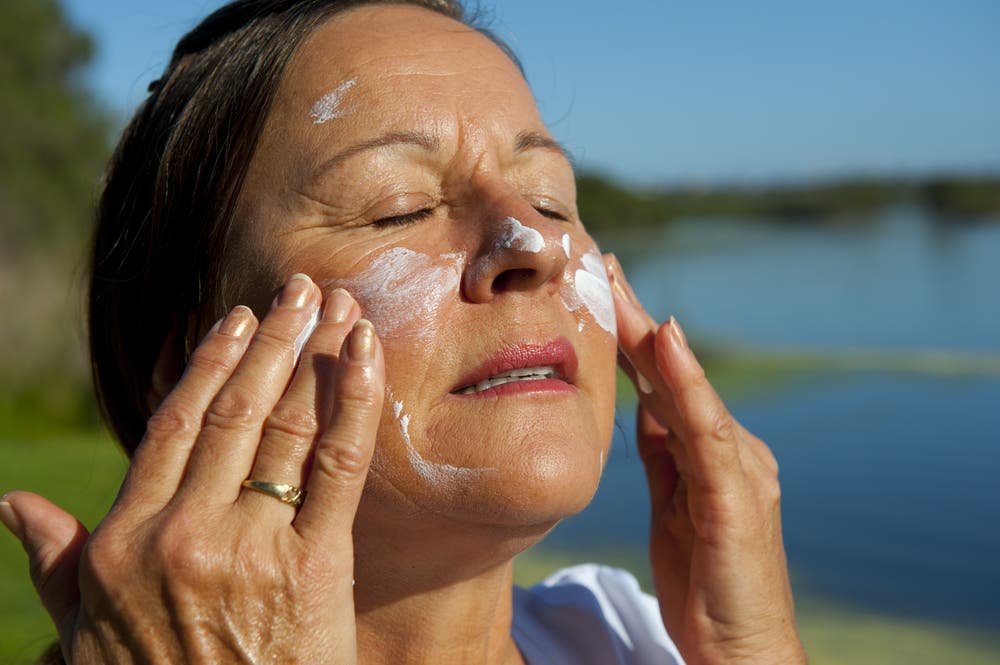
Everyone needs to protect their skin. In Southern California, 30 SPF (Sun Protection Factor) sunscreen, or higher, should be a daily ritual. Some clothing also offers SPF protection. In addition, wide-brimmed hats keep sunlight off the head and neck, and sunglasses protect the eyes and surrounding skin.
Tanning beds should be avoided. They raise the risk of melanoma and also dry the skin, causing wrinkles and premature aging.
Watch out for reflected light from water, sand or snow, which intensify the sun’s rays. In addition, try to stay out of the sun during the most intense hours, between 10 a.m. and 2 p.m. Schedule that tennis match early in the morning or late in the afternoon.
Detection
Anyone who has ever had a sunburn is at risk for melanoma, but genetics also play a part. People who are fair skinned or have a family history must be more alert.
Regardless of their personal risk, San Diegans should be watching for atypical moles, which tend to be multicolored and asymmetrical. Problem moles are usually located on the head, neck, upper back, torso or lower legs but can be found anywhere on the skin.
Moles should be self-checked monthly. Mirrors and digital photographs can be useful to observe and track them. If one is darker, has ragged borders or appears to be changing, see a dermatologist. An itchy mole can also be problematic. If a mole just seems more obvious, even if there’s no apparent reason, it’s a good idea to get it checked. Be sure to see a dermatologist at least once a year for a thorough exam.
Treatment
The earlier melanoma is found, the easier it is to treat. Once the disease has spread, it becomes a serious problem. In its earliest stages, melanoma is removed surgically. If it spreads to the lymph nodes, other therapies may be required.
Advanced melanoma treatment options are limited in terms of their long-term success. There are several approved chemotherapy agents, as well as interferon, interleukin and other biologic modifiers that prime the body’s immune system to fight cancer, including some newly approved agents. Pharmaceutical and biotech companies continue to look for better treatments, such as a recent trial of attaching a virus to the melanoma for identification and treatment.
Melanoma accounts for less than 2 percent of all skin cancer cases, but it causes a large majority of skin cancer deaths. According to the American Cancer Society, approximately 10,000 people are expected to die of melanoma in the United States in 2015.
So it bears repeating: the most effective way to beat melanoma is to prevent it entirely. Otherwise, early detection is the best bet. Monthly self-exams and annual dermatologic checkups can be life-savers.
Hubert Greenway, Jr., M.D., is chairman of Bighorn Mohs and dermatologic surgery at Scripps Clinic Torrey Pines. “To Your Health” is brought to you by the physicians and staff of Scripps Health. For more information, please visit www.scripps.org/Patch or call (858) 914-4275