Business & Tech
Microsoft Co-Founder Paul Allen Recounts His Days of Dumpster Diving
From scavenging code texts to funding extraterrestrial research, Microsoft co-founder Paul Allen shares the high—and the low—points of growing up with Bill Gates, becoming a billionaire and learning the importance of curiosity.


Microsoft co-founder Paul Allen has spent his billions on music projects, funding the search for extraterrestrials and collecting sports teams–but as a young programmer in Albuquerque, he celebrated his first contract with a poor man's delicacy: an extra large pizza.
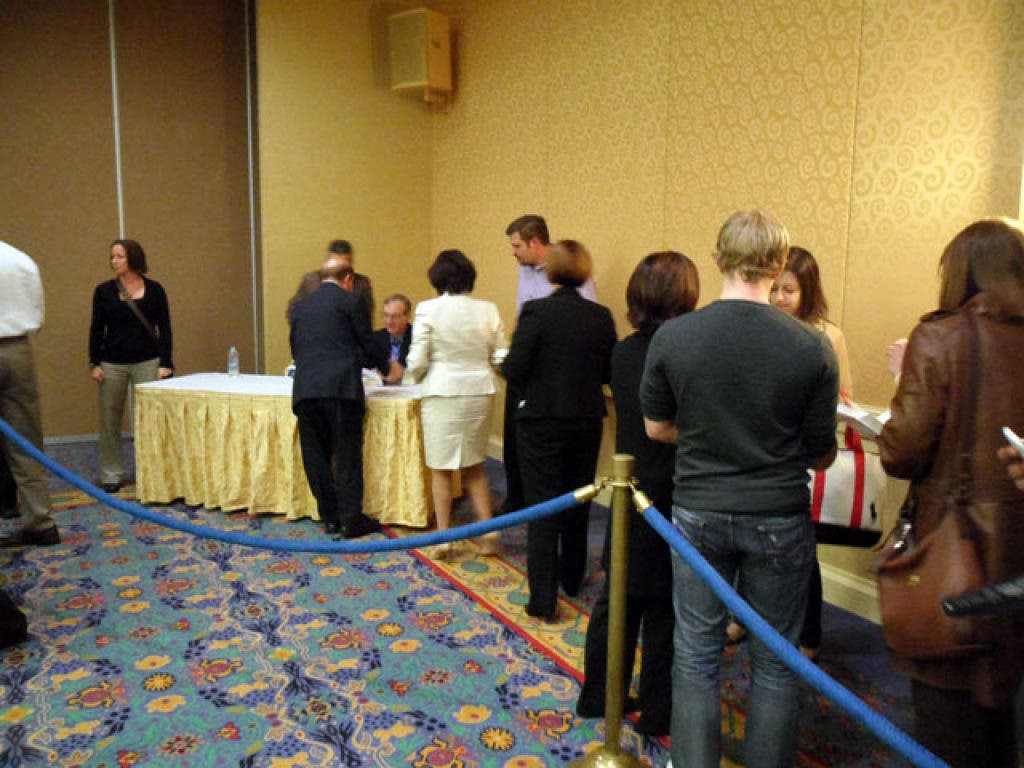
Allen recounted his Microsoft days – and how he got to be one of the wealthiest men in the world–at a Commonwealth Club event Tuesday evening in Palo Alto. The event coincides with last week's release of Allen's memoir, Idea Man: A Memoir by the Cofounder of Microsoft.
“It's sort of a Benjamin Franklin arriving in Philadelphia story,” President John Hennessy, who lead the discussion, said of Allen's transformation from a penniless yet ambitious youngster to billionaire and philanthropist extraordinaire.
Find out what's happening in Los Altosfor free with the latest updates from Patch.
As a child, Allen grew up around library university stacks. His mother would come home from the thrift store with bags of books, 15 cents apiece, adding to the thousands-strong collection in their basement. The bespectacled 58-year-old smiles at the memory of reading so many books.
Allen became fascinated with rocketry when his father built him a work bench where he could conduct chemical experiments. He considers his survival of childhood a matter of luck, as many experiments, such as building a rocket out of an aluminum lawn chair, failed. “It hissed and was about to take off,” said Allen, “and then it melted.”
Find out what's happening in Los Altosfor free with the latest updates from Patch.
In another childhood experiment, “I made a chlorine gas generator and almost killed the family dog,” recounted Allen to an attentive audience at the hotel.
Allen credits his basic programming skills to Lakeside School, the Seattle preparatory school where he met Bill Gates. “We were the only high school in Seattle with a (computer) terminal. The teachers wrote a three-line base code on the blackboard and gave us the manuals, and that was it. We were hooked,” said Allen.
That phase of Allen's life involved taking the bus–sports coat, tie, leather briefcase and all—down to the offices of local computer gurus. “I would boost Bill into dumpsters and we'd get these coffee-stained texts (of computer code)” from behind the offices, grinned Allen.
“Very early on, Bill was thinking about a company. This seemed to be a difference in your outlooks,” Hennessy prompted Allen.
Bill would say, I wonder what it's like to run a Fortune 500 company, and I'd say, I don't know, Allen shrugged.
In 1975, the two founded Microsoft in Albuquerque, New Mexico. Five years later, Allen lead the initiative for Microsoft to purchase a Quick and Dirty Operating System (QDOS), which in turn lead to their contract with IBM to supply DOS on their PCs—one of the best decisions Allen ever made. Allen and Gates had acquired a fortune.
When Allen was diagnosed with Hodgkin's lymphoma in 1982, he took some time off to do treatment and never returned to Microsoft. His relationship with Gates had weakened, he said. “Bill had a very intense discussion style,” Allen said to some generous laughter. “My style is very much more logical...I was worn down by the change in our relationship and (because I was sick). I left and I haven't had any regrets.”
What's the dynamic of business partnerships like yours and Gates, and what makes them work, asked Hennessy. “Bill and I were each other's sounding boards,” said Allen.
In matters of success, Allen said that everything starts with curiosity. “You think, maybe there's a better way to do something. I've been lucky in my life to see a few potential solutions to some of these things,” he said.
Today, Allen uses his fortune to fund space exploration, brain research and projects like the Jimi Hendrix-tribute Experience Music Project in Seattle. A guitar player himself, Allen believes in the importance of having a creative outlet—and an athletic one, too (he's the owner of the Seattle Seahawks, Portland Trail Blazers and Seattle Sounders FC).
Allen concluded the discussion with some advice for companies. “Companies tend to have blind spots. New things come along, and they (ignore it),” he said. “Jump on new platform definitions, like the tablet (or social media). If you don't jump on these new things when they come along, you can be left in the dust.”
Furthermore, consider how to improve a product to make it the best. “There was once a thing called MySpace,” said Allen. “Your challenge is to meet the project, and then to beat it.”