Schools
Roz Hamar, Head of Marin Horizon School
Longtime leader of private school in Homestead Valley is retiring after 16 years.
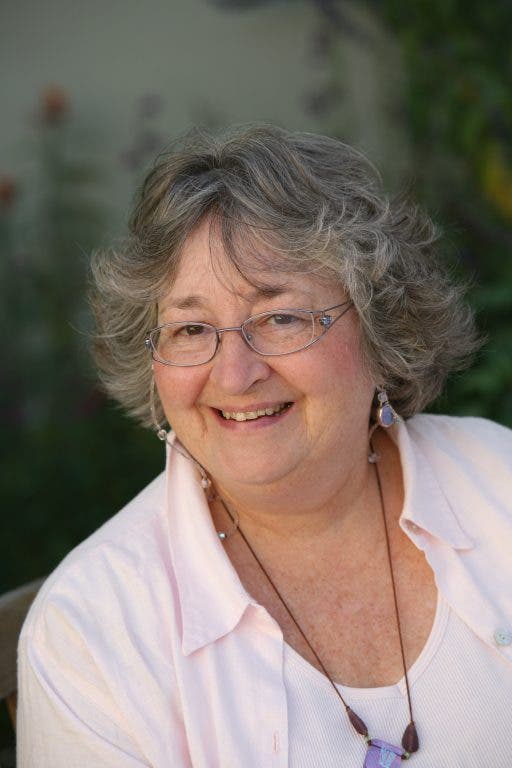
While most Mill Valley students will cheer today's arrival of summer vacation, those sentiments will come with mixed emotions for students, parents and teachers at Marin Horizon School.
After sixteen years as head of the Montessori-inspired pre-school-through-8th grade school in Homestead Valley, Roz Hamar is leaving to head the Valley Montessori School in Livermore. June will also mark Roz’s last month as a resident of Mill Valley and the end of her time on the board of the Homestead Valley Association. It seems education is in her blood, as both of Roz’s parents, as well as a grandmother were also educators. Roz is also an avid birder, theater-goer, and fan of Samurai Sushi.
Patch: How long have you been in Mill Valley?
RH: I came here in 1995 for this job.
Find out what's happening in Mill Valleyfor free with the latest updates from Patch.
MVP: What’s your neighborhood?
RH: Almonte, close to Richardson Bay.
MVP: What do you like most about your neighborhood?
RH: I particularly like the view. But I guess I don’t have as much of a feel for that neighborhood as I do for Homestead Valley. I lived across the street from the school for four years, and of course I’m here in the neighborhood every day. Plus, in 1997 I joined the board of the Homestead Valley Association and am still a member. I hope that Luis, (Dr. Luis Ottley, the new head of Marin Horizon School), will also join the board.
MVP: Is it important to have a representative from the school?
Find out what's happening in Mill Valleyfor free with the latest updates from Patch.
RH: Oh it’s really important. We take up a good piece of real estate in the neighborhood and we want to be good neighbors. Even though we’ve had our disagreements, there are many, many people in the valley who I have strong friendships with and good working relationships. We want to continue to be the best neighbors we can.
MVP: The latest is the ?
RH: I don’t know where that is right now. I know there was a fair amount of opposition. I’m still hopeful that the (Marin County) Department of Public Works will go neighbor to neighbor and address the concerns. It’s really important for safety, not just for our kids going to school, but for Homestead Valley kids and also for the various others who walk on the street – nannies with babies, older people walking their dogs – it’s a popular route.
MVP: It’s very pleasant because it’s shaded and it’s flat.
RH: It’s the broadest street in the neighborhood and people use it because of that, but it’s not so safe because you have to walk around cars. Plus, in the morning the sun is in your eyes if you’re driving east, and in the afternoon it’s in your eyes driving west.
MVP: I know that a lot of the neighbors are opposed to traffic coming into the neighborhood to the school. It’s interesting that some of the neighbors don’t want the traffic, but they don’t want the sidewalk either.
RH: Yes, that’s a conundrum to me. We have to peacefully co-exist. We have the most restrictive traffic management plan in the county. With the exception of our little kids who need parent escorts, we bus, we carpool, and we walk. You’ll see a lot parents walking or riding bikes or scooters from in the morning with their kids. We really try hard to reduce our carbon footprint. We want to be good neighbors, and this also represents the values of the school. Plus, there has been a school in this neighborhood since 1909.
MVP: So anyone who has chosen to live in this neighborhood in the past 100 years must have been aware that they were moving into a neighborhood with a school.
RH: When Homestead Elementary was here as a public school, it was the heart of the neighborhood and I know a lot of people mourned that loss. It was a real neighborhood hub. It was closed by the school district in 1983.
MVP: Can you give me a basic explanation of “Montessori-inspired” and what makes Marin Horizon School unique?
RH: Maria Montessori was an Italian physician who was a great student of children and learning. She worked in a ghetto in Italy with poor children before World War II. She developed all kinds of materials that kids can use without instruction, very self-correcting. Marin Horizon School is “Montessori-inspired.” The philosophy of mixed aged classes, integrated and spiral curriculum, teaching to the child, not to the curriculum - all of those things come out of Montessori. We also add the interdisciplinary aspect.
Whenever we undertake the study of a culture, it’s completely blended into a curriculum that includes social studies, science, art, and language arts. We place a great emphasis here on building independence; helping kids to be their own best advocates and encouraging them ask the questions. We also work hard to inspire individual, global and social responsibility.
MVP: After 16 years, do you ever see former students in bars? Maybe you don’t go to bars.
RH: No, not in bars. But we have had alumni come back to teach, and they have also been on our board.
MVP: I remember once my husband and daughters ran into you at the California Pizza Kitchen. That was a big thrill for the girls. It must be like that for all the kids. This is a small town and you’re bound to run into people from school everywhere.
RH: I love that. There was an eight-month stretch where I lived in San Anselmo. People thought it would be good for me to have a break and separation, but I really missed running into people.
MVP: Do you often have the parents coming up to you wanting to talk about their child?
RH: Sometimes that happens, and if it’s serious I’ll say, “Let’s meet,” but normally I like it. I ask them about their kids! Especially the alumni families, those kids are doing interesting things. Being a part of this community has been it’s own reward.
MVP: The are very good. Is there anything that parents in Marin or Mill Valley should know or should consider when looking at schools? Is there anything you wish they cared about more?
RH: Mill Valley is lucky to have such a strong public school system. Nationally, independent schools only educate about 10 percent of kids, so you can’t overstate how important strong public schools are. It’s really fortunate that this community enjoys that and that’s there’s such widespread support through . I also got to get a little closer to what’s going on in Mill Valley public schools last summer when I was on the external Strategic Planning Commission for the district. I facilitated discussions with the teachers on bringing in and retaining excellent teachers. I was really pleased with how important it was to everyone involved to find great teachers.
What you have to ask when you’re looking for a school is, “What’s the best for my child, what’s the best for my family?” And if you’re considering an independent school, “What kind of value would an independent school add that I might not get in a public school?” One of the advantages we have is we are not driven by the No Child Left Behind obsession with standardized testing, which I think has damaged public education nationwide. I think Mill Valley public schools has managed to dance that dance in a good balance because the teachers are so good about creating curriculum around it and making it work. In low income areas where they don’t get the best teachers and the whole focus is just on test scores, social studies, science and arts have disappeared to the great detriment of the children. I think that’s just hugely tragic.
The second advantage we have is that we are not dependent on public funding, which is decreasing dramatically and .
We have done a lot here to make the school affordable to a range of families. We don’t want to be an elitist school. We have tuition assistance and we use it to make sure we have a nice balance. It doesn’t serve our kids to be growing up in a school where everyone is uniformly affluent.
MVP: On another topic, you’re a birder aren’t you? Where do you see birds?
RH: You see a lot of them just out on the marsh. I love how the birds change as the seasons change. It’s fun to note that.
MVP: What are you seeing now?
RH: Well, the songbirds are back from their southern winter habitats. We’re hearing robins and sparrows and bushtits. I’ve been birding since I was a teen, but I didn’t really take it up as a hobby until 1992, and then I made a life list.
MVP: What are some birds that are unique to our area?
RH: I don’t know that they’re totally unique to our area, but I see black-shouldered kites around here and they are very interesting. When they are doing their mating ritual, they fly way up in the air and then they lock talons and spin almost all the way to the ground. It’s amazing. I saw it happen out at Abbott’s Lagoon at Pt. Reyes. They’re one of my favorites. We also have a red-shouldered hawk that perches on the wire outside our house.
MVP: What else do you like to do in Mill Valley?
RH: I’m a long time season ticket holder at and Berkeley Rep. I also got that from my dad because he was a drama director at Lewis and Clark college. I grew up in the theater and saw much more live theater than movies when I was a kid. I’m also in a book club with several women, none of whom have anything to do with the school. And one of our favorite restaurants is on Miller. We like to sit at the bar. I don’t have to order any more, they just know what we want.
MVP: Two final questions: One, what do you think you’ll miss the most?
RH: The people. I have been so lucky to work with such a wonderful faculty, a strong administrative team and a hard working board. And the kids – they are cute! They are worried about me leaving. I mean, I don’t think they’re losing sleep, but they’ve said things to me like, “Why do you have to go?” Change is hard for kids. But I know Luis will be great.
MVP: And lastly, anything you won’t miss?
RH: Putting on that orange vest and monitoring the traffic! I’m retiring the orange vest.