Crime & Safety
City Council to Vote Tonight on Revised Red Light Camera Contract
The revised contract includes a cap on per camera cost increase and an exit clause if courts decide the cameras are illegal. A new look at collision data at red light intersections sheds light on cameras' effectiveness in reducing accidents.

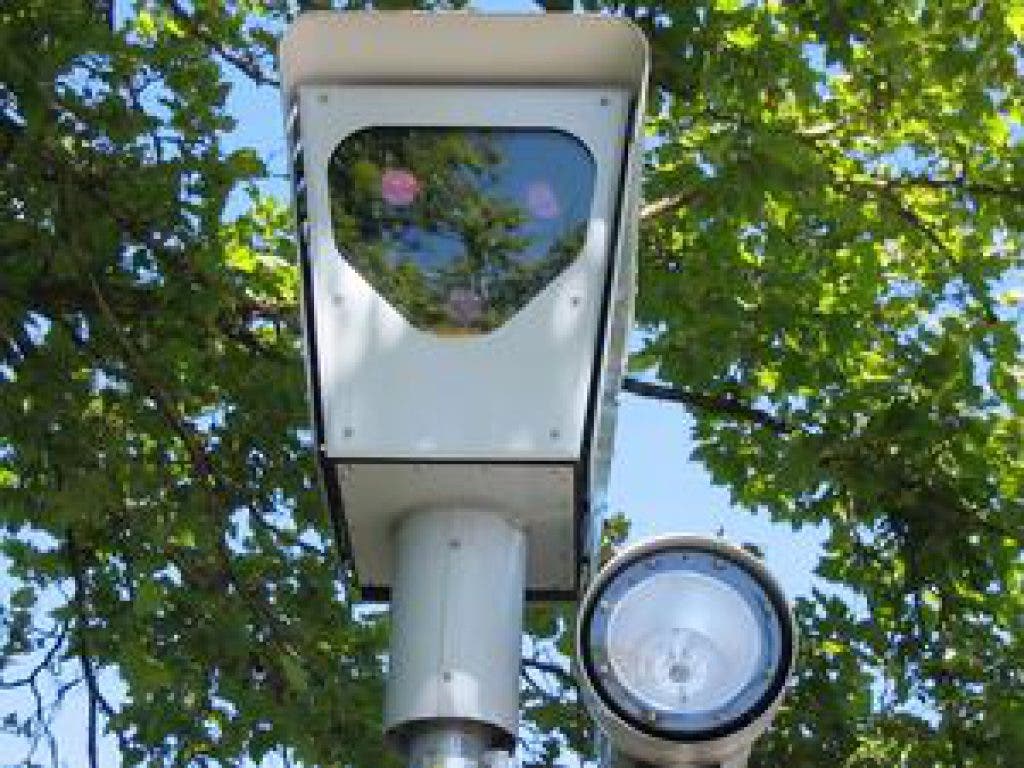
Eight more years of red light cameras are in the hands of the City Council tonight. The council will vote on a revised contract with Redflex for the continued operation of five cameras — a contract worth more than $2 million.
At the behest of city council members, several changes have been made to the contract that was for a vote on April 4.
The revised contract caps the yearly per camera price increase at 2 percent of the Consumer Price Index. It also allows the city to suspend a camera at an intersection under construction, since that camera would presumably be catching fewer red light violations because of slowed traffic.
Find out what's happening in San Leandrofor free with the latest updates from Patch.
In addition, the revised contract would give the city a way out in the case that California courts determine the cameras are illegal.
Red light cameras have generated controversy around the country, with drivers tending to hate them and police chiefs often backing them as vital traffic safety enforcement tools. Plus, some supporters say, the lights allow for less human bias than police officers.
Find out what's happening in San Leandrofor free with the latest updates from Patch.
“It’s almost the cleanest way to issue a citation,” Police Chief Sandra Spagnoli said after the April 4 City Council meeting.
Under the eight-year contract, the city would pay $5,200 per month per camera this year, with the price potentially rising to nearly $6,000 per month per camera in 2018.
In a , a Newark resident and ardent opponent of red light cameras noted that other California cities, including Fremont, pay less for their cameras. Nevertheless, Newark renewed its contract with Redflex last week, with the per camera price starting at $5,700 per month.
In a recent article in the Oakland Tribune, Newark Police Chief Jim Leal said the per camera cost was dependent upon the number of cameras in operation.
In a letter to a concerned citizen forwarded to San Leandro Patch, San Leandro Police Chief Spagnoli said the reduced per camera price paid by some Southern California cities was because those cities originally negotiated pay per citation contracts with Redflex, which are no longer legal.
Many of those contracts, including those of Hawthorne and Oceanside, were converted to flat fee contracts with much lower rates than newer contracts, such as that of San Leandro.
Although red light cameras generate revenue for some cities, San Leandro actually lost about $140 on the program during the last fiscal year, according to statistics provided by the police department to the City Council. During that same time, the police department issued nearly 7,000 traffic citations.
Some San Leandro residents have argued the money earned by Redflex from traffic citations could be put to better use if it stayed in people’s pocketbooks. At the April 4 City Council meeting, resident and school board trustee Mike Katz-Lacabe said residents were paying hefty red light tickets “at a time when our economy, not to mention our residents, can hardly bear that burden.”
Katz-Lacabe mentioned several studies indicating extending yellow lights can do an equal, if not better, job at reducing red light violations and accidents.
Overall, collisions in the city have fallen from a ten-year high of 1,292 in 2002 to 455 last year – a reduction of 65 percent, according to data from the city's Engineering and Transportation Department. The number of people injured in traffic accidents has fallen by 43 percent over the same time period, from 335 to 192.
Statistics from the city’s transportation department show a 30 percent drop in the number of collisions at the five intersections where red light cameras are installed during the four-year period after installation (2005-2009), compared to the four years prior to installation (2001-2004).
Collisions at these intersections dropped from 136 to 93 between the two time periods, according to the report. However, narrowing the accident data down to the approaches where red light cameras are installed paints a slightly different picture.
Collisions still dropped, around 33 percent, but the number of accidents involving cars at red light camera approaches fell from 48 to 32, or four per year, according to an evaluation of the red light camera program produced by senior transportation engineer Reh-Lin N. Chen.
Collision data showed other differences among the red light intersections. For example, collision-related right of way violations, an indication of red light running, remained unchanged at the northbound East 14th Street approach at Davis Street (two violations) between 2005 and 2009, while it dropped from one to zero at the eastbound Floresta Boulevard approach at Washington Avenue.
Broadside collisions, another indication of red light running, remained unchanged at both of the approaches to these intersections where red light cameras are installed.
Broadside collisions decreased from one to zero at the westbound Halcyon Drive approach to Washington Avenue/Floresta Boulevard and at the eastbound Fairmont Drive approach to East 14th Street.
At the same time, broadside collisions decreased from four to two at the eastbound Marina Boulevard approach to Wayne Avenue/Teagarden Street, according to the data.
Under the proposed contract extension for San Leandro, the camera on eastbound Lewelling Boulevard at Washington Avenue would be taken out of operation “due to a drastically reduced number of violations since the deployment of the camera, and the lack of fines generated to cover the monthly leasing cost,” according to a city staff report.
Chen’s report indicates the latter — lack of sufficient fines — is likely a bigger factor than the former.
The report shows collisions were down by just one — from seven to six — on eastbound Lewelling Boulevard at Washington Avenue, where the camera is installed, in the four years following camera installation compared to the previous four years. At the same time, auto right of way violations increased by two, and broadside collisions decreased by just one (from two to one), according to the data.
Despite the emphasis from red light camera supporters on their function as safety tools, frequent collisions weren’t the only factor taken into account when deciding where to install San Leandro’s cameras.
The location of cameras was chosen based on “high violation potential” along with frequency of collisions, traffic flow and difficulty of enforcing traffic laws with police officers, according to Chen’s report.
Police Chief Spagnoli said, “We use a business model,” when deciding where to install red light cameras. “We look at a totality of circumstances,” she said following the April 4 City Council meeting.
According to the city transportation department’s most recent analysis, the top five most dangerous intersections in San Leandro, in order from highest to lowest are Sybil Avenue at Bancroft Avenue, Bancroft Avenue at 138th Avenue, Lewelling Boulevard at Farnsworth Street, Washington Avenue at Monterey Boulevard, and San Leandro Boulevard at Best Avenue.
None of these intersections have red light cameras.
The City Council meeting will begin at 7 p.m. Attached are the transportation department’s report on the city’s red light camera program, and Redflex's 2010 annual report (click on the photo).
You can access the revised contract and staff report for tonight's meeting here.
Get more local news delivered straight to your inbox. Sign up for free Patch newsletters and alerts.