Community Corner
A Joy Ride Through South Pas
South Pasadena's vintage cars remind us of our place in Southern California's transportation history.
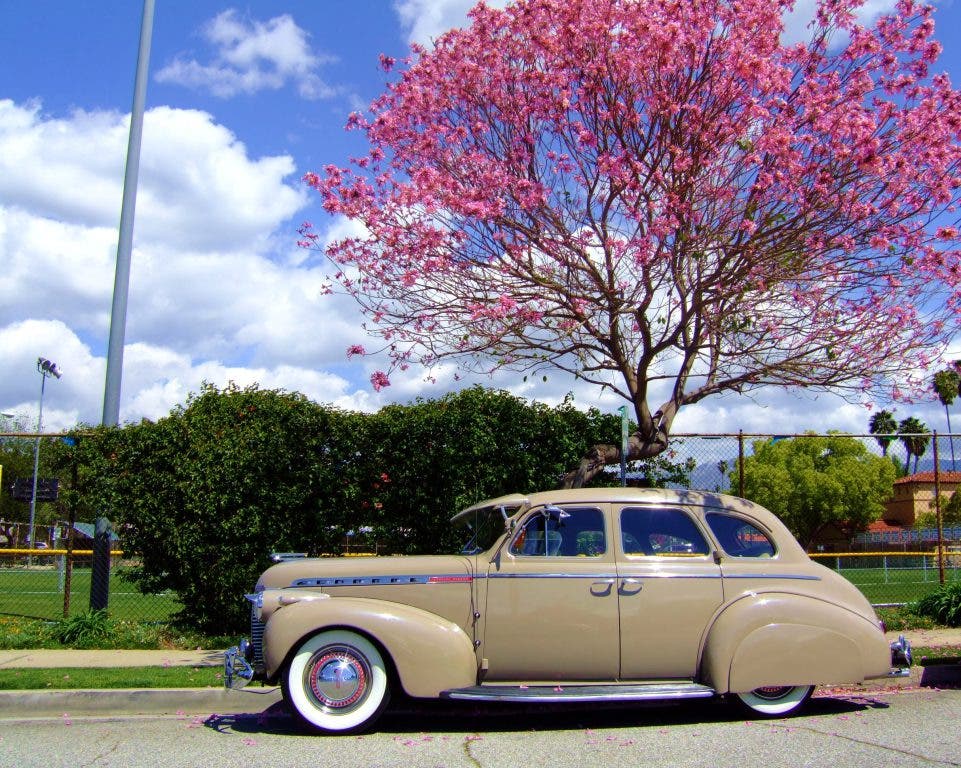


Spend enough time in South Pasadena, and you’ll notice that the and aren’t the only remaining treasures of our past. This town has more than its fair share of vintage cars. Hang out in front of on a weekend afternoon, and you’ll see a promenade of enough old roadsters, coupes and muscle cars to satisfy even the most persnickety car buff. I’m not just talking about your standard issue American Graffiti-worthy hot rods, either. I’ve spotted a late '30s Peugot 402 and a 1949 Hudson Commodore—even a mysterious, black sedan that two confounded, car aficionados argued about nearby. (One insisted it was an unmarked 1939 Cadillac; the other swore it was a Citroen Traction Avant.)
It’s not surprising that South Pasadena residents display so many examples of our driving history. Our city itself has always held a prominent spot in the changing landscape of Southern California transportation. Back at the turn of the 20th Century, the horseless carriage was considered no more than an amusement created by eccentrics. The future according to those in the know, would not be paved with asphalt, but rather etched in rail.
In 1901, Henry Huntington incorporated the Pacific Electric Railway Company and began work on what would eventually develop into the largest interurban electric rail system in the world. One of the main hubs was Oneonta Station, located at the corner of present-day Huntington Drive and Fair Oaks in South Pasadena. This spot marked the junction of the Pasadena Short Line and the Monrovia Line—two of the most important Big Red Car trolley routes. Within a few decades, a huge network of trains and streetcars wound their way through Southern California connecting Los Angeles, Orange, San Bernardino and Riverside counties. The system was hailed as the one to copy, and reporters all over the world began to refer to Los Angeles as a mecca of reliable public transportation. South Pasadena was at the heart of it all.
Find out what's happening in South Pasadenafor free with the latest updates from Patch.
But by the mid-1920s, those reliable trolleys had been upstaged by Henry Ford’s mass-produced, reasonably-priced automobiles. No longer a carnival curiosity or novelty, the personal car was becoming a viable means of transportation. By the time the Model T was discontinued in 1927, Ford had sold some 15 million cars—many to Southern California residents. San Gabriel Valley contractors had a huge upsurge in business as local homeowners tore down carriage houses to build carports and garages. The trolleys might have been efficient and dependable, but South Pasadena’s mild climate tempted residents to put the top down and cruise around.
While the Red Car line continued for several more decades, it was no match for our region’s growing obsession with cars. Little by little, rail rights-of-way were lost to the roads. Once again, South Pasadena was part of an enormous transportation shift when the Arroyo Parkway—now known as the 110 or Pasadena Freeway—opened in December of 1940. Similar to how the rails once made South Pasadena a popular train stop, the Arroyo Parkway made South Pasadena a prominent destination on the region's road maps. “Travel down the Arroyo Parkway, and you’ll end up in the fairest city of all: South Pasadena,” one reporter wrote.
Find out what's happening in South Pasadenafor free with the latest updates from Patch.
Although the Pennsylvania Turnpike had opened a few months earlier, many historians argue that the Arroyo Parkway was the first real commuter freeway. Hailed at a time when motoring was marveled, the sleek, well-paved parkway offered South Pasadenans and neighboring residents the chance to open up their vehicles full-throttle and travel at top speeds. Connecting downtown LA with Pasadena along , the parkway was revolutionary because engineers had designed the gently curving road to accommodate modern speeds up to a dizzying 45 miles per hour.
The 110 we know today is almost identical to the one that beckoned South Pasadena car lovers 60 years ago, with modern SUVs whipping over those 45 mph curves at speeds the original engineers would never have believed possible. It is a National Scenic Byway, a National Civil Engineering Landmark and a State Scenic Highway. If you sit at the overlook on Arroyo Drive and watch the traffic flow, you’ll see a lot of vintage cars heading to and from South Pasadena.
Every September, South Pasadena puts its love of classic cars on display by hosting the . There, hundreds of local car owners from around the region show enough steel, chrome and shiny paint to make the most jaded gearhead swoon. Proceeds of the event go toward .
South Pasadena clearly loves its old vehicles, but it still has its eyes on the future of transportation—and not just because it's a prominent stop on the Metro Gold Line. At the last Cruz’N For Roses show, I heard two guys talking about converting a classic Mercedes diesel engine to biofuel. I’ll bet they both attended South Pasadena’s . The annual event features examples of all kinds of next-generation technology vehicles from hydrogen-powered sports cars to electric city buses.
South Pasadena must have a reputation as a transportation-savvy, green-loving city because recently Toyota picked our Farmers Market as a stop on its . The event featured cuisine prepared by local chefs paired with regional farmers, and showcased Toyota’s newest fleet of energy-efficient Priuses.
Whether you have a classic Model T or a new hybrid, South Pasadena is a great place to take your car for a spin. Shift into low gear and wander around Monterey Hills for panoramic views along Alpha and Via Del Rey. Curve along Arroyo Drive under the same canopy of trees that was there during the construction of nearby Arroyo Parkway. Head east along Huntington Drive, and smile because while most of Los Angeles sits in gridlock, our thoroughfare moves along pretty smoothly—even during rush hour.
There are plenty of destinations within a few minutes’ drive from South Pas (Huntington Library and Gardens, Santa Anita Racetrack, the Rose Bowl), but that’s not really the point, is it? The original owners of those vintage cars discovered something that is still true today: When you’re behind the wheel on the open road, it’s not always about the destination. Most of the fun is in getting there.
To joyride with Laurie Allee as she highlights some of South Pasadena’s vintage cars, click on the video in the photo box above. Original music: Upsurge by Jonah Dempcy.
*The article originally reported that the Big Red Car trolley routes included Ventura, but they did not.