Arts & Entertainment
Greenwich Symphony Voyages to New Realms with Programming, Brilliant Soloist
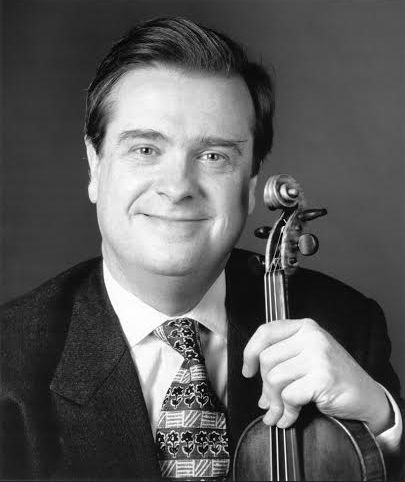
Violinist James Buswell 'simply inhabited the music, from his playing to his body language and expression.'


By Linda Phillips.
It isn’t often that a musical audience is transported from its earthly surroundings to pure states of mind, imagination, thought, and emotion, but that is what happened as the Greenwich Symphony, swollen to the fullest complement that the Dickerman Hollister auditorium at Greenwich High School stage could hold, played the second concert of it 57th season.
Presenting works by Maurice Ravel, Richard Strauss and Dmitri Shostakovich, the performance held listeners in thrall, from the lush and lilting Valses Nobles et Sentimentales of Ravel to the brooding, sometimes manic Shostakovich Violin Concerto #1. Between these was the profound spiritual journey known as Death and Transfiguration by Strauss.
Find out what's happening in Greenwichfor free with the latest updates from Patch.
And then there was the soloist, James Buswell, guest soloist for the Nov. 22 and 23 concerts.
Introduced by Conductor David Gilbert, whose commentary illuminates each work, the audience learned that there were profound messages in the works by Strauss and Shostakovich. As Strauss lay dying, he said of his “heaven storming” work, “Dying is just like I wrote it” (at the age of 26.) The Shostakovich work, written for violinist David Oistrakh, was suppressed by the Stalin regime for several years before it could be performed, as it portrayed the dictator. The Ravel Valses had no message, according to Gilbert: “they’re just gorgeous.”
Find out what's happening in Greenwichfor free with the latest updates from Patch.
With two harps, castanets, kettle drums, and full string sections, the “lush life” of the first Valse was lilting and lovely, the second mournful, informed by oboes and woodwinds, containing all the languor of a summer afternoon.
A Pan-like flute sounded alluringly.
The second valse moved to oboes and woodwinds, evoking the languor of a summer afternoon, as the third, playful and antic, again featured oboes and lots of pizzicato in the string sections, with a repeating motif. An organic sound with snare drums moved to density of orchestration, with addition of a tambourine, the violins shimmering.
Beginning with clarinet and oboe, the The third was antic, playful, again featuring oboes, with pizzicato strings, and a clarinet in a repeating motif against a full orchestra (six double basses!). The fourth created an organic sound, punctuated by snare drums. A french horn led the densely orchestrated fifth Valse, swelling to a wild tambourine punctuation, with violins shimmering. The creatively chorded final Valse featured clarinet and oboe, with bassoons creating menace, before the music faded away before the entranced audience.
The utter majesty of the tone poem Death and Transfiguration, which evokes the mysteries of the universe and life, evokes mighty themes. so great that the precursors for the scores for “Superman” and “Star Wars” could be discerned if one listened carefully. An ominous chord in violins and violas was underscored by the heartbeat of a kettle drum. The first section was a throbbing threnody informed by oboe and harp.
Violinist James Buswell took the stage for the stunning Violin Concerto # 1, and treated listeners to a long recitativo (quite fascinating) of his history with the Concerto and the Soviet Union, which pulled the descendants of both the composer and the person to whom it was dedicated, David Oistrakh, from a performance for political reasons. As interesting as it was, it broke the proscenium wall, and had the character of an aside (as in Victorian dramas) to the audience.
The performance itself was a 40-minute tour de force, as the soloist moved from the moody, slightly atonal Nocturne to a striking Scherzo. Mr. Buswell simply inhabited the music, from his playing to his body language and expression, dancing and sawing through. The Passacaglia featured a march of oppression, with the violin in striking counterpoint with French horn. The long coda was a lament, reaching to the highest register, performed by the completely rapt artist. The Burlesque was a musical interpretation of insane politics of the Cold War, and Joseph Stalin.
The audience erupted, standing, and would not let the soloist leave the stage. He played a solo encore of sweetness and sorrow.
This concert was nothing less than a holiday gift to its audiences, and is the most accomplished performance this reviewer has heard in 14 seasons of writing about the GSO. The next concert will be on January 24 and 25th, and will feature trumpet soloist Ryan Anderson in Haydn’s Concert for Trumpet. For tickets and information, call 203.869.2664, or go to www.GreenwichSymphony.org
Photo courtesy of Greenwich Symphony: James Buswell.
Linda Phillips’ classical music reviews have won four “Best Column of the Year” awards from the Connecticut Press Club, and have been nominated for the Pulitzer Prize in Criticism. She is the author of the novel, “To The Highest Bidder.”
Get more local news delivered straight to your inbox. Sign up for free Patch newsletters and alerts.