Health & Fitness
The Hyde Estate- Wealth in Stillmanville
The story of the Hyde Estate, an early fixture in the Stillmanville Section of Pawcatuck.


Orsemus M. Stillman was a very well known character in Pawcatuck. He owned many businesses, including the Stillmanville Mills that lined the Pawcatuck on the Connecticut, and Rhode Island sides. One of these mills was located at the end of Stillman Ave. The mill, built in the 1840’s, still stands today.
Stillman‘s stepdaughter, Fanny Hazard Brown, ended up marrying Stillman’s new partner, who worked for him in these mills. His name was Theophilus Hyde. At the time of the wedding, the Charles Maxson & Co. was contracted for building the largest house in town.
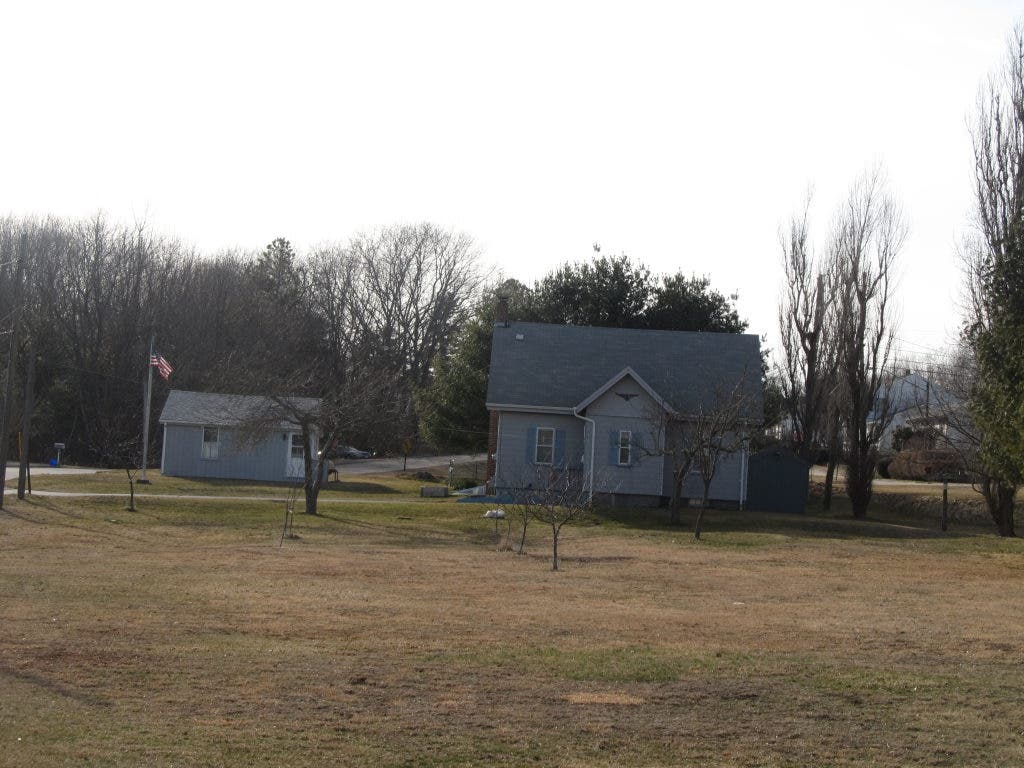
When completed, the Hyde estate consisted of a three-winged mansion, which consisted of 51 rooms. Also on the property was a small Cape-Cod style house, and a livery barn. The house was completed in 1864. The mansion was located on what is now Arch St., which connects Stillman Ave. and Robinson St. When the house was completed, O.M. Stillman gave the property to his stepdaughter, and his business partner, also known as his stepson in-law.
Find out what's happening in Stonington-Mysticfor free with the latest updates from Patch.
The house was a fixture in the community for years. Many lavish parties were thrown at the mansion, and older locals still remember hearing stories of the house today. Rumor has it that some of the granite that came from the estate’s quarry (Keenan’s Quarry) was used in the building of the Statue of Liberty. Some other fixtures in town such as Christ’s Church and West Broad St. School feature the pink granite from this quarry around their windows.
It was in the early 1880’s that the Hyde’s began selling tracts of land around the house to the arriving Irish immigrants. These are the same Irish immigrants that built St. Michael Church on Liberty St.
Find out what's happening in Stonington-Mysticfor free with the latest updates from Patch.
In 1883, the Hyde Estate was sold. The buildings were empty for many years. In 1915 the servant’s quarters was purchased by Rosario Lombardo. The house remains in the Lombardo family today. Antonio Longo converted the livery stable into a house in 1920. This house remains in the same family as well.
As for the mansion itself, in 1919 it was purchased by Angelo Morrone and converted into apartments. Four families lived in the house until February 1, 1920.
On February 1, 1920, the Hyde Mansion burned to the ground, and was a total loss. The fire was discovered in the basement, and a garden hose was used to douse the flames, but this did not work. Box 65 was pulled, and soon the P.S. Barber Hose Company (Pawcatuck Fire Dept.) responded to the blaze.
Not many things were salvaged from the house, but one distinct artifact was found. The largest mantle in the house, from one of its four chimney’s was saved. The walnut mantle read “J. W. Randolph Oct. 30, 1864” Randolph was the foreman when the house was constructed. According to the February 2, 1920 edition of The Westerly Sun the house “was one of the costliest in town” and “was made of the best material money could buy”.
In 1998, Anthony Lombardo wrote a short book about the Hyde Estate. He lives in the servant’s quarters. His book is full of great photos and valuable information and stories.
Although the stately mansion is no longer, remnants of the Hyde Estate still remain. If you ever pass by the small Cape with its beautiful field in the front yard, look closely. In the front of the house is a sign that bears the name “Hyde Estate”.
A special “thank you” to Anthony Lombardo, Dwight Brown, and The Westerly Sun.