Seasonal & Holidays
When Do You Tell Your Child, 'There Is No Santa Claus?'
A child psychologist from Advocate Children's Hospital-Oak Lawn offers some helpful advice.


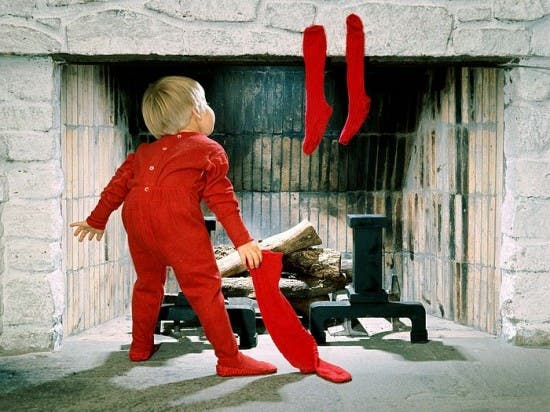
Most of us probably remember when we first learned that Santa Claus didn’t manifest himself in the chimney or land on the roof in a sleigh. For me, it was Miss Abrahamson’s second-grade classroom at Cumberland School, with a couple of boys angrily denouncing to other students that Santa was a fake.
The idea had fleetingly crossed my mind that Santa might not be real. I asked my mother, who then asked me, what I thought. I decided that no way could my parents afford our modest bounty of gifts left under the tree. By third grade, however, my childhood belief in Santa was over.
Whether you have young children anxiously awaiting the arrival of Santa Claus, or older kids for whom the Santa stories are starting to wear a bit thin, when is the best time to tell your child, “There is no Santa Claus?”
Find out what's happening in Beverly-MtGreenwoodfor free with the latest updates from Patch.
“There is really no ‘right time’ or right way to tell your child that Santa is simply a symbol of what is good about Christmas and that those holiday presents actually come from mom and dad,” says Gabrielle Roberts, Ph.D., clinical child psychologist at Advocate Children’s Hospital-Oak Lawn.
Dr. Roberts advises parents to wait for their child to come to them with questions about Santa and his existence rather taking any preemptive action. A parent can create some complications if telling a child that Santa is a myth before the child is ready to hear it.
Find out what's happening in Beverly-MtGreenwoodfor free with the latest updates from Patch.
“Certainly, some parents may fear that their son’s or daughter’s heart will be crushed if they learn at school that Santa does not exist, but mom and dad should resist the temptation of bringing up the subject first,” Dr. Roberts advises. “Of course, there are some exceptions to that guideline. For example, if an older child is being bullied or at risk of being bullied for his or her belief, then it may be time to initiate the ‘talk.’
If a child does start asking questions about Santa, “use your parenting intuition to determine whether or not your child is simply seeking confirmation of his or her belief in Santa or is really wanting hard answers,” Dr. Roberts says.
The best approach is to “throw the question back to the child. Ask your son or daughter, ‘What do you think? If you believe, that is what’s important,” Dr. Robert says. “It is okay to believe in Santa.’ The child’s response should give you some understanding of what they are truly trying to learn.”
When children are ready to find out the truth about the jolly, bearded old man in the red suit, “parents can use the opportunity as segue to discussing what Christmas is all about and how Santa Claus symbolizes the true magic of the holidays,” Dr. Roberts said.
Francis Pharcellus Church, editorial writer for the New York Sun, perhaps, said it best in September 1897, when responding to a letter from 8-year-old, Virginia O’Halon, who had questioned the existence of Santa Claus:
“Yes, Virginia, there is a Santa Claus. He exists as certainly as love and generosity and devotion exist, and you know that they abound and give to your life its highest beauty and joy…A thousand years from now, Virginia, nay 10 times 10 thousand years from now, he will continue to make glad the heart of childhood.”
Get more local news delivered straight to your inbox. Sign up for free Patch newsletters and alerts.