Community Corner
Bat-bit Crazy: 'The Midwest is Just Unbelievably Infested with Bats'
Everything you need to know about Chicago-area bats and summertime rabid-bat warnings.


Chicago, IL -- If you’ve heard the scurrying of little feet or the flutter of wings in your attic, you probably should get that checked out. What most homeowners mistake for mice or birds or even a squirrel could turn out to be bats — and some of them may be carrying rabies
Paul Coppola, a senior bat exclusion technician for Get Bats Out, estimates eight of 10 homes in the Chicago region harbor bats.
“The Midwest is just unbelievably infested with bats,” Coppola said. “I’d say 80 percent of neighborhoods are infested with bats, and people don’t even know about it.”
Find out what's happening in Glen Ellynfor free with the latest updates from Patch.
With bats coming out of hibernation and baby bats, or pups, being weaned out of their nests, reports of rabid bats are on the rise. The Illinois Department of Public Health reports 19 bats tested positive for rabies since Jan. 1.
Shockingly, most of Illinois’ rabid bats were found inside homes or other buildings.
Find out what's happening in Glen Ellynfor free with the latest updates from Patch.
This past week in Will County, a dead bat found inside the Crete Library tested positive for rabies; in Cook County, six rabid bats, excluding a seventh bat that someone brought home from DuPage County, have been reported so far. Most were found inside buildings, and the bat season has barely gotten started.
Little Browns and Big Browns
Illinois is home to 12 species of bats, most weighing about an ounce. The most commonly found are little brown and big brown bats, sometimes known as “house bats.” Little browns are about the size of an adult thumb with a wingspan of 8.5 to 11 inches.
Big browns are much larger, about 4 to 5 inches long with an 11-to-15-inch wingspan. The big brown’s nose is much broader than the little brown’s pointy proboscis.

Photo: Wisconsin Bats
Female bats give birth live, usually to one or two pups. Bats are the only mammal that can fly. A common myth is that bats are blind; they’re not. Their night vision is pretty good, though they mainly use echolocation to find flying insects at night, much like sonar.
If bats don’t migrate in the fall (usually to caves or underpasses), they’ll hibernate in a warm attic, usually sleeping upside down.
Bats play an important role in the local ecosystem and can significantly reduce the insect population in your neighborhood.
“One bat can eat up to 3,000 mosquitoes in one night, or any insect outside after dark, like moths and crickets,” said Christopher Appelt, a biologist and associate professor at Saint Xavier University in Chicago. “Put 100 bats out there, and they can eat 300,000 insects in one night.”
A Bad Rap
Throughout history, bats have been vilified as vampires or the menace of terrified cave explorers. More recently, bats have earned a bad reputation as rabies carriers, and the summer months in Illinois feature frequent rabid-bat reports from local health departments.
Although far more raccoons, skunks and foxes carry the virus, a majority of human rabies exposures in the United States are from bat strains, according to the Illinois Department of Public Health.
IDPH is responsible for testing animals for rabies, and the only way to do that is when the animals are dead. In 2015, the state lab tested 3,096 critters — including bats, raccoons, skunks, foxes, dogs, cats and other species. Last year, 97 rabid bats were recorded across Illinois; 2010 also proved to be a banner year for rabid bats, with 117 testing positive.
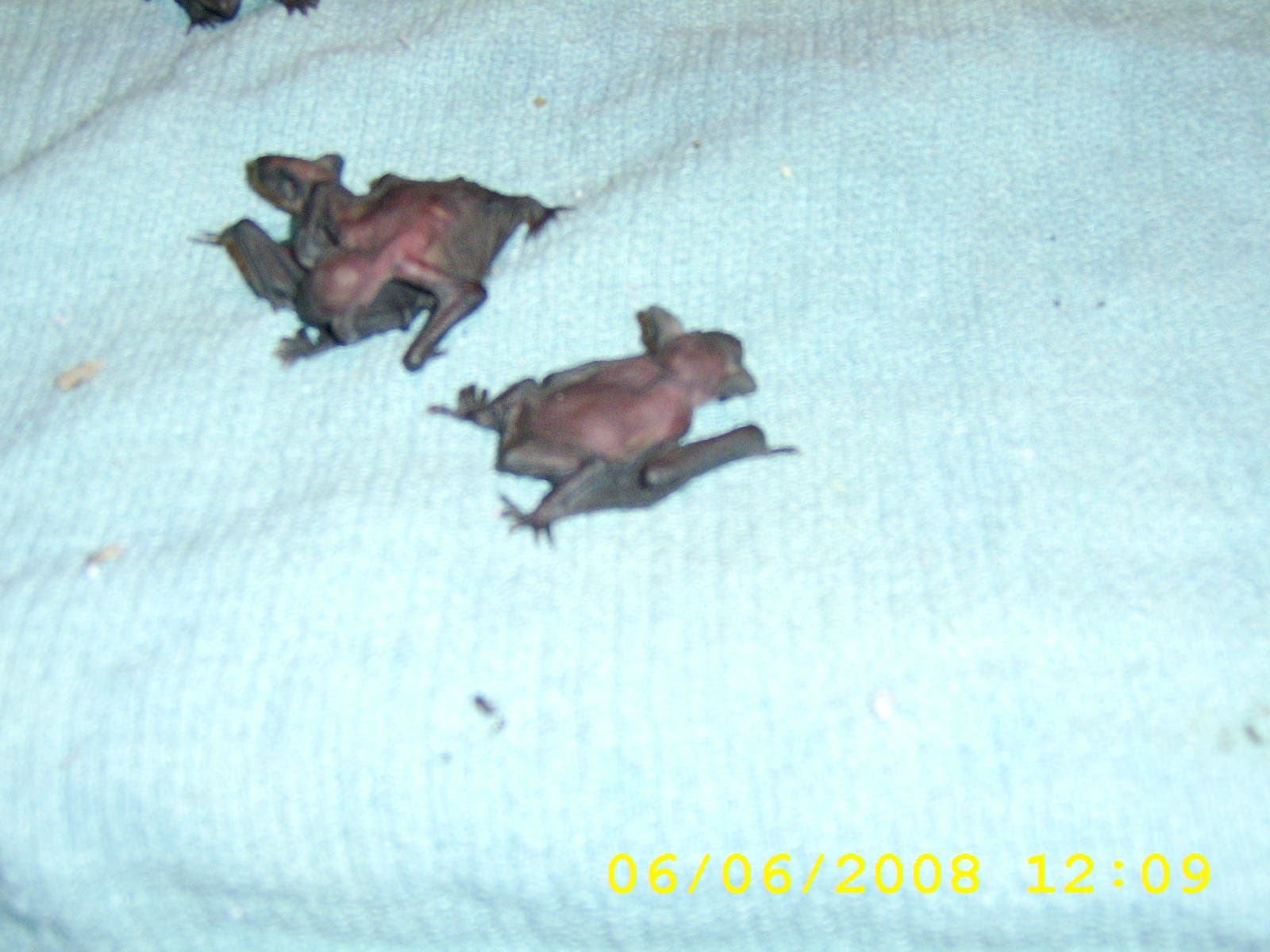
Bat pups
Of the hundreds of bats submitted to IDPH, fewer than 5 percent are found to be rabid. In the bat population as a whole, the percentage of rabid bats is much smaller, less than 1 percent.
Most humans bitten by a rabid bat may not even realize they've been attacked because bats’ teeth are so small the bite marks may not be apparent.
Exposure can also occur when an infected bat’s saliva comes in contact with a person’s eyes, nose, mouth, a scratch or other open wound.
Since Jan. 1, 19 bats have tested positive for rabies statewide. County-by-county statistics in the Chicago region include:
- Cook County - 7 (one of the bats was submitted by a resident who brought it home from a DuPage County worksite);
- Will County - 2
- DuPage County - 4
- Lake County - None
- Kane - 2
- Kendall - None
Dr. Donna Alexander, veterinarian and administrator of Cook County Animal and Rabies Control, told Patch bats will become even more prevalent in July and August when mosquito populations reach their peak.
“We have probably submitted over 100 bats to the state lab for testing since January, and most of those were found inside homes,” Alexander said. “A majority of the bats we have in northern Illinois are the small brown bat, which is equivalent to one knuckle of your thumb and can squeeze through a 3/8-inch opening between a drainage pipe and your home.”

Bat bite | Agrilife
“We collect bats in unincorporated and incorporated areas of Cook County,” Alexander said. “If a bat tests positive, we notify everyone within a one-mile radius of where the bat was picked up.”
Last year, five bats tested positive for rabies in Cook County; the highest number of rabid bats recorded in recent years was 21 in 2013.
Save the Head
If you wake up and find a bat flying around your bedroom or your kid’s bedroom, isolating and capturing the bat is crucial. One thing you don’t want to do is crush the bat’s head, because the brain, as in any animal specimen being tested for rabies, is needed to conduct a direct immunofluorescence antibody test.
Rabies is a viral disease causing encephalitis (brain inflammation) in humans and animals. Because rabies infects an animal’s nervous system, the ideal tissue to test for rabies antigen is the brain. The DFA test contains fluorescent labeled antibodies designed to specifically target unique antigens present in the bacteria or virus.
When the rabies antigen is present, fluorescent apple-green areas appear under a fluorescence microscope. If rabies virus is not present, there will be no staining.
Rabies is fatal in mammals, such as bats, and humans — the small number of people who’ve survived rabies without treatment were left with severe brain damage. The good news is rabies is treatable provided that a post-exposure prophylaxis regimen of human rabies immune globulin (HIRG) is administered immediately following an exposure.
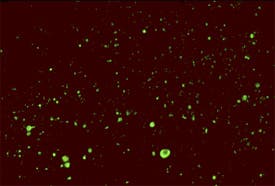
Positive DFA rabies test | Centers for Disease Control and Prevention
Unlike years past, when persons bitten by a rabid or potentially rabid animal were subjected to painful daily shots in the stomach over several weeks, human rabies immune globulins are injected near the bite, preferably on the day someone is bitten or exposed. This is followed by three additional rabies vaccinations over a two-week period, as explained by the Minnesota Department of Health.
Another reason you want to save the bat’s head is because the regimen of post-exposure rabies vaccinations can cost thousands of dollars and isn't covered by most health insurance carriers.
In Atlanta, a family of five paid $70,000 for rabies vaccines after a bat flew into their home in the middle of the day, when most nocturnal bats aren’t active, the Associated Press reported. Unfortunately, the family’s son chased the bat outside before the animal could be caught.
Once rabies symptoms appear — fever, headache, fatigue, over anxiety, paralysis, hydrophobia and overproduction of saliva — you’re a goner.
“In 2015, we had 20 positive bats,” said Dr. Leroy Shields, a veterinarian and administrator for Will County Animal Control. “All were found in bedrooms inside the house. Approximately 50 people went through post-exposure treatment. The bottom line is when you’re dealing with rabies is not to wait and see if you’re going to get symptoms.”
If you find a bat flying around your living space, you need to contact your physician immediately.
Bat Removal
Bats in the United States are protected species because of the valued role they play eating skeeters and other destructive pests, such as the lumbering gypsy tree moths that can defoliate an entire town’s tree canopy or a forest in a New York minute.
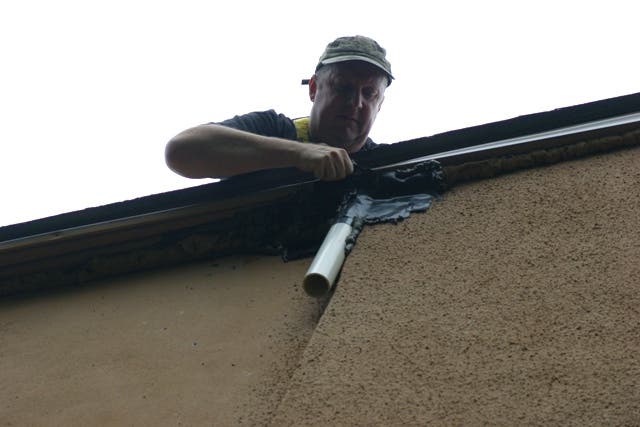
Bat exclusion technician | Get Bats Out
It is against the law, however, to kill or poison bats when removing them from buildings. Bat exclusion is also prohibited when pups are still nursing and in the roost. The cost of professional bat removal from a residence begins at $2,000 to $4,000, and can run even higher depending on the size of the home.
Get Bats Out employs a one-way device over openings where bats enter into eaves and attics. The device allows the bats to exit humanely but not re-enter a home, essentially “bat proofing” the home.
Professional removal service also includes cleanup of guano (poop), which, if piled up in your attic or inside your walls, can lead to histoplasmosis, a serious lung infection caused by breathing in spores from bat or bird droppings.

Humane bat removal device | Get Bats Out
Coppola, the senior bat exclusion technician who has spent the past six years chasing bats out of buildings, said the worst infestation he encountered was a brownstone in downtown Chicago where he found a colony of more than 1,000 bats.
“The homeowners gave me the keys and said to call them after the bats were out,” he said. “There were 30 to 40 bats flying around the kitchen. I spent at least a week catching 50 or 60 bats a night with a net, then letting them go. Every time I thought I had caught them all, there would be more crawling out of the woodwork."
Get more local news delivered straight to your inbox. Sign up for free Patch newsletters and alerts.