Politics & Government
Donald Trump Refugee Ban Condemned By Chicago-Area Holocaust Survivors
After escaping Nazi Germany as young refugees, survivors spoke out Thursday against Trump's orders and Holocaust Remembrance Day snub.


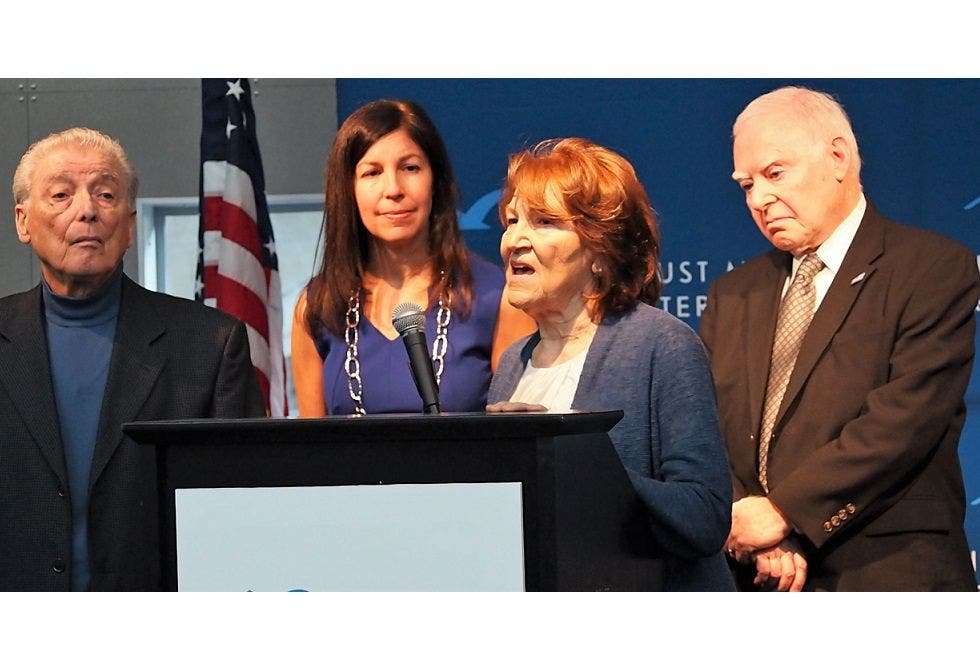
SKOKIE, IL — More than a dozen Holocaust survivors gathered at the Illinois Holocaust Museum in Skokie Thursday to address President Donald Trump's executive order on immigration and refugees.
The museum and survivors also denounced the Trump administration's statement on Jan. 27, International Holocaust Remembrance Day, which contained no mention of the killing of approximately six million Jews.
"To not mention Jews and antisemitism on International Holocaust Rememberance Day is to fundamentally misunderstand the Holocaust and its commemoration," said the museum's CEO, Susan Abrams. She described the Trump administration statement as a kind of "soft-core denial," using a term coined by Holocaust scholar Deborah Lipstadt.
Find out what's happening in Skokiefor free with the latest updates from Patch.
"It's very hard to grasp why they wouldn't relate it to the fact six million Jews were killed," said vice-president of the museum and Holocaust survivor Raph Rehbock, 82, of Northbrook. "It's quite a big deal."
Rehbock warned the United States is risking repeating the mistakes of the past. Thousands of Jewish refugees fleeing Nazi persecution were turned away, and more than 100,000 Japanese-Americans were forced into internment camps.
Find out what's happening in Skokiefor free with the latest updates from Patch.
"We were told to get off the train, we were strip searched to make sure there were no other valuables in our body parts other than the $4 we were allowed," he said. He still remembers all the "upstanders" (rather than "bystanders") who helped his family, he said, like the total stranger who approached them as they waited in a train station at the Germany-Netherlands border, or the U.S. Marine and American diplomat who came into work on their day off to finalize his family's paperwork allowing them to leave before it was too late.
Rehbock was able to escape Germany as a young child thanks to the help of some cousins in Chicago. His immediate family had never met their American cousins, but thanks to the kindness of his relatives, the Schrayer family of Hyde Park, Rehbock quickly learned English, lost his accent and assimilated into Chicago. He moved to Highland Park in the mid-1980s and now speaks to thousands of students a year about his experience escaping near-certain death.
"When I watched TV the other morning I had tears," said museum president Fritzie Fritzhall, who survived being deported to Auschwitz at age 13. Her family, she said, died because they were not allowed to immigrate to the United States at the time. "I had compassion, I had feelings, I understood, and I remembered," she said.
The current refugee crisis cannot be compared with the situation for Jews during the Holocaust, yet Fritzshall said she felt compelled to speak out against religious discrimination. "People are singled out, again, because of religion, because of where they live, because of how they look," she said.
Trump's new policies, suspending entry to the United States for all refugees and blocking some visitors and immigrants based on national origin, are a "sliding slope," according to Aaron Elster, a museum vice-president and survivor of the Sokolow Ghetto in Poland.
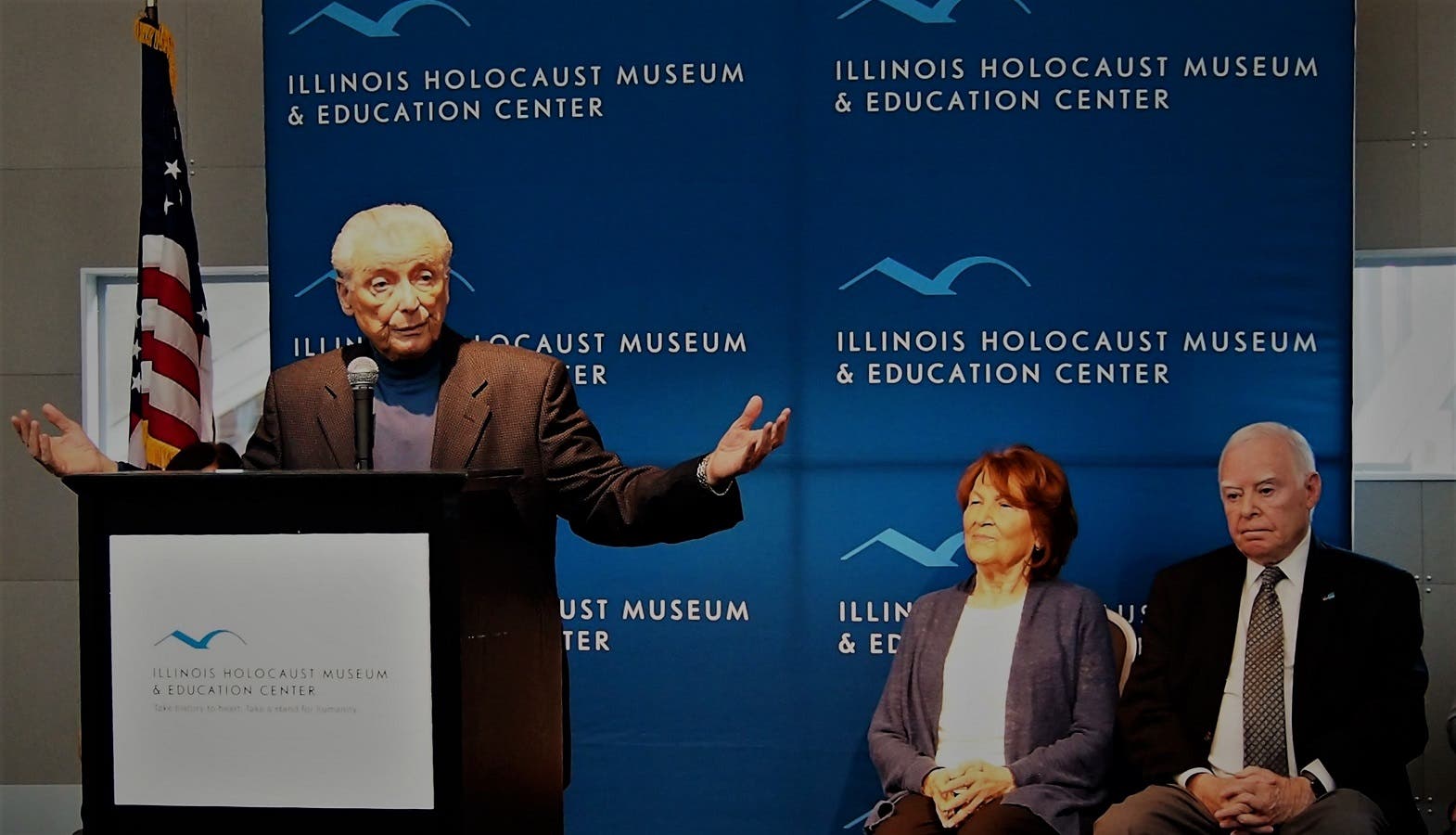
"What group will be next, that will not be able to come into the country? And then what else could possibly happen once you do that?" he asked. Elster, 87, of Lincolnshire, is the author of a book about his experience during the Holocaust as a hidden child.
"You dehumanize people, and then it's OK to do what you want with them," he said, noting the gradual way by which German Jews first had their citizenship revoked before being pushed together in ghettos and eventually forced into death camps.
"It's up to us to make sure that they are included, that we are all-inclusive."
Fritzshall, Elster and Rehbock are all members of the Illinois Holocaust Museum's Speakers Bureau, made up of 67 Holocaust survivors who engage the roughly 60,000 students and teachers who visit the museum. Since 1989, Illinois law has explicitly required students be taught the history of Nazi atrocities.
"One of the universal lessons of the Holocaust is that national, ethnic, racial, or religious hatred can overtake any nation or society, leading to calamitous consequences," states the Illinois law.
Photo: (From left) Aaron Elster, Susan Abrams, Fritzie Fritzshall, speaking, and Ralph Rehbock at the Illinois Holocaust Museum and Education Center in Skokie, Feb. 2
Get more local news delivered straight to your inbox. Sign up for free Patch newsletters and alerts.