Neighbor News
How chiropractic can help runner's knee
40% of all running injuries are knee injuries. Find out what runner's knee is and how chiropractic can help.

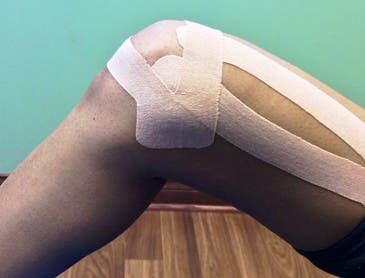
Now that things are getting warmer (for the most part) runners are finding their way back outside after a long hibernation and running along the Fox River in St. Charles. While some don’t let the cold weather hold them back and many find their way to a treadmill for most it’s a time where training increases. There are races to be raced after all. With this increase in training, a rise in injuries is often seen. It’s an unfortunate but true and probably obvious inevitability. For runners, about 40% of these injuries are knee injuries. Many of these knee injuries are what’s commonly referred to as “Runner’s knee.” So...
What is runner’s knee?
Runner’s knee is sort of an umbrella term. It is often used to describe any pain in the front of the knee after running. More specifically, I’ve heard it used to describe patellofemoral pain syndrome (PFMS), chondromalacia patellae, plica syndrome and Iliotibial band syndrome. The most common of these is patellofemoral pain syndrome (and possibly chondromalacia patellae but that’s a discussion for another time). Patellofemoral pain syndrome is an irritation of the tissue between your patella (kneecap) and femur (thigh bone). It is characterized by pain during or after long runs that is further aggravated by prolonged sitting (like when you watch a movie at the theater) and going up or down stairs. It can be caused by a variety of things like overuse, anatomical abnormalities and poor patellar tracking. When rest and ice doesn’t work or when it comes back after returning to running, a patellar tracking disorder is often to blame. This goes hand-in-hand with muscle imbalance or dysfunction and often times a loss of motion in the hip and/or ankle.
What you may or may not realize is that when you bend or straighten your knee like when you run, walk or navigate stairs your patella actually runs through a track on your femur. If the muscles of the thigh or calf are imbalanced or dysfunctional such that the outside muscles pull on the patella more than the inside (which is most often the case), then the patella will track too far laterally (toward the outside). This will cause irritation of the tissue that lies between the lateral portions of your patella and the groove in your femur. Concurrently, joint dysfunction in the hip, ankle and foot are often seen, which will change your biomechanics and further complicate the issue. These dysfunctions often present as a lack of hip internal rotation, decreased ankle dorsiflexion (the ability to move your ankle such that the toes move toward your shin) and hyperpronated feet (flat feet).
Find out what's happening in St. Charlesfor free with the latest updates from Patch.
What’s the treatment?
First and foremost, it’s important to get checked out by a healthcare professional. Not only do you need to be sure about what you have, it’s also important to know why you have it. The best way to treat anything is to know what’s causing it and treat those issues. Muscle tightness, imbalances, dysfunctions and joint restrictions will all need to be addressed to reach a full resolution. Foam rolling and stretching are a big part of any home care as well as exercises aimed at balancing any muscles that need it. You’ll thank yourself (and me) later if you get some guidance on this. The easiest way to work with flat feet is to get shoes that are supportive. If that isn’t enough you may need to look into orthotics.
Chiropractic care for runner’s knee
Chiropractors are a great choice for treating runner’s knee. They can examine the knee to obtain an accurate diagnosis and evaluate the cause. For example, at White Oak Family Wellness we perform a thorough examination to determine the correct diagnosis and then check the individual muscles and joints to find the cause. Once we are sure of which muscles and joints need to be addressed we will create a treatment plan which will focus on your specific needs. In addition to any exercises, stretches and joint manipulations we often use kinesio tape. This can help with muscle imbalance while directing the patella to track properly, which usually means a quicker recovery time and getting you back on the Fox River Trail faster.
Find out what's happening in St. Charlesfor free with the latest updates from Patch.
Phillip Gamble, DC
Chiropractic Physician
White Oak Family Wellness
405 Illinois Avenue #2b
St. Charles, IL 60174
Phone: (630) 442-0057