Community Corner
Does Yoga Do More Harm Than Good?
A new book discussing the hazards of yoga is getting a lot of press. What does it mean for the average practitioner?
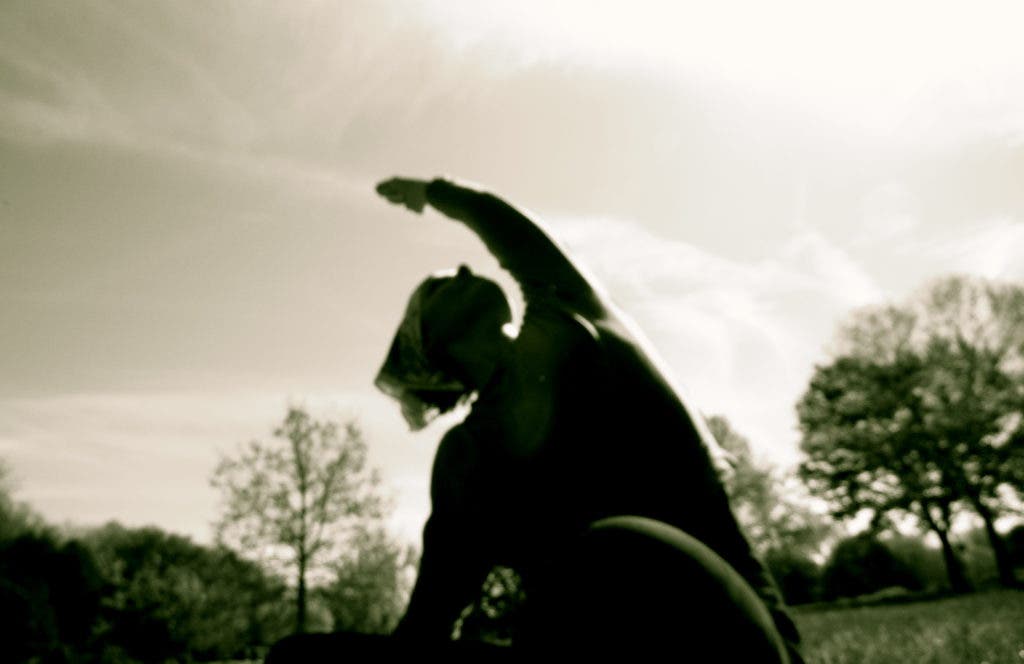
Yoga is most often associated with zen-like peace and a strong mind-body connection. That made it all the more surprising to come across this headline in the New York Times Magazine recently: How Yoga Can Wreck Your Body.
Wreck? What about all that relaxation, peace and love? People frequently turn to yoga to recover from or prevent injuries. Now the New York Times is telling us it can ruin our bodies instead of healing them?
RELATED:
Find out what's happening in Winnetka-Glencoefor free with the latest updates from Patch.
Yoga injuries are out there, no question about it, probably because so many people are doing yoga these days. Once a fringe activity, largely for commune dwellers and wheat-grass drinkers, yoga is now mainstream.
In fact, it's downright trendy. Even those of us who lack the fexibility to touch our toes in a forward fold are doing it. Some estimates put the number of yoga practitioners at 20 million, so a few pulled hamstrings are no surprise. What struck me, however, was one word in the New York Times article: stroke.
Find out what's happening in Winnetka-Glencoefor free with the latest updates from Patch.
William Broad, author of both the article and a new book called The Science of Yoga, says that poses that put pressure on the neck, such as shoulder stand, headstand and plow, can damage the vertebral arteries, possibly causing clots which can lead to strokes. However, Broad cites only a handful of cases, which suggests the overall risk is quite low.
I have to confess, I've never been a fan of inversions, so I'm happy to skip them, stroke risk or no. But what about the other 95 percent of a standard yoga class? Can it do more harm than good? For guidance, I turned to local yoga instructor Eileen Collins, who teaches at the Winnetka Community House, Yogaview in Wilmette, and other area studios.
Eileen pointed out, quite correctly, that any activity can cause injury if not done properly. All things need to be done in moderation. More importantly, she noted that practitioners need to accept limitations.
“Yoga isn't about being able to do a certain pose. It's about breathing deeply, listening to your body and observing what it's telling you. It's usually our egos that lead us astray and into positions that may not be appropriate for us, both on and off the mat.”
I'm not particularly good at yoga, so I've had a lot of practice letting go of my ego. But I think Eileen is correct that knowing and accepting limitations is key to keeping yoga a safe and beneficial activity. So from now on, when I'm the only one in the room who can't touch my toes in a forward fold, I'll modify the pose with pride. And I'll gladly skip the shoulder stand.