Politics & Government
Iowa City Transgender Man Said He Was Initially Denied Hospital Treatment
A local transgender man said a hospital staffer told him he couldn't be treated for hormone issues.
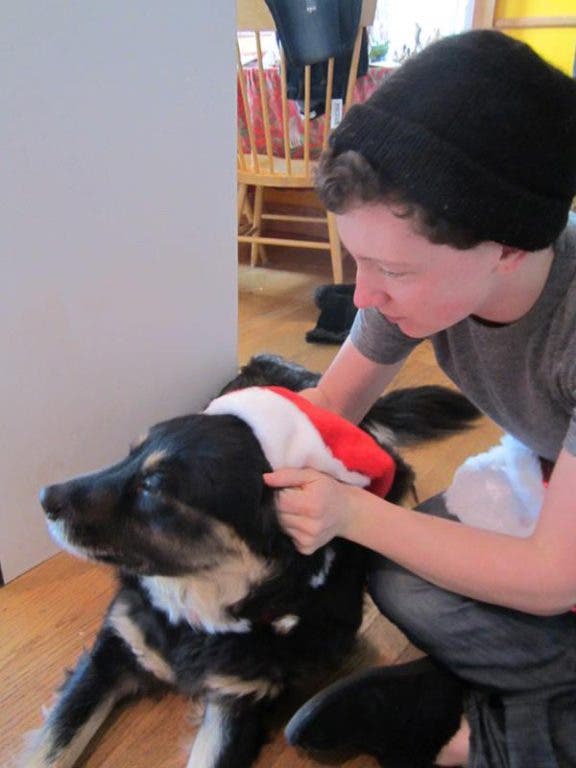
Despite local efforts to improve health care for transgender patients, a local man says barriers still exist.
Shay O'Reilly, a local transgender man and former University of Iowa student, said he filed a complaint with state officials last week after he was initially denied medical care because he's transgender.
O'Reilly said he called late last month to set up an appointment with an endocrynologist. But he said two different schedulers told him he couldn't be seen at the UIHC for his hormone problem. One staffer reportedly told O'Reilly he could try a clinic in West Virginia instead.
Find out what's happening in Iowa Cityfor free with the latest updates from Patch.
One hospital staffer eventually told O'Rielly that the director of the clinic would call him. O'Reilly waited a few days and when that call didn't come, he called the director of the endocrinology department.
And eventually everything worked out. According to O'Reilly's account, the director put him in touch with a suitable doctor who was "extremely helpful."
Find out what's happening in Iowa Cityfor free with the latest updates from Patch.
But even though O'Reilly finally got the medical attention he sought and there are signs of improvement, he said his ordeal shows there are still problems. O'Reilly isn't looking for any monetary compensation with his complaint.
Instead, he just hopes the situation at UIHC will improve.
"I really just want people to go in and get the health care they need without having to jump through extra hoops," O'Reilly told Patch. "I don't think it's intentional malice, but it's the way the system is structured or a lack of education or organization for handling transgender patients."
UI Spokesman Tom Moore said he couldn't discuss O'Reilly's case specifically, but said hospital officials follow up with all complaints.
"We strive to care for all patients to the best of our ability without regard to their gender, sexual orientation, race, religion, or economic status," Moore wrote in an email. "Clearly, all feedback from patients is a helpful learning tool for our staff and helps us provide more appropriate care in the future."
The issue of trans* care has already received some attention locally, and some members of the local trans* community are looking to do something about it.
In April, the Daily Iowan published a lengthy story about another local transgender man's struggle with health care.
One doctor who has worked with the trans* community said his expertise is rare.
"There aren't very many of us," UIHC endocrinologist William Davis told the Daily Iowan. "My take on observing other physicians is that they would not touch the issue with a 10-foot pole."
Members of the local trans* community are bringing attention to the issue by hosting the Eastern Iowa Transgender Medical Symposium later this month on the UI campus.
"The conference stems from many many years of conversations within the trans* community regarding the poor healthcare services for trans-specific care and the mistreatment of transgender people in healthcare settings," said Stef Shuster, a UI grad student.
O'Reilly said he hopes his story and attention to health care barriers will help make it easier for other trans* people stand up for themselves.
"I worry that someone who wasn't so assertive would've made the first phone call and would've just hung up and said 'Well, that's a dead-end,' " he said.
Note: trans* = transgender