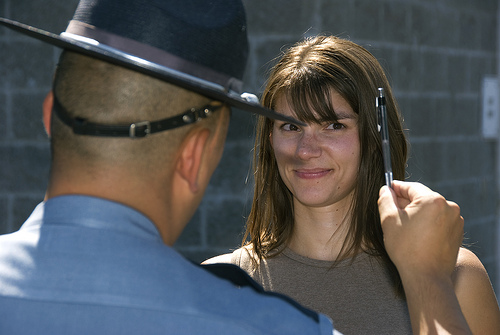
When it comes to field sobriety tests (FST), it’s never been a completely “straight line” from test-to-result-to-correct conclusion. The reality is that there are many variables and mitigating factors that call into question the veracity of field sobriety testing in determining a driver’s blood alcohol level. In fact, controversy swirls around them. Field sobriety tests have long been thought to be at the very least unreliable and at the very most, damaging: Statistics indicate that hundreds of people a year are falsely accused and/or convicted of DUIs as a result of failing or badly performing in a field sobriety test.
Regardless of these “sobering” facts, law enforcement continues to rely on FSTs for DUI arrests. But recently, courts have argued that the field sobriety test can actually do more harm than good as governments waste millions of dollars in resources and man hours wrongfully convicting drivers and distracting officers from apprehending actual criminal offenders.
So, as the question of field sobriety test accuracy remains in limbo, the following are some common FST myths that you should be aware of if you ever find yourself in the unfortunate position of being pulled over for a DUI and asked to perform a field sobriety test:
Find out what's happening in Annapolisfor free with the latest updates from Patch.
Myth: The Police Officer’s Judgment at the Scene is Credible
Unlike a blood, urine or breathalyzer test that measures alcohol levels in your system, a field sobriety test is completely contingent upon the subjective judgment of the police officer who administers it. Alarmingly, recent studies found that officers who use the field sobriety test modelincorrectly assessed people’s intoxication levels a whopping 30% of the time! That means that approximately one-third of the people pulled over for a DUI will be wrongly arrested and some of those actually convicted of driving under the influence. Given the dire consequences of a DUI (threatened livelihood and tarnished reputation), it is unacceptable in this day and age for a person to be convicted of a felony based solely on an officer’s prejudicial evaluation in the field. The Truth: A field sobriety test is an unreliable measure of a person’s blood alcohol level.
Find out what's happening in Annapolisfor free with the latest updates from Patch.
Myth: Field Sobriety Tests are Scientifically Sound
When confronted with the evidence, most people agree that field sobriety tests have little or no scientific basis for determining a person’s sobriety or lack thereof. Furthermore, a large percentage of FSTs are given incorrectly, further reducing their accuracy and reliability. If that weren’t enough, the National Highway Traffic Safety Administration (NHTSA) has failed to set standards for the administration, scoring and interpretion of FST results.The Truth: Field sobriety tests are actually set up for people to fail them.
Myth: Performing Badly on a Field Sobriety Test Means You Have Consumed Alcohol
Have you ever tried to walk toe-to-toe on an uneven, slippery surface in high-heels while a police officer scrutinizes your every move as the traffic blows past you at 80 mph in the rain? Under these conditions, I doubt an Olympic gold medalist in the balance beam could pass the test. The Truth: There are other reasons to fail or perform badly on a FST other than being drunk.
***
Unfortunately, many people will fail a field sobriety test and believe the results are indisputable and their only option is to give up and plead guilty or no contest. We now know that just isn’t the case. If you or someone you know is arrested for a DUI based on a field sobriety test, the best thing you could do is to consult a competent, experienced DUI lawyer who can help you fight for your rights and protect your future.