Weather
Geminid Meteor Shower Peak: When To See Fireballs In Maryland
Even with a nearly full moon, Maryland residents may be able to see about 30 Geminid meteors an hour, weather permitting.


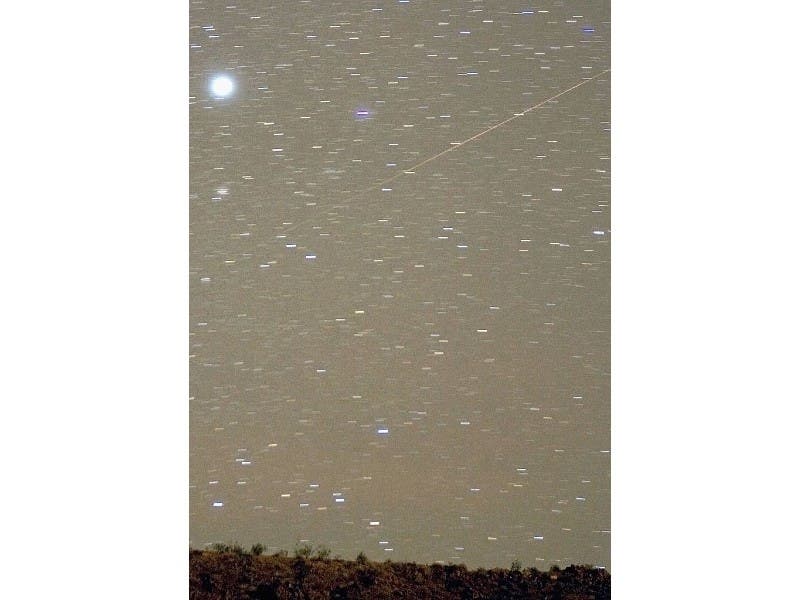
The Geminids meteor shower, known for colorful shooting stars, fireballs and long-lasting tails, is like an early holiday light show coming to the skies over Maryland. The shower, regarded one of the year’s best, peaks late Friday night and early Saturday morning. Weather permitting, we may see as many as 30 meteors an hour.
The National Weather Service is calling for cloudy skies and a 90 percent chance of rain after 7 p.m. in the Baltimore-Washington area. Temperatures will be in the mid 40s.
The best time to see the Geminids is around 2 a.m. local time. A nearly full moon is expected to wash out all but the brightest, but NASA meteor expert Bill Cooke says the show is still worth a trip outside to watch.
Find out what's happening in Dundalkfor free with the latest updates from Patch.
“It won't be a total washout, because the Geminids have a lot of fireballs in them,” Cooke told Space.com.
The meteors fly quickly and could continue for a few days after the peak, so continue scanning the skies whenever you’re out at night.
Find out what's happening in Dundalkfor free with the latest updates from Patch.
The Geminids are reliably the most prolific meteor shower of the year, producing up to 120 shooting stars an hour — typically outperforming the summertime favorite, the Perseids.
The first known report of the Geminid meteor shower was in 1833, seen from a riverboat on the Mississippi River. Over the centuries, it has grown in intensity as Jupiter’s gravity tugs particles from the source of the shower, the asteroid 3200 Phaethon, closer to the Earth.
The meteor shower radiates from the bright constellation Gemini (the twins). In the Northern Hemisphere, look in the southwestern sky for the constellation Orion — it’s the one with the three stars that make up the hunter’s “belt” — and then look up and to the left to find Gemini, which is high in the southwestern sky.
But don’t focus on Gemini itself, or you’ll miss some of the amazing tails associated with this wintertime favorite. Instead, look slightly away from the constellation.
You’ll also want to find a dark sky to view the Geminids, and make sure you allow about half an hour for your eyes to adjust. You won’t need binoculars or telescopes. Dress warmly to stay cozy while you watch the meteors fly.
— By Beth Dalbey and Elizabeth Janney
Get more local news delivered straight to your inbox. Sign up for free Patch newsletters and alerts.