Crime & Safety
Baltimore To Pilot Surveillance Plane Program: Commissioner
The Baltimore Police Department will pilot an aerial surveillance program starting in May 2020, with public sessions to be held first.


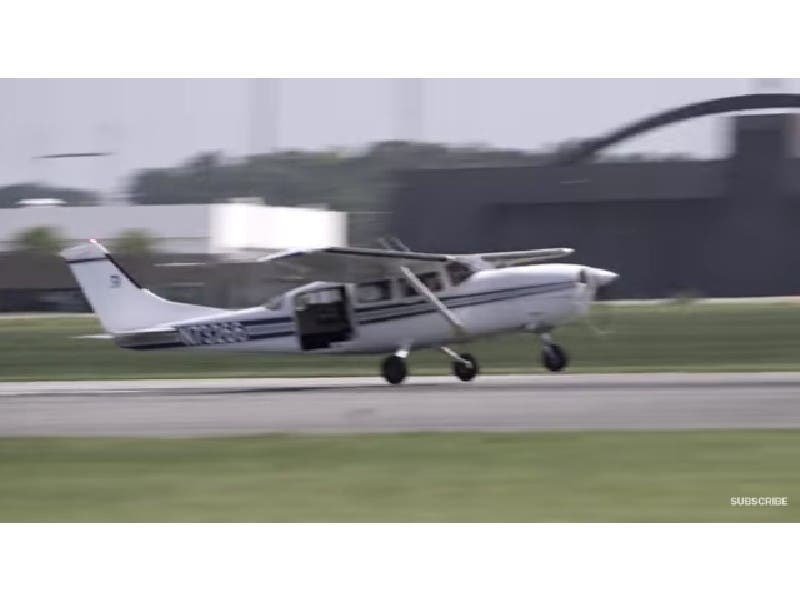
BALTIMORE, MD — After negotiating with the operator of a surveillance plane that prompted public backlash under the previous administration, Baltimore Police Commissioner Michael Harrison announced Friday that the plane would return to the skies over the city — in May 2020.
"I have always been and remain against the methodology of how the program forecast that it would reduce the murder rate, but not against the program and the plane itself," Harrison said.
The commissioner, who has described his approach to fighting crime as "data driven," said he disagreed with the way the plane previously had been introduced to Baltimore.
Find out what's happening in Dundalkfor free with the latest updates from Patch.
"It was done without informing the public about it," Harrison said.
In August 2016, it was revealed that the Baltimore Police Department authorized a private firm to use cameras mounted on a small plane for aerial surveillance of Baltimore City. The program began in early 2016, according to Capital News Service. Then-Mayor Stephanie Rawlings-Blake, the Baltimore City Council and state officials were not initially made aware of the program and were not notified until months after it began.
Find out what's happening in Dundalkfor free with the latest updates from Patch.
"Policies for the operation of it were not put into place. We want to do this the right way," Harrison said, "with strict measures of accountability and strict measures of transparency." Because the program had been set up in that way, he said, there was no way to determine its efficacy.
The aerial surveillance program will launch in May after public input sessions, according to the commissioner. The idea is to "align the program with the most violent months of the year," said Harrison, who oversees the police department for a city that has experienced more than 300 homicides a year since 2015.
"This is an important time to be able to try something that has not been tried so that we can do all that we can to preserve life and make Baltimore a safer place," Harrison said at a press conference Friday. "We will be the first American city to use this technology in an attempt to solve and deter violent crime."
He outlined these parameters for the pilot aerial surveillance program:
- After 120 to 180 days of piloting the program, the city will assess the data to gauge its effectiveness.
- "The scope will include murders, robberies and nonfatal shootings," he said of the use of the plane's footage. Carjackings would be included, since those are robberies.
- Police will not have live access to the footage. Instead, the company handling the plane will provide the police department with "evidence packages" to help "connect the dots on a case-by-case basis," Harrison said. The program will be used to investigate only past events.
- The program will not use taxpayer dollars. Harrison said he has talked with the Arnold Foundation about funding it.
- There will be a series of public meetings to educate residents about the plan and allow them to voice concerns and questions about proposed use of the plane in the pilot program.
- An independent entity will assess the data to determine whether the program has had a measurable impact.
"We will use the data collected from the pilot program to tell the citizens that it works or that it doesn't work," Harrison said, adding that part of the agreement with the operator, who was unnamed, was that it was unknown whether the plane would have an impact on crime.
The plane will not capture faces as it flies over the city, Harrison said. "It captures dots — where those dots move," he said, with one pixel per person.
The commissioner did not have information on the type of plane that will be used, including whether it will have a pilot. Because the aircraft has a "life span" and needs to refuel, he said that there would be a backup plane, so there will likely need to be multiple planes involved.
In 2016, Persistent Surveillance Systems owner Ross McNutt, whose company flew its plane over Baltimore that year for the Baltimore Police Department, told Bloomberg that the planes were equipped with cameras capable of 192 million pixels, or the equivalent of 800 video cameras at once. The plane could capture a 30-mile radius in a second, according to Bloomberg, which showed footage of a pilot inside the plane who could watch images on a monitor inside.
"We're essentially a Google Earth live with TiVo capability," McNutt said, "that allows us to follow people to and from crime scenes." McNutt said it costs about $2 million a year.
When asked whether the plane could help provide data in real time, Harrison said: "It could evolve to that. Right now, we want to pilot the program to test its efficacy and not predict its efficacy."
The Arnold Foundation is the only entity that has discussed funding the program, according to Harrison. Texas philanthropists Laura and John Arnold, who established the foundation in 2010, were also the ones who funded the program that was not disclosed to the public in 2016, The Baltimore Sun reported.
Related: Baltimore Police Must Report Surveillance Tactics, New Bill Proposes
Six homicides occurred between Tuesday and Thursday, according to police:
- A 50-year-old woman was found shot in the 1200 block of East Belvedere Avenue in northeast Baltimore, where officers were called at 9:35 a.m. Thursday to check on someone's well-being. She was pronounced dead at the scene.
- A man was shot in the chest multiple times in the 2300 block of East Northern Parkway at 6:02 p.m. Wednesday in the northeast district. He died at an area hospital.
- An 18-year-old was shot in the head at 9:50 p.m. Wednesday in the 1400 block of Union Avenue in the northern district. He died at the hospital.
- David Wilson, 26, of the 400 block of Fallsway, was killed Tuesday in the 900 block of Ensor Street.
- Keontay Porter, 18, of the 2800 block of Kirk Avenue, was killed Tuesday in the 3000 block of Southern Avenue.
- Sean Davis, 33, of no known last address, was killed Tuesday in the 1100 block of East 25th Street.
City Solicitor Andre Davis said that his office had no concerns about privacy in the context of the aerial surveillance program.
"The law department is entirely, entirely comfortable with the program," Davis said. "This is a pilot program designed to deter crime. And —as the commissioner just said — transparency, openness and full community engagement on the design and implementation of the program is what were going for."
Get more local news delivered straight to your inbox. Sign up for free Patch newsletters and alerts.