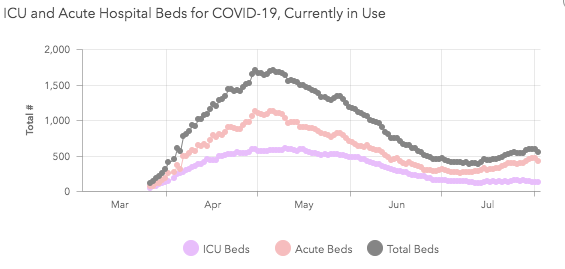
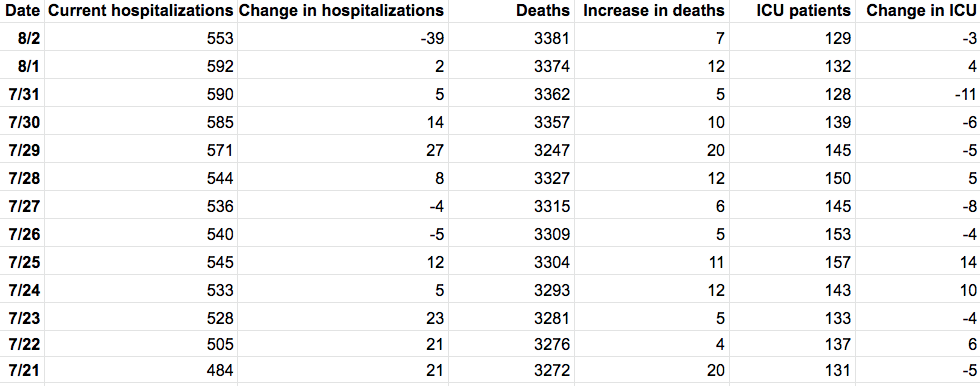
MARYLAND — Maryland saw the greatest daily decrease in coronavirus-related hospitalizations in nearly six weeks. On Sunday, the Maryland Department of Health reported there were 39 fewer hospital patients being treated for the virus than the previous day. This is the largest day-to-day decrease since June 23, when 41 fewer patients were reported than the day before.
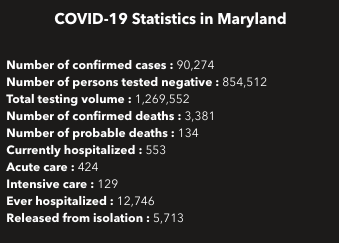
Intensive care and acute care unit patients with the virus have decreased by three and 36 in the last day, respectively, officials said Sunday.
The decrease in coronavirus-related hospitalizations comes after five days of increases.
Find out what's happening in Dundalkfor free with the latest updates from Patch.
The Maryland Department of Health reports there are 90,274 confirmed cases as of Sunday, and 3,381 people have died from COVID-19, the disease caused by the virus, across the state.
Courtesy of Maryland Department of Health.Courtesy of Maryland Department of Health.
Maryland Hospitalizations, Deaths
Here's a look at the data Sunday compared with a week ago: 13 more patients hospitalized; 72 deaths in the past week; 24 fewer patients in intensive care; and 37 more patients in acute care.
Table by Patch. Source: Maryland Department of Health.
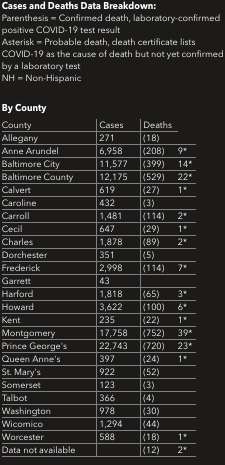
Maryland Coronavirus Cases By JurisdictionCourtesy of Maryland Department of Health.
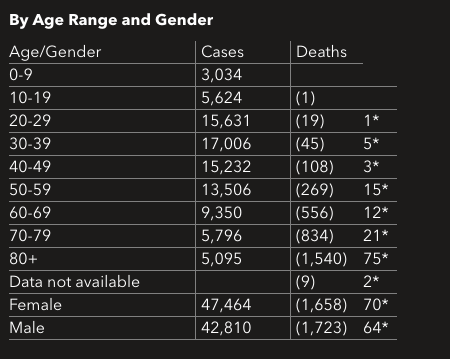
Maryland Coronavirus Cases By Age And GenderCourtesy of Maryland Department of Health.
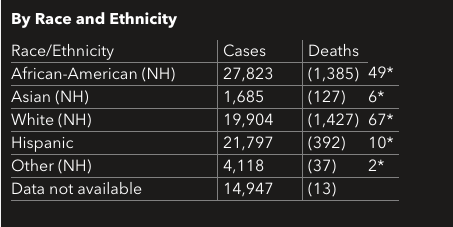
Maryland Coronavirus Cases By Race And EthnicityCourtesy of Maryland Department of Health.
Symptoms Of Coronavirus
Contracting the coronavirus can result in mild to severe illness. Older adults and those with underlying medical conditions, such as diabetes or heart or lung disease, are the most at risk of complications from COVID-19, according to the Centers for Disease Control and Prevention.
These symptoms of coronavirus can appear two to 14 days after exposure, according to the Centers for Disease Control and Prevention:
Fever or chills
Cough
Shortness of breath or difficulty breathing
Fatigue
Muscle or body aches
Headache
New loss of taste or smell
Sore throat
Congestion or runny nose
Nausea or vomiting
Diarrhea
Those who have trouble breathing, feel persistent pain or pressure in the chest, experience new confusion, have the inability to wake or stay awake or have bluish lips or face should get medical attention immediately, federal health officials say.
To prevent getting the illness, authorities advise staying away from those who are sick, keeping 6 feet of distance between yourself and others, washing hands with soap and water or hand sanitizer that is at least 60 percent alcohol, cleaning and disinfecting surfaces and wearing a cloth face covering when around others.