Neighbor News
Human Annoyance Falmouth Wind Turbines
When do omissions become lies ? State & local officials always knew about Human Annoyance noise ( low frequency noise )
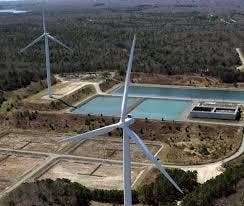
Human Annoyance Falmouth Wind Turbines
When do omissions become lies ?
State & local poilticians as well as semi quasi state agencies have always known about the low frequency noise from wind turbines.
Find out what's happening in Falmouthfor free with the latest updates from Patch.
Prior to building Falmouth Wind 1 it is was called Human Annoyance.
Falmouth residents need to be aware of problems prior to 2010 building of Falmouth Wind I.
Find out what's happening in Falmouthfor free with the latest updates from Patch.
The Massachusetts Clean Energy Center aka the Massachusetts Technology Collaborative was stuck with two Vestas V 82 megawatt wind turbines in 2005. A study was done for Mattapoisett in 2005 long before the Falmouth wind turbines using much smaller kilowatt turbines.
The Mattapoisett residents in 2005 were afraid the state agency would change from smaller kilowatt turbines used in the their study to much larger megawatt turbines because the Massachusetts Clean Energy Center had two 1.65 megawatt Vestas wind turbines they couldn't sell.
Note : (Falmouth later had a study done using smaller kilowatt turbines that were switched out to the larger megawatt turbines in 2010) This is what the Mattapoisett residents feared would happen in 2005. The fears were justified when they switched the turbines in Falmouth. Aka part of the play book.
The reason for the mistrust over the wind turbines in Mattapoisett was a 23 page report produced by the state agency that had what the agency called "mistakes" on almost every page and some pages had up to three mistakes.
An example of one mistake was the chief nesting area of all the Roseate Terns in North America was less than one half mile from the turbine location. The other "mistakes" included right of ways and setbacks etc.
The plans to build wind turbines in Mattapoisett were dropped and the agency went on to build the turbines in Falmouth.
One important factor from the 2005 Mattapoisett study has been overlooked for years. On page 14 of the Mattapoisett 2005 wind turbine study is a section B below along with the link. The section B. Human annoyance section was of major concern to the Mattapoisett residents.
Section B. Human Annoyance was not included in any of the Falmouth wind turbine studies and was never used again in any wind studies after the failure to build wind turbines in Mattapoisett.
My opinion is the reference to Human Annoyance was dropped from the Falmouth studies because of the objections to the turbines from the Concerned Citizens of Mattapoisett because of the term Human Annoyance in 2005 which today has become know as the low frequency noise from the turbines. Aka prior to the installation of the Falmouth wind turbines they were aware of a noise called Human Annoyance.
The Town of Falmouth should be asking why after what happened in Mattapoisett was the reference to Human Annoyance dropped from the Falmouth wind studies. Did they drop the reference to Human Annoyance because it caused to many problems with neighbors worried about this type of noise ?
The next question is if the reference to Human Annoyance been included in the Falmouth wind turbine studies would the town ever built the megawatt turbines in the first place ?
Today its clear why the reference to Human Annoyance was dropped from the Falmouth wind studies. Residential home owners around the Falmouth megawatt turbine and other turbines around the state describe the noise as torture.
Falmouth is ground zero for poorly placed wind turbines in the United States
Here is the reference material : The material clearly describes two distinct types of noise. Regulatory & Human Annoyance
On page 14 of the Marion ,Mattapoisett and Rochester wind test study
-Noise
Noise considerations generally take two forms, state regulatory compliance and nuisance levels at nearby residences:
A. Regulatory compliance: Massachusetts state regulations do not allow a rise of 10 dB or greater above background levels at a property boundary (Massachusetts Air Pollution Control Regulations, Regulation 310 CMR 7.10). This sound level is very unlikely to be a reached incase at the sites we examined.
B. Human annoyance: Aside from Massachusetts regulations, residences must also be taken into consideration. Any eventual turbine would be sited such that it would be inaudible or minimally audible at the nearest residences. At this stage, to check for “fatal flaws,” a rule of thumb can be used: to minimize possible noise impacts,site wind turbines at least three times the blade tip height from residences. Distances from mixed-use areas may be somewhat shorter.