Community Corner
Here's Why There Are Dead Fish Lining Cutler Pond
Dozens of fish have turned up dead at the edge of Cutler Pond along the border of Newton and Needham. Residents want to know why.


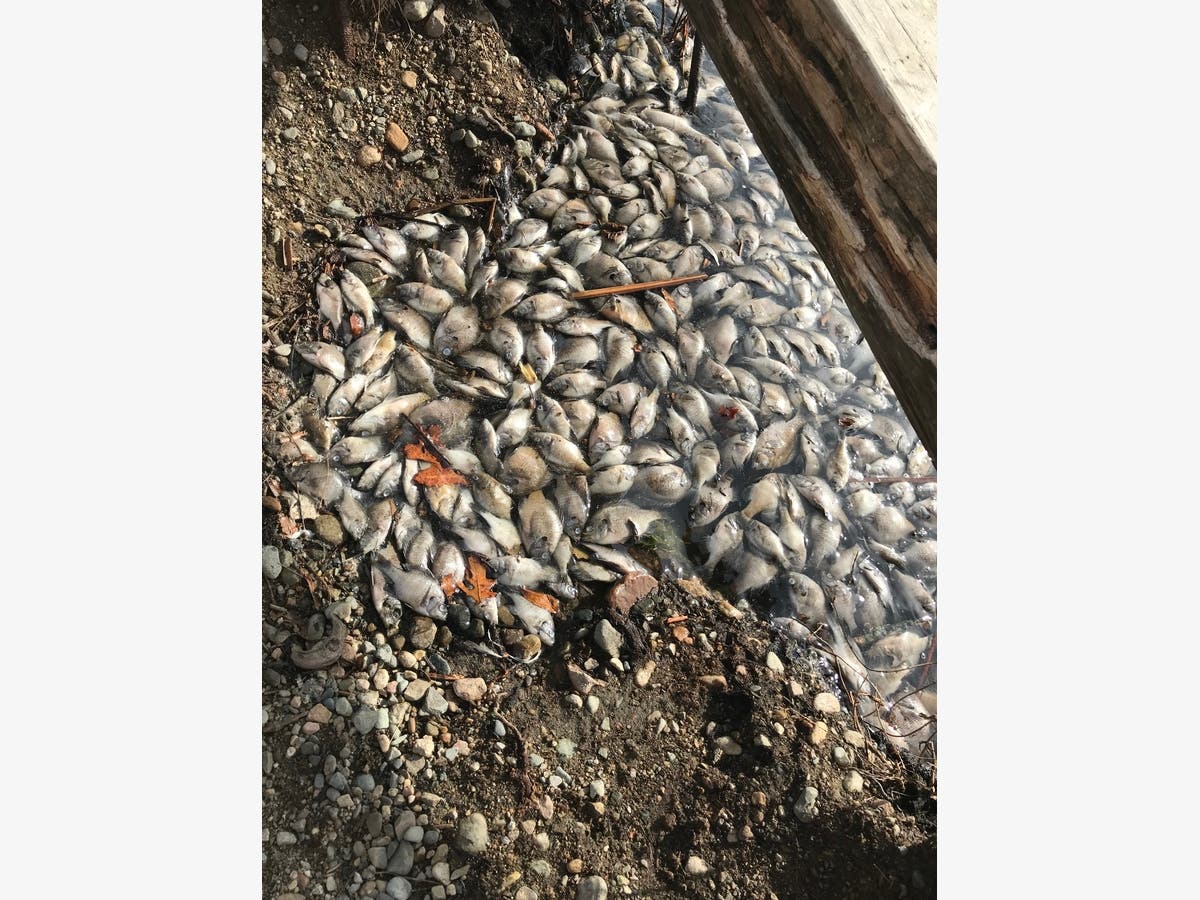

NEWTON, MA — Dozens of fish have turned up dead at the water's edge of Cutler Pond near the border of Newton in Needham. Residents were posting photos of what appeared to be dead sunfish floating near the water's edge Tuesday on social media, as Village 14 first pointed out.
MassWildLife said they received a report of the fish kill Tuesday. But officials say they don't think it was a man made or pollution related event.
"There were more than 200. There was a ton of them along the border of the lake and in the mud," said Jenny Lipoff, a senior at Newton South who went to the park around 2 p.m.
Find out what's happening in Newtonfor free with the latest updates from Patch.
At first she said she thought they were pretty pebbles near the water's edge, but as she got closer joggers and walkers pointed them out, she said. It seemed like anyone who was there was talking about it.
"It was just really sad. I thought it was global warming or climate change or something that has to do with that," said Lipoff.
Find out what's happening in Newtonfor free with the latest updates from Patch.
"Generally these kinds of situations are natural occurrences, not that it's not disturbing because it certainly can be... But these do happen for reasons other than pollution, which is natural to think," said spokesperson Marion Larson.
A woman called the MassWildLife Ayer office at 8:30 a.m. to report that while she was walking around the pond that morning she saw about 50 fish round and flat had washed ashore.
"This is one of those shallow ponds, which is even more vulnerable to oxygen depletion when you have icing," said Larson, who said the role of her agency is to make an initial determination about whether a fish kill was natural or pollution related.
It could be a situation where the fish died weeks ago when the ice was forming and depleted the oxygen. Then, once the ice melted, the fish just came to the surface. Or it might have had more to do with the warm weather today coming off the cold.
But after the department received the woman's call, they determined it was a natural event.
"This is what we would term a natural winter fish kill. Meaning this occurred naturally, it's not a pollution or a toxin event," she said, adding that she's happy the woman picked up the phone and called.
Fish kills are not as uncommon in the spring as one might think, according to Larson.
According to the state website, the majority of fish kills turn out to be caused by a natural event. Natural fish kills are generally the result of low dissolved oxygen levels, spawning stress or fish diseases. And low oxygen can spike during severe winters or late spring or early summer.
Weather alters chemical and biological processes, often resulting in a winter fish kill.
Sudden warmer temperatures often cause similar alterations. As temperatures rise, the water cannot hold as much oxygen as when it was cold. Aquatic plants also increase their oxygen consumption. In turn, oxygen levels in shallow, weedy ponds decrease. If levels fall below that required for fish to survive, it can become critical, according to the state website.
Larson said no matter the reason for the kill, it helps when residents report fish kills
"We always want that information because you never know. Once we find out what kind of fish and what's involved we can determine whether we need to make a visit," she said.
Now that the organization has determined that it was a natural event the fish will hang out until someone comes along and eats them or residents take it upon themselves to clean it up. "There won't be a visit there because the information that we got from the citizen was sufficient that this was a natural case," she said.
MassWildLife does partner with the Department of Environmental Protection and other agencies, so if there was a situation that they thought warranted a visit, they'd alert that other agency, which would go out and test the water or fish.
Larson said anyone who comes across something like this should get in touch with the environmental police.
"We're really very grateful for people to report these either to our regional offices or to the environmental police 24/7 line. We really want to encourage that," said Larson.

Village 14 was the first to blog about the strange sightings.
How to report a fish kill?
Call the Massachusetts Environmental Police Main Office
MEP Main Number Dispatch(800) 632-8075
Updates to come.
(For more information on this and other neighborhood stories, subscribe to Newton Patch to receive daily newsletters and breaking news alerts.)
Photos courtesy of Jennifer Lipof.
Get more local news delivered straight to your inbox. Sign up for free Patch newsletters and alerts.