

For a number of years, the City Marshal in his reports documented inadequate police facilities.
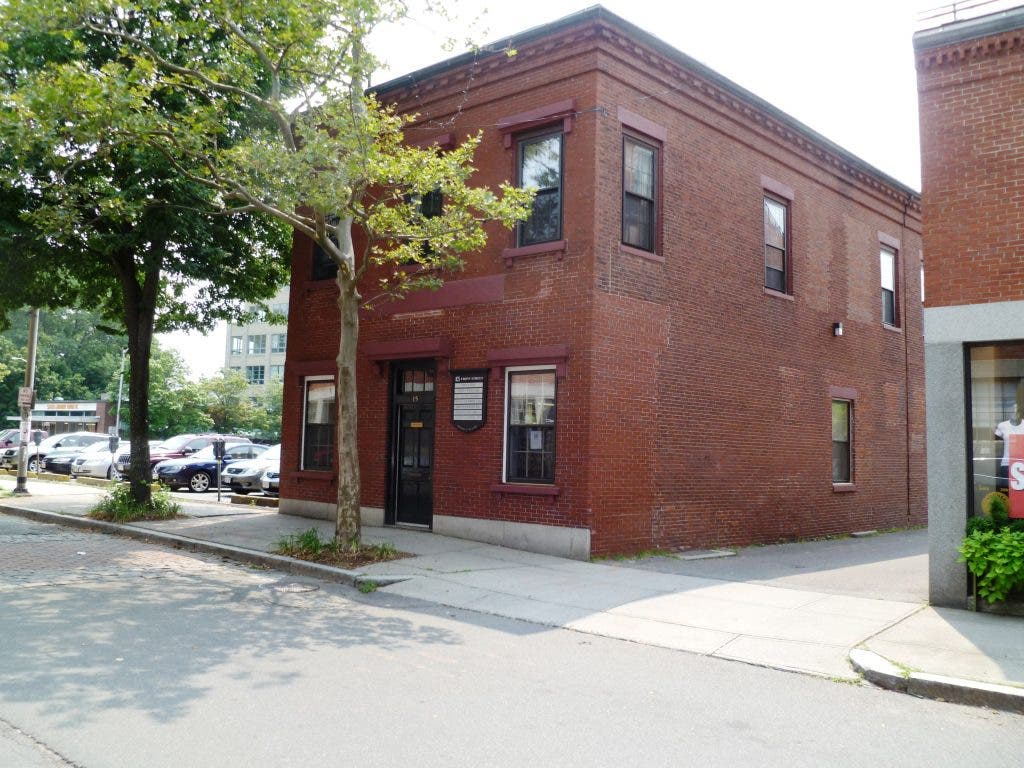
The rented space used was too small and without adequate ventilation or heat in the winter. He considered the situation as unsafe for his police and the people they served. In 1860, Salem's city government responded by building a police station at 15 Front St.
In those days, before state social services, if someone was homeless the first stop was the police where they might find a bed for the night. In effect, the police, in addition to all of their other duties, also ran a shelter. In 1859, 674 persons were furnished with lodging by the night watch. According to the City Marshal’s Annual Report, the majority of these people were seeking work, while others were seeking relatives or friends and still others were considered wanderers not really seeking employment and were treated as vagrants or paupers.
Find out what's happening in Salemfor free with the latest updates from Patch.
In 1859, the City Marshall proposed that the police force be reorganized as a police department that would combine the then separate evening patrol and night watch under a captain and lieutenant of police who would work in conjunction with the chief of police.
At the time, there was a marshal and two assistant marshals during the day with six to 12 patrolmen on the evening patrol, then a dozen night watchmen. There were also officers hired for special events such as the Fourth July and other gatherings.
Find out what's happening in Salemfor free with the latest updates from Patch.
This state of the art building housed both the police department and the police court. On the first floor, in addition to the Watchmen’s Room, there were 10 cells for the detention of prisoners each measuring 6.5’ by 4.5’ furnished with iron bedsteads and iron doors.
Also on this floor were three rooms about 9’ square furnished with wooden bunks for the accommodation of destitute persons applying for lodging. In the lower end were the necessary water appendages and conveniences.
On the second floor front was the Marshal’s Office, The Judge of the Police Court’s room, a clerk’s office and the Court Room — 34’ by 22’ occupied the southern end of this story.
By combining the jail with court, prisoners no longer had to be transported to jail while awaiting trial, thus saving the city money.
The addition of the police station and reorganization did much to increase the professionalism and stature of the police department.
While there are many memorable stories of the old police station, one that stands out is the visit of Harry Houdini, the great escape artist who has been the subject of books and movies over the years.
In 1906, Houdini toured with his show in New England. On April 16, 17 and 18, he came to Salem where he performed to sold out audiences at the Salem Theater. As was his custom, he sought challenges from the local police departments.
In Salem, the chief of police challenged him to escape from a locked cell in the police station. Naked, with three pairs of handcuffs and two pairs of leg irons on, Houdini was locked in the middle cell. In 13 minutes, Houdini had freed himself, unlocked his cell and the cell where his clothes were.
Then, he dressed, unlocked all the cells and handcuffed himself to a prisoner, left the building and appeared at the window of the room on Front Street where the City Marshal and other dignitaries were waiting. This free performance no doubt helped his theater sales and has been an enduring tale for many tours of Salem.
This building remained the police station until 1913, when a new, larger police station was built at 17 Central St. The old police station was then converted to commercial use in 1914/1915. In
1915, J.J. Welch Construction Company took over the building. J.J. Welch Construction remained at this address until 1990.
During the years while J.J. Welch was the principal tenant, the building also housed a number of other businesses both on Front Street and at
the rear of the building. In 1920, the city directory also lists B Goodwin Building Movers as well as Berkeley Press in the rear.
In 1922, The Salem Public Market was briefly here. In 1924, the Gazette Press was located in the building rear.
In 1929, the Essex Supply Company was located on Front Street.This company sold election supplies.
In 1935, Share’s Stationery opened on Front Street. Share’s remained in business here until 1972.
Many Salemites may recall Mr. Share’s store and how it almost had a magical quality to it. I recall going there as a young child for the first time and being fascinated by the sheer volume of supplies stacked
everywhere from floor to ceiling with narrow aisles.
Walking into the store amidst the tinkling bell that announced a customer, you would cautiously make your way down the main aisle
toward Mr. Share, who sat on a chair at the end of the aisle. I recall him as being tall, thin and elderly.
Having been admonished beforehand by my mother not to touch
anything, I could readily realize why I was warned. All the boxes and piles of supplies looked very precarious. Walking down the aisle was like walking in a paper and cardboard tunnel. Boxes and supplies were everywhere, nothing seemed organized.
Reaching Mr. Share on that first visit, he looked up from a book on his lap and greeted us. He knew my mother, which I took for granted. Everyone seemed to know everybody in those days. Salem, for all its stores and businesses, was still a small town at heart. Where today
there are pockets of familiarity, back in the 50s, it was the prevailing
atmosphere it seemed to me.
In response to my mother’s request for a receipt book for some school group or sodality, I saw the real magic. Mr. Share, without moving from his chair, reached a hand into some amorphous pile of supplies and handed my mother just what she had requested. I was amazed. Over future visits to the store it seemed he was always able to reach out without leaving the chair and find whatever was needed. He seemed to be a wizard.
With a twinkle in his eye, I recall his asking me on my first visit if I knew how to write. Being about five years old, I shook my head
and crowded closer to my mother. Mr. Share then said: “We’ll have to do something about it,” and tousled my hair saying, “ I bet you can write as well as any doctor, practice with this." He handed me a shiny yellow pencil. I cherished that first pencil of my own.
In thinking about this so many years later, I wondered if I was embellishing a memory. To my good fortune, I met a friend, Pam Greaves, at the Farmers' Market recently and being only steps from the old store, we reminisced about old Mr. Share. She had remarkably similar recollections and also recognized his magic. I thank her for that confirmation and her insights into what is becoming old Salem.
In addition to Share’s Stationery and J.J. Welch Construction, there were a number of other tenants in the rear of the building. Starting in 1935, Wilson Printing was there until 1951 when Cassino Press took
over and ran their business there until the 1960s.
By 1973, the lone tenant for the building was J.J. Welch Construction, which became the Welch Group in 1989. In 1991, the building was
listed as vacant. At that time it had been converted into an office building. From 1999 to the present, it has housed a number of professional offices for attorneys and legal services. It also houses many memories for Salem.