Community Corner
Hot Car Deaths and What the Auto Industry Is Doing About Them
Advocates have pressured the NHTSA for a decade to require rear seat reminders to help stem hot car deaths; one 2017 model has technology.


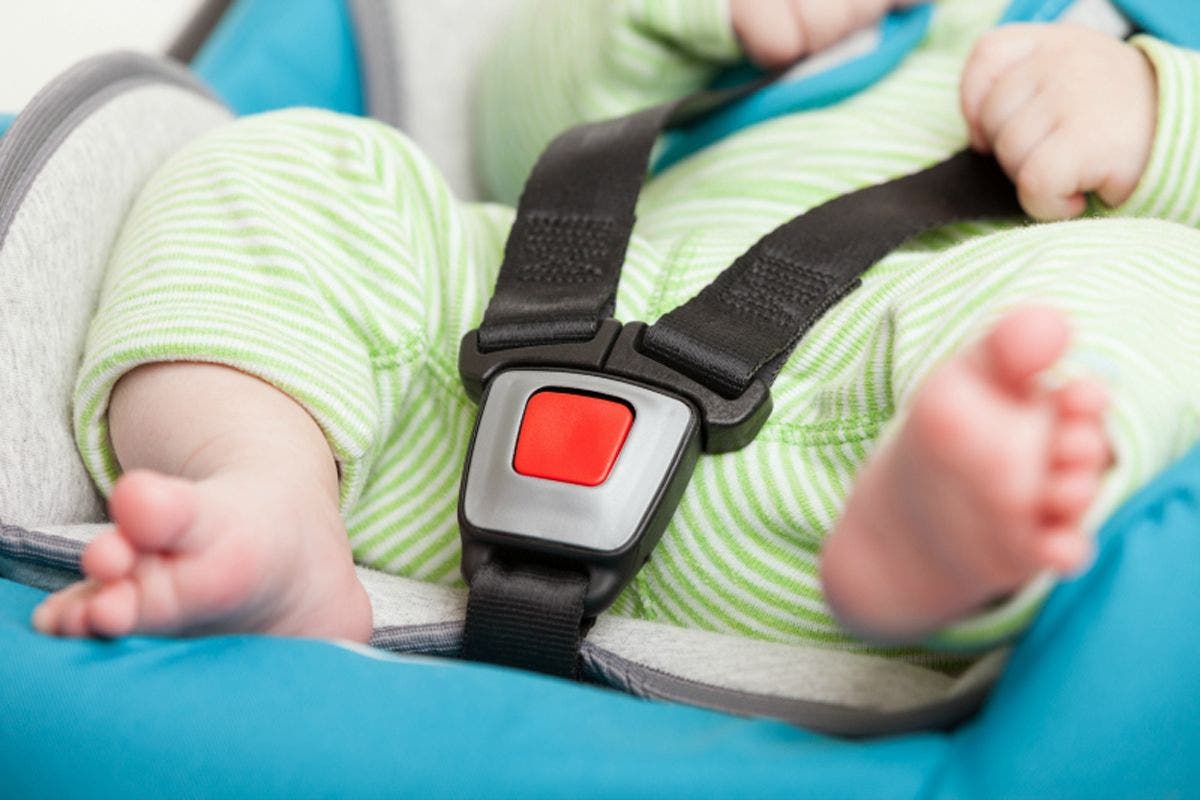
On Aug. 17, a tearful Milford, Michigan, woman called police to explain she had forgotten a toddler in her care and left the 2-year-old locked in a hot car for up to an hour while she and her 12-year-old shopped. The temperature was around 85 degrees outside and many degrees hotter inside the automobile, and when the pair returned, they discovered they had left the by-then distressed, crying boy behind.
A day later and a county away, two children showing signs of heat-related distress — a 2-year-old and a 4-month-old — were rushed from a Fenton apartment complex to Hurley Medical Center after they were left in a hot car for about half an hour.
Two brothers who came to the rescue of the frantic great-grandmother had to break out two windows to save the children about 4:30 p.m. on Aug. 18. One of them had “started convulsing and having seizure-like symptoms,” one of the brothers, Chris Hasman, told WJRT-TV in Flint, “so we decided we had to bust out the window.”
Find out what's happening in Grosse Pointefor free with the latest updates from Patch.
Police in Fenton say the incident was a tragic accident. The great-grandmother reportedly said she had left the keys in the car while she was securing the boys in their safety seats, and the door locked when she closed the door. In the Milford case, the woman faces possible charges and a child abuse investigation. Police want to know why the mother of five and the toddler’s guardian waited until she had returned home before reporting what had happened, the Detroit Free Press reported. Police are investigating.
In both cases, the children recovered, unlike 27 children who have died of in-vehicle heatstroke in 2016. On average, 37 children a year perish after being left in hot cars. It happens quickly — after just minutes in a hot car, a child’s core body temperature rises to 105 degrees, and their bodies begin to shut down. It also happens across the socioeconomic spectrum, a sign of America’s busy, fast-paced society.
Find out what's happening in Grosse Pointefor free with the latest updates from Patch.
The problem with hot car deaths can be traced back to the introduction of passenger-side airbags in the 1990s, the Associated Press reported, citing data from the National Highway Traffic Safety Administration and San Jose State University.
A rise in airbag-related fatalities prompted changes in state laws to require that child safety seats be placed in the back seat, where they are less noticeable by parents and caregivers. But as airbag-related fatalities decreased, hot car deaths increased. At least 775 have died of vehicular heat stroke since 1990, according to noheatstroke.org.
The group Kidsandcars.org has for more than a decade lobbied the NHTSA to pressure the automobile industry to install sensors and other technology, but “they are not working toward a solution,” Janette Fennell, president of the advocacy group, wrote in a July op-ed that appeared in Time magazine.
“Countless inventors have stepped up offering remedies,” Fennell wrote. “Our vehicles remind us to buckle our seat belts, turn off the headlights and take our keys with us. Though while that proves that auto manufacturers realize humans need reminders, those companies have not implemented a sensor and alert system to protect the most precious passengers — our children.”
Noting statistics showing about half of the children under age 14 who die of in-vehicle heatstroke are simply forgotten, Detroit-based General Motors became the first U.S. car manufacturer to include backseat reminder technology in one of its vehicles — the 2017 Acadia sports utility vehicle. The reminder sensor also can cut down on car larcenies; about 23 percent of larceny in 2014 was from a motor vehicle, according to the FBI.
“Our customers live busy lives with demanding schedules, and the rear seat reminder helps protect the things we care about most,” Tricia Morrow, GM global safety strategy engineer, said in a statement. “Whether it’s your lunch, laptop, pet or most importantly, your child, it’s easier than it seems to forget what’s in the back seat when moving between life’s events. With this new feature, we are leading the charge to address this ongoing problem.”
The sensor in the Acadia monitors the vehicle’s rear doors and is intended to activate if either of the doors was opened or closed within 10 minutes of the vehicle being started, or if they were opened and closed while the vehicle was running.
Under these circumstances, the next time the vehicle is turned off after a door is opened, the Acadia will sound five audible chimes and display a message in the in-dash driver information system that reads, “rear seat reminder/look in rear seat.”
Though back seat reminders can help, technology alone won’t alleviate hot car deaths, said Kate Carr, president and CEO of Safe Kids Worldwide.
“We must always remember that the safest way to protect a child from heatstroke is to never leave a child unattended in a vehicle,” Carr said in a statement.
In her Time op-ed, Fennell said “parents and caregivers must know about how an overtaxed brain can fail.”
“And childcare providers need to call — and not just leave a message — if the child does not show up at daycare as expected,” she wrote. “Most important, drivers must get in the habit of checking the backseat every time they arrive at their destination: ‘Look before you lock.’
“One way to do this is to put their cellphone, handbag or employee badge in the back seat with the child to ensure they always open the back door when they arrive at their destination.”
Another reason children die in hot cars is that vehicles are an attractive place to play.
They can become overcome by the heat and quickly become disoriented inside a a hot car, Fennell wrote, so it’s not only important for parents and caregivers to lock vehicles and keep the keys out children’s reach, but also to check vehicles and their trunks first when they realize a child is missing.
Image via Shutterstock
Get more local news delivered straight to your inbox. Sign up for free Patch newsletters and alerts.