Health & Fitness
Victory Over Prostate Cancer for This North Brunswick Man
Bob Jones met a group of men fighting prostate cancer, just like him. Here's why they call themselves The Brotherhood of the Blue Bottle.


North Brunswick, NJ - Bob Jones hadn't had a prostate cancer screening in a few years.
Sure, this North Brunswick resident, then 65, knew it was important. And the PSA (Prostate-Specific Antigen) exam is only a simple blood test, one that most older men are supposed to get done every year. But Jones, who commuted daily into Manhattan for his banking job, was busy.
"I had skipped it for three years. And sure enough, when I did do the test they found something," he told Patch. "Anything above a 4 is bad. And I was a 7.9."
Find out what's happening in East Brunswickfor free with the latest updates from Patch.
A follow-up biopsy of his prostate confirmed it: Prostate cancer.
Jones' urologist offered several treatment options: The first was surgery, to have the whole prostate gland removed. Or, radioactive seeds could be implanted in the prostate, which kills the cancer cells, but comes with side effects. Third, he could have IMRT radiation, which involves up to 40 visits. Fourth, he could undergo CyberKnife, which is only five visits, but involves intense radiation.
Find out what's happening in East Brunswickfor free with the latest updates from Patch.
Jones wasn't satisfied with any of those options. So he started doing his own research. "I knew there was some center over here in Somerset that just opened — a proton therapy center," he said. "It's somewhat different than other types of radiation. They generate these protons that go in, hit the target and then stop."
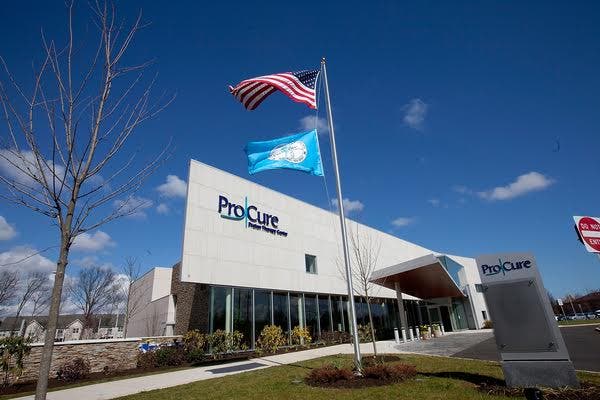
He was thinking of the ProCure Proton Therapy Center in Somerset. It had just opened in 2012, and was brand new at the time. Proton therapy uses radiation, but instead of x-rays, it uses protons, a positively charged particle of matter. At high energy, those proton molecules can destroy cancer cells. At the time, the next closest proton therapy centers were in Philadelphia and Boston.
"I went and toured the center, met the people and decided this was the way I wanted to go," said Jones. "I told my urologist I chose that method, and he actually wasn't all that familiar with it. Most doctors know about the traditional methods, but not this."
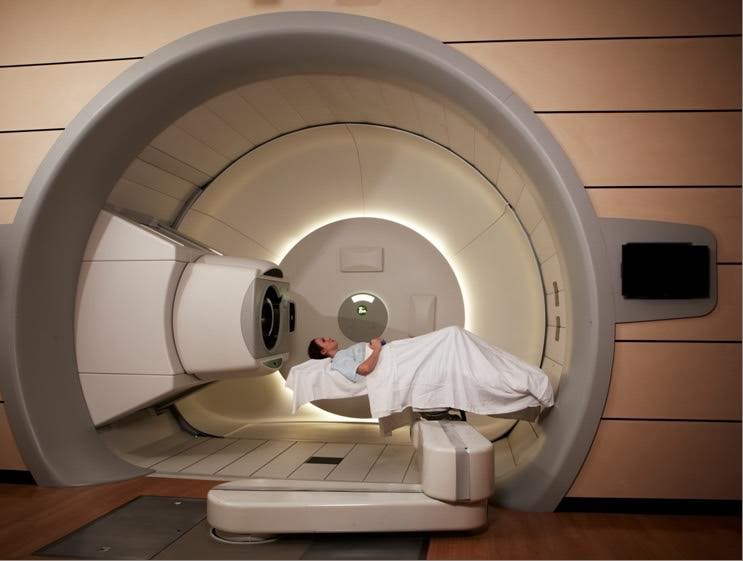
He started treatment in March of 2012: It was 44 treatments total, and he finished in June of 2012. Because the Center was so new, Jones was one of the first patients they treated. At every visit, he would sit in the waiting room with a dozen other men around his age, all of them required to guzzle 18 ounces of water out of a blue bottle as they awaited treatment. The water fills up the bladder, which conveniently moves it out of the way for the radiation beam to target the prostate.
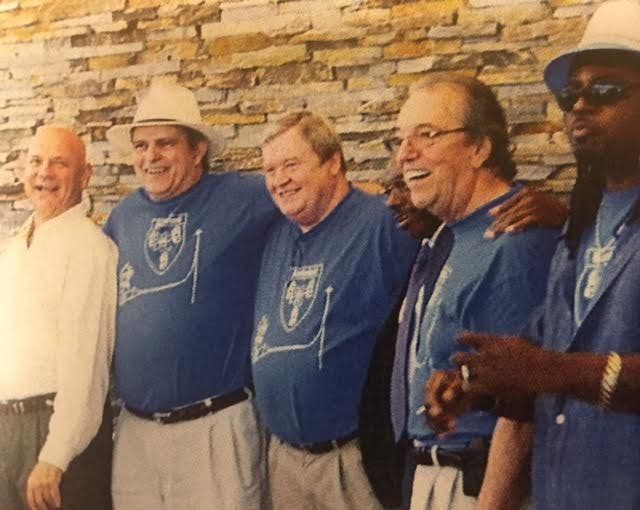
"The center was so new at that time that construction was still going on around us. We got to talking and every half hour one of us would get up and go in for treatment," he said. "We all really got to know each other sitting in that waiting area. A sort of bonding took place."
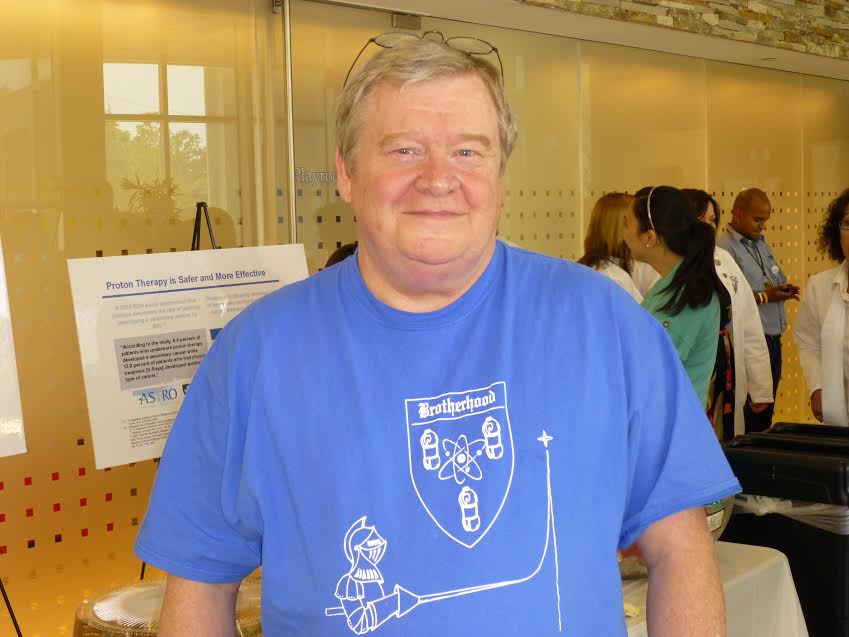
They even gave themselves a nickname: The Brotherhood of the Blue Bottle. One of the men's wives had T-shirts made, a knight with a lance, which represented the strength of the radiation beam.
And then the results came back: "My first PSA test after treatment was 3.6. I was shocked," said Jones. Six months later? It was down to 1.8, then .8. At one point it was as low as .4. Today, Jones' PSA levels hover around .14.
His cancer is "absolutely in remission." The treatment had few side effects, except for fatigue. Jones still is very close with the other men in the Brotherhood of the Blue Bottle. When other patients finish their 44 rounds of treatment, the Center holds a small "graduation" ceremony for them. Jones, now retired, always tries to be there.
"I go just to encourage them to stay positive. I go and say, 'Just watch how well this works for you,'" he said.

Proton therapy is used to treat not just prostate cancer, but brain tumors, tumors along the spine and with increasingly positive results, breast cancer. Last December, Patch wrote about this little boy with brain cancer who traveled from Hawaii to receive proton therapy at the ProCure Center. The treatment is expensive, but many insurances do cover at least part of the cost. And proton therapy is growing rapidly: ProCure used to be the only facility in New Jersey, but Robert Wood Johnson University Hospital in New Brunswick just opened their new center this year.
And what's Jones' advice for other men who may be faced with a scary diagnosis like prostate cancer?
"You have to do your own research; you can't just depend on a doctor's recommendation," he said. "Every guy I met at ProCure, I would say 99% of them found the facility on their own. It wasn't from a doctor's recommendation. You have to do the research and learn what options are available to you."
Get more local news delivered straight to your inbox. Sign up for free Patch newsletters and alerts.