Community Corner
Letter to the Editor: Oppose the National Park Service's Plan to Build New Maintenance Building at Sandy Hook
Plans for a new maintenance facility runs counter to the mission of the National Park Service, and will impact natural habitat.
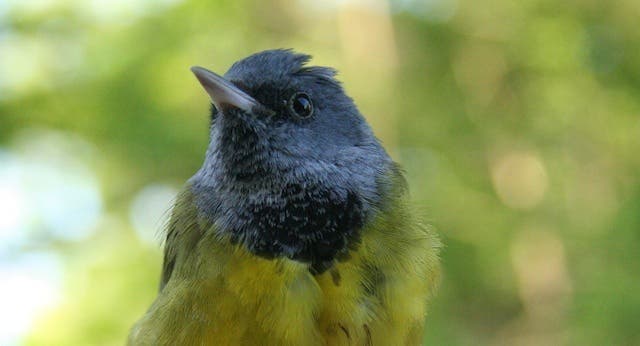
I have recently been made aware of the National Park Service’s plan to construct a new maintenance facility at Sandy Hook, New Jersey.
The National Park Service plans to construct a new maintenance facility at Sandy Hook, New Jersey. The Park Service puts forth the rationale that the construction of such a facility is for “sustainable maintenance”, perhaps the individual given the task of devising this plan of action should be made aware of what sustainability actually refers to. In order to construct this new facility a large swath of woodlands, part of the largest contiguous forest on Sandy Hook will have to be destroyed. This is certainly not in keeping with true sustainable practices as they are geared towards preservation and conservation of habitat and resources. Construction of a large facility runs counter to the Park Service’s mission:
“The National Park Service preserves unimpaired the natural and cultural resources and values of the national park system for the enjoyment, education, and inspiration of this and future generations. The Park Service cooperates with partners to extend the benefits of natural and cultural resource conservation and outdoor recreation throughout this country and the world”
Find out what's happening in Middletownfor free with the latest updates from Patch.
The particular area of forest that the Park Service plans on destroying runs from the north end of the Boy Scout Camp (from the “rusty barn”) north to where the multi-use path (MUP) joins the unused portion of Randolph Drive, and west to Hartshorne Road. This particular area is heavily utilized by individuals and groups that visit Sandy Hook to enjoy the natural setting, in particular the abundance and diversity of bird and insect life. On a personal level, we (I and Dr. Richard Veit) have been studying the importance of Sandy Hook as an important stop-over site for migratory birds since 2009, utilizing these particular woodlands as a study site. In this time we have banded over three thousand birds, including Golden-winged Warbler (Vermivora chrysoptera), an endangered species in New Jersey, and numbers of Bicknell’s Thrush (Catharus bicknelli), listed as a species of special concern by National Audubon and the International Union for Conservation of Nature (IUCN). We have also encountered other species in these woodlands that are endangered or threatened in New Jersey, such as Barred Owl (Strix varia), Long-eared Owl (Asio otus),with several other Golden-winged Warblers observed but not banded. In addition to the above species we have discovered that these particular woodlands harbor a large wintering population of the migratory Saw-whet Owl (Aegolius acadicus), a wintering population we have not experienced elsewhere in New Jersey.
Sandy Hook is an important migratory stop-over site for hundreds of species of migratory birds, many of which have experienced significant population declines due to loss of habitat; destruction of forested habitat on Sandy Hook will further compound the negative impacts these species face. During migration thousands of landbirds set down on Sandy Hook after a long night of migratory flight, these birds require a location to rest, and to refuel, in order for them to continue to their breeding grounds or wintering grounds. The forest tract that is destined to house a new maintenance facility is one of the most active locations for migratory birds on Sandy Hook. One of our goals was to investigate weight change in migratory birds that we recaptured on Sandy Hook. Over the years we have found that the majority of birds recaptured gain weight, and exhibit an increase in subcutaneous fat. Many studies have shown that many migratory species will not continue their journey until they restore some of the fat reserves they have lost over the course of a long flight. These woodlands serve as a site for migratory birds to stop, feed, and gain energy reserves to continue migration; the loss of habitat in this area would certainly have a negative impact on the stop-over ecology and survivorship of birds, including species that are threatened, endangered, or of special concern.
Find out what's happening in Middletownfor free with the latest updates from Patch.
We have recently discovered that the woodlands where the new facility is to be placed are an important stopover site for Bicknell’s Thrush, a Neotropical migrant of highest conservation priority in the Northeast U.S. During the 2014 field season we have banded six Bicknell’s Thrush, a total of nine since 2010. I believe the increase in numbers in 2014 is due to increasing our effort during the latter part of May and early June, a time when migration tends to slow, but evidently Bicknell’s Thrush are still moving. Banding six individuals may seem insignificant, but populations of Bicknell’s Thrush are very low, due to a very limited breeding range and specialized habitat requirements, and they are rarely encountered or banded outside of their breeding range. Banding six in one season, within these very woodlands, indicates that these woodlands are crucial to the stop-over ecology of Bicknell’s Thrush.
I find it puzzling as to the proposed locations of the new maintenance facility. One of the rationales given for creating a new facility is due to damage to the North and South maintenance yards during Hurricane Sandy. However, the very area that the new facility is destined to be placed was also inundated by the storm surge from Sandy. The top of the multi-use path, and part of the roadway, required major repairs as the flow of water washed away a large area of asphalt, and left a large hole. The woodlands on both sides of the non used portion of Randolph drive (north of the maintenance building on Randolph) were flooded. This is still evident by the number of dead American Holly trees in this area, and it was clearly evident when we began our 2013 field season as there was still a debris field located on parts of the road, and debris fields in the woodlands as well. Destroying habitat for a new facility in an area that is also prone to flooding seems a bit dubious.
Why is there a need for a new facility that requires the destruction of habitat? Sandy Hook has many regions that are already developed and can be converted to a maintenance facility, or developed areas can be expanded upon. Although the South maintenance yard evidently experienced damage, it is further above sea level than the area where the new building is proposed. Does management believe the best course of action is to spend hundreds of thousands of dollars (probably more) on a new facility when Sandy Hook will always be at the mercy of storms that have the magnitude of a Sandy or an Irene? Continued construction of any hardscape on Sandy Hook is folly, and a complete waste of taxpayer money.
What was the major damage caused by the flooding from Sandy? The sewage plant off of Atlantic was hit very hard, are there plans to move that facility? One of the major economic losses to the Park Service was the loss of vehicles and equipment that were left in areas prone to flooding. Given the predictions of Sandy, and a fairly lengthy time to prepare for the storm, wouldn’t it have been a wise management decision to relocate as many vehicles and equipment to higher ground within Sandy Hook, or outside of Sandy Hook? It was clearly negligent to leave all that equipment and vehicles to the elements, knowing the likelihood of flooding from past storms over the years.
The construction of a new maintenance facility runs counter to the mission of the National Park Service, especially when destruction of a unique natural habitat is involved. Many visitors to Sandy Hook come for the peaceful surroundings of the natural habitat, and to enjoy the wildlife that exists there. The particular area that the new facility is destined to be built is heavily used by park visitors. The woodlands serve an important ecological role for migratory birds, many of them long-distance Neotropical migrants that rely on these woodlands as a stop-over site for rest and refueling. The expenditure of a great deal of money on a facility that is destined to be impacted by future storms is a tremendous waste of taxpayer money and must be completely rethought.
I invite members of the public to voice their concerns regarding this issue to the park. Comments can be made by visiting the Park Service’s website:
Sincerely,
Thomas Brown