Politics & Government
Dakota Pipeline Protests: 76 Police Agencies Have Visited Standing Rock, ACLU Says
ACLU: "How many law enforcement agencies does it take to subdue a peaceful protest?"


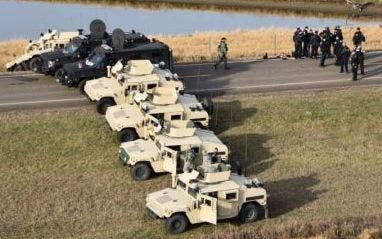
“How many law enforcement agencies does it take to subdue a peaceful protest?”
That’s the question that the ACLU posed Wednesday when it declared that officers from as many as 76 law enforcement agencies have assisted with crowd control at the ongoing protest at Standing Rock Reservation in North Dakota.
Controversy over Energy Transfer Partners’ Dakota Access Pipeline – which would run through several states including an area near the Standing Rock Indian Reservation - has sparked a protest at the site that has raged since early this spring.
Find out what's happening in Montclairfor free with the latest updates from Patch.
So far, the conflict has resulted in a massive police presence and more than 100 arrests.
- See related article: North Dakota Pipeline Protests: What You Need To Know
The ACLU based its number on data from the Morton County Sheriff’s Department and from media accounts of incidents near the reservation.
Find out what's happening in Montclairfor free with the latest updates from Patch.
“The help was made possible by a bill signed into law by President Bill Clinton about 20 years ago, which created an interstate agreement for emergency management,” the ACLU wrote.
The same compact also helped bring officers to the scene of the Black Lives Matter protests in Baltimore following the death of Freddie Gray in April of 2015, the ACLU stated.
- See related article: Freddie Gray: Arrest, Death, Trials and What’s Next
According to the ACLU, the list of 76 law enforcement agencies that have lent aid at Standing Rock include officers from North Dakota, Louisiana, Montana, Wisconsin, Minnesota, South Dakota, Wyoming, Nebraska, Indiana and Ohio.
LOCAL ACTION, NATIONAL ISSUE
Several Native American tribes have said the pipeline would come too close to their reservations and possibly disrupt graves and burial artifacts, and that the pipeline's close proximity to their lands could pollute their water supply.
Environmental activists claim that the pipes are likely to break at some point, and that it’s unclear what resources will be available to respond to such a disaster.
Outrage against the proposed pipeline has inspired people across the nation to take local action in solidarity with the North Dakota protesters.
In Minneapolis, MN, protesters incensed about Wells Fargo's funding from the Dakota Access Pipeline project entered the lobby of the bank’s downtown Minneapolis offices on Dec. 1 and blocked employees on their way to work.
- See related article: Dakota Access Pipeline Protesters Attempt to Shut Down Wells Fargo in Minneapolis
In New York City, a group of about 2,000 protesters rallied in Lower Manhattan on Nov. 15, some reportedly banding together to block the street in front of the federal court building.
#noDAPL protesters blocking the street right now in protesting, chanting “Water is life!” pic.twitter.com/hNW7XgboWQ
— OccupyExistence (@Occupy_Exist) November 15, 2016
- See related article: 'Dakota Access Pipeline' Protest in NYC: Thousands Block Street, Some Arrested
In Mount Laurel, NJ, four activists with the Food & Water Watch, NJ Industrial Union Council and the Green Party of NJ were arrested in October after staging a sit-in at TD Bank’s corporate headquarters in response to the bank’s financial support of the pipeline.
- See related article: Activists Protesting Dakota Pipeline Arrested In Burlington County
In Boston, hundreds of pipeline opponents rallied with a large protest through Downtown Crossing and Boston Common into Back Bay on Nov. 9.
In Austin, TX, motorists dealing with rush-hour traffic had the added challenge of negotiating around protesters marching against banks funding the Dakota Access pipeline on Nov. 15. The protest started with a 4 p.m. rally on the south steps of the Texas State Capitol building with a march through the downtown area starting about an hour later.
- See related article: Protesters Hit The Streets In Protest, This Time Over Proposed Dakota Access Pipeline
In Detroit, residents joined protesters in more than 300 North American cities on Nov. 15 in a local demonstration against the pipeline. At Campus Martius Park in downtown Detroit, about 200 demonstrators carried signs, sounded horns and chanted "Water is life.”
- See related article: Detroit Demonstrators Enter Protest of Dakota Access Pipeline
In Newtown Square, PA, members of the Pennsylvania, New Jersey and Delaware Sierra Clubs, as well as representatives from the Delaware Lenape Tribe, converged on Sunoco Logistics Headquarters on Sept. 21 in solidarity with those fighting the pipeline.
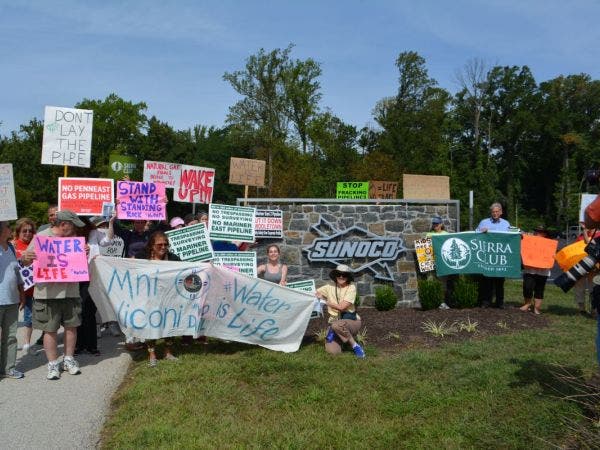
- See related article: Sierra Club, Lenape Tribe Protest Dakota Access Pipeline At Sunoco HQ
The Santa Clara County Board of Supervisors in California passed a resolution on Nov. 15 that supports a moratorium on building the Dakota Access Pipeline. Similar resolutions have been passed in Oakland, Berkeley and many cities nationwide.
- See related article: Santa Clara County Joins Dakota Access Pipeline Naysayers
In Mahwah, NJ, residents and members of the Ramapough Indian Nation stood together in solidarity against the pipeline during a Sept. 25 gathering on the banks of the Ramapo River.
- See related article: Residents, Native Americans Will Rally And Pray Against Dakota Pipeline This Month
Photo: Morton County Sheriff’s Department
Get more local news delivered straight to your inbox. Sign up for free Patch newsletters and alerts.