Community Corner
The Importance of Trees: It's More Than Just Shade
A one-mile walk around the city includes several varieties of trees.


To love trees is to understand life.
The Fallow Land, by Virgil
My wife and I take walks in Summit several times a week in all seasons. Often these walks take us through Woodland Park, our neighborhood near Franklin School. We marvel at the variety of wonderful trees, magnificent old, tall oaks to small, exquisite cut-leaf Japanese maples. The breathtaking beauty of the landscape accented by the strong vertical elegance of shade trees is immediately apparent to us on our summer walks. Also we often comment on the sudden drop in temperature when we stride from the sun to the shade.
In a simple one-mile walk, we are greeted by a broad range of trees. Take a look at the photos of leaves accompanying this article and see how many trees you can identify–and that's just a small sampling.
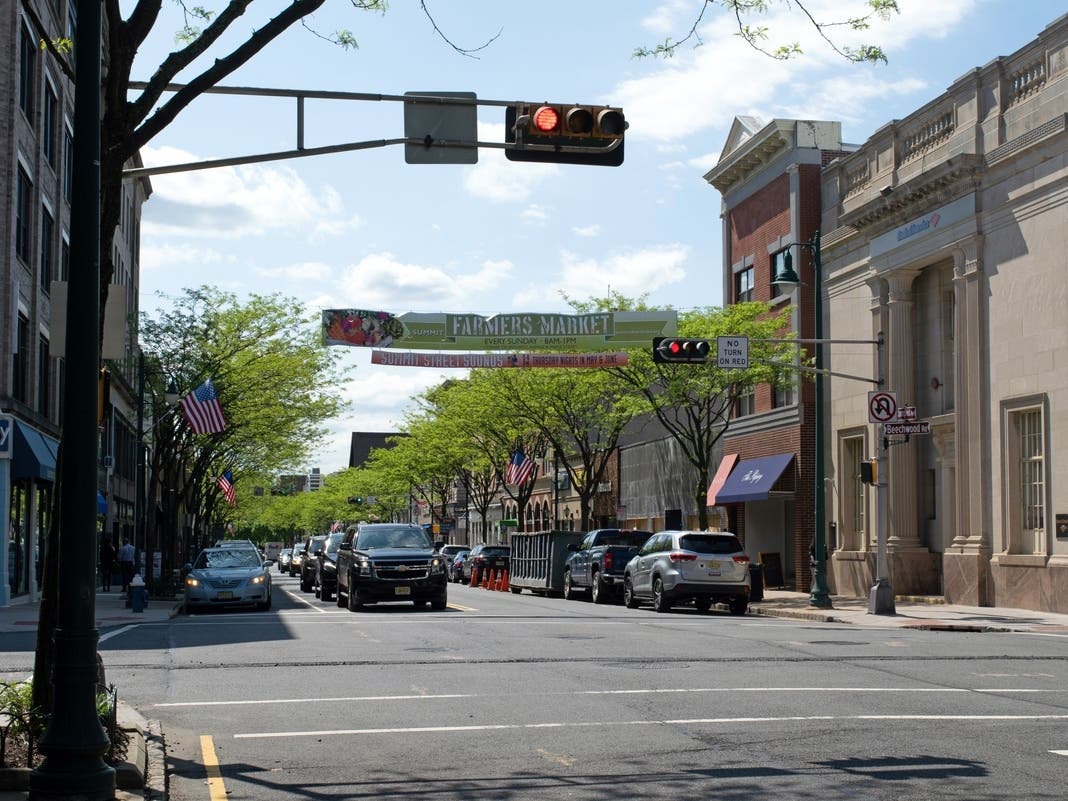
In the spring, flowering trees dominate Summit’s landscape from downtown’s white flowers on its many pear trees to pink magnolias, red cherries, white and pink dogwoods, and many types of crabapple trees all over the city. Their colorful fruit and berries soon adorn their branches as well.
In the summer, trees after blooming show off their varied shapes. Pyramids, cones, globes, umbrellas, tangled branches, and leaning roofs of leaves over the streets provide a visual variety not just in form but also in color. Every shade of green is represented, interspersed with blue spruce, red maples, copper beeches, and white-barked birches.
Of course, autumn leaves turn from green to shades of red, orange, and yellow for our pleasure. Come winter, evergreen trees come into their own and snow on evergreens makes an irresistible tableau.
Yet trees have functions well beyond beauty and decoration. They are our principal supplier of oxygen and they rid our air of many pollutants including fine particulates, sulfur dioxide, carbon dioxide, and volatile organic compounds, thereby eliminating a lot of illness, especially among children.
On average, each tree absorbs 13 pounds of the greenhouse gas, CO2, per year as it grows. Thus every tree absorbs the CO2 emissions from 13 miles of a typical auto trip. All the trees in Summit are not enough to absorb the yearly carbon dioxide emissions of its citizens’ driving, but they do make a dent.
Trees provide refuge, homes, and food for our bird friends as well as for other wildlife. They provide cool resting places from the summer heat for birds and wildlife as well as for us. Backyard trees are a joy to climb and play in for our children (and our pet cats).
Tree roots are important for soil erosion protection. This is a particularly valuable function in hilly Summit. Deep tree roots bring up soil nutrients; leaves and needles provide mulch to enrich the soil all around a tree. Trees therefore both protect and enrich our topsoil.
There is more to say. Trees can be used as noise barriers and privacy screens. They are windbreaks and can be important in protecting our houses in windstorms. They soak up excess water on our properties and help solve drainage problems. So, when raking colorful leaves in the fall becomes a chore, think of the many ways trees are enriching our life here in Summit.
–By Phil Eisner, Summit resident and friend of the Environmental Commission
Get more local news delivered straight to your inbox. Sign up for free Patch newsletters and alerts.