Politics & Government
33,091 Heroin Deaths: Congress Has More Work To Do, N.J. Rep. MacArthur Says
The 2016 Comprehensive Addiction Recovery Act was just a start; Bipartisan Heroin Task Force looks to help communities more.


As the opioid crisis continues to rage across the United States and communities, including Ocean County, look for ways to address the multitude of issues, a bipartisan congressional panel is looking at ways the federal government can assist in the fight.
More than 52,000 people died of overdoses in 2015, according to figures released by the Centers for Disease Control in December. Of those, more than 33,000 were tied to opioids, the CDC said.
"That's nearly 100 people dying every day," Rep. Tom MacArthur of New Jersey said this week. And it's a number that continues to grow. MacArthur said that's why the Bipartisan Heroin Task Force, an 85-member congressional panel looking at the issues of heroin and opioid abuse, is pushing forward with hearings and focus groups to education fellow members of Congress about the crisis.
Find out what's happening in Toms Riverfor free with the latest updates from Patch.
MacArthur, a Republican from New Jersey's 3rd District, which covers parts of Ocean and Burlington counties, co-chairs the task force with Rep. Annie Kuster, a Democrat from New Hampshire. "It's truly a bipartisan effort," MacArthur said.
Last year, the panel was responsible for the passage of 18 bills in the Comprehensive Addiction and Recovery Act, MacArthur said, federal legislation that appropriated millions of dollars in funding for education and prevention efforts, naloxone availability, and prescription disposal, as well as treatment and intervention efforts.
Find out what's happening in Toms Riverfor free with the latest updates from Patch.
But more needs to be done, MacArthur said.
"We're really concerned about making sure this gets worked on," MacArthur said. In 2016, the panel was able to focus attention for a week to get CARA passed, making sure there are resources for prevention, treatment and recovery. An additional $1 billion in funding was directed to the effort to try to address the issues, he said.
"Now we're trying to build on that, by educating members, making sure money gets spent wisely, and making sure communities know how to access it," MacArthur said.
The education effort starts with educating members of Congress about the facts and extent of the problem. A roundtable discussion with health-care professionals on Monday put the information in stark terms, he said.
The speakers — Dr. Nora Volkow, director of the National Institute of Drug Abuse; Dr. Corey Waller, advocacy committee chairman of the American Society of Addiction Medicine; Dr. Josh Rising, director of Health Programs for the Pew Charitable Trusts, and Dr. Lisa Marsch, director of the Dartmouth Center for Technology and Behavioral Health — looked at the science and some of the treatment issues involved with opioid abuse.
Volkow told the panel that 8 of 10 heroin addicts became addicted to opioids first through legal prescription drugs, drugs such as oxycodone (best known as OxyContin), Percocet, and other narcotic painkillers.
"We talked about the physiology of the brain and how it changes (with opioid use), how judgment changes," MacArthur said. "People feel like they're dying if they can't get it," he said, referring to opioids, and as their addiction deepens, and the amount of opiate they need to feel "normal" increases, they turn to heroin because it has become so inexpensive.
Ocean County law enforcement has reported heroin is offered for as little as $5 a hit.
Because prescription opioids are fueling the crisis, MacArthur said, the panel talked about measures Congress can take to address that.
Every physician is required to have a license from the Drug Enforcement Administration to prescribe controlled substances such as opioid painkillers, he said, so one avenue that was discussed was requiring doctors to undergo more extensive education about addiction pathology and pain management before granting the license.
The CDC in 2016 issued guidance to physicians urging them to reduce initial prescriptions of opioid painkillers to a seven-day supply. Typically, patients receiving prescription medications are given a 30-day supply in their initial scripts. The CDC's guidance has received pushback from some physicians organizations, who insist the guidance interferes with the doctor-patient relationship.
But restricting opioid prescriptions has gained traction in spite of that pushback. In New Jersey, the state Senate on Monday approved a bill sought by Gov. Chris Christie to restrict initial opioid prescriptions to a five-day supply. The measure would not apply to those suffering from chronic pain or to those battling cancer.
"Dr. Volkow said those (battling chronic pain) using opioids actually do worse over time," MacArthur said. Though the New Jersey legislation did not come up during the roundtable, "I think that (five-day) limitation is something I support."
MacArthur said the roundtable also spent time on the issue of recovery.
"It's not quick," he said. "People need to be treated in science-based recovery treatment."
Panelists noted that when someone is taken to the emergency room because they've suffered a heart attack, there is a great deal of response and follow-up. That stands in contrast to the response of someone who has overdosed, MacArthur said.
"We're not treating it like the pathology that it is," he said. "We're not doing the referrals, the aftercare that we do with every other disease and pathology."
"I found it very helpful and disturbing," MacArthur said of the information presented during the roundtable.
MacArthur acknowledged that there are local efforts underway on many of these issues, including efforts in Ocean County to meet with addicts in the emergency room after they have been revived from an overdose and help them get into recovery programs. A Rhode Island study found that 80 percent of addicts presented in the emergency room with the opportunity to get help will accept it, he said.
There are more roundtables planned, MacArthur said. One later this month will meet with families who have lost loved ones to opioid addiction, he said, and there will be others talking with law enforcement and other aspects of the issue.
"We will keep exploring subjects we think will inform legislation," he said. "I hope before too much time passes we have a sense of what bills will be more helpful" to states and local governments in combating the crisis.
But right now, many communities are simply overwhelmed, he said.
"We have to work together at this," MacArthur said. "We want people to come forward with ideas. There's no one place where this is all going to get solved."
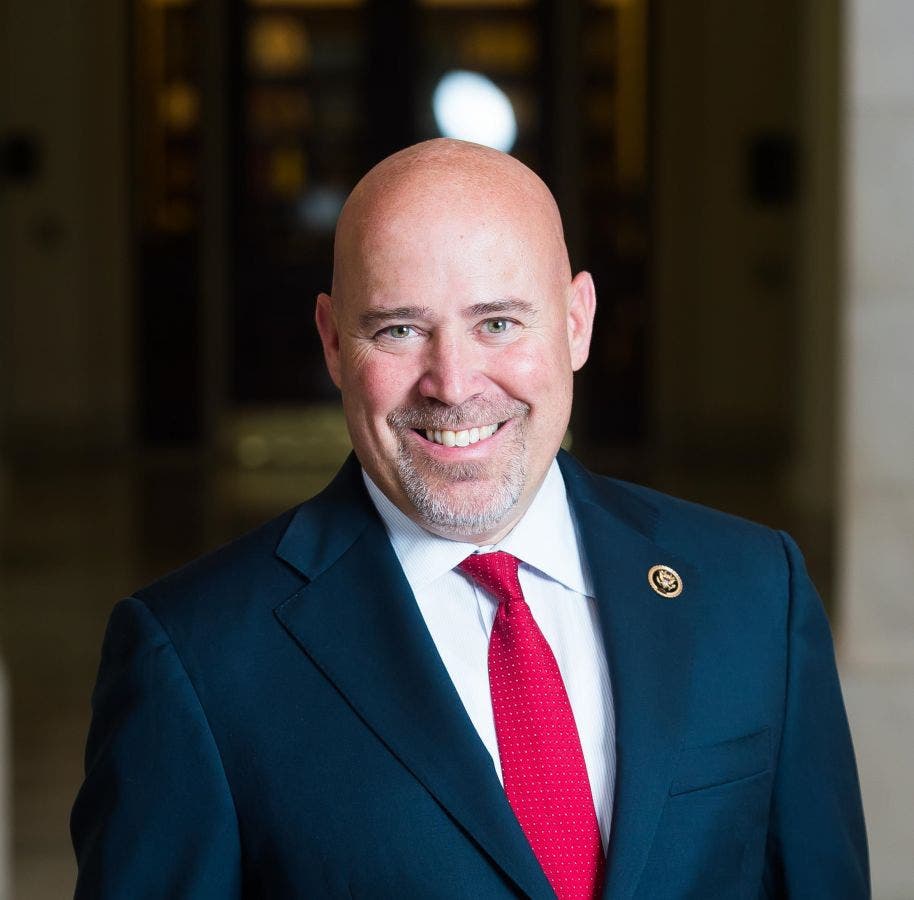
Tom MacArthur, via his Congressional website
Get more local news delivered straight to your inbox. Sign up for free Patch newsletters and alerts.