Neighbor News
Celebrate Banned Books Week, September 26 - 30
Why are some books banned while others aren't? Come find out!

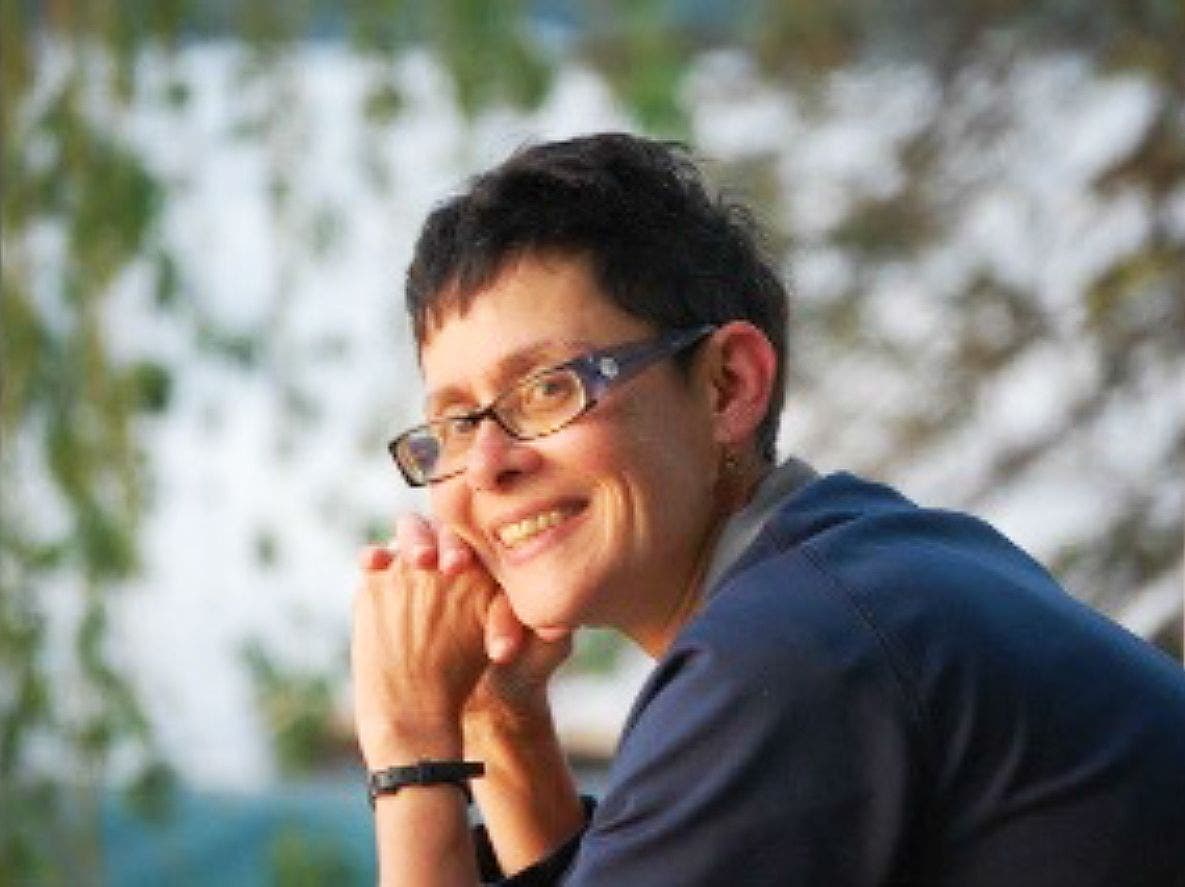
Why are some books banned while others aren’t? And isn’t it strange how some of the classics of American literature end up on the list of books to avoid? Is it because they challenge our notions of who we are — as a nation, and as individuals? Or maybe that they directly confront issues that other works only hint at? Join Catherine Wald for two in-depth book discussions at the Larchmont Public Library to find out.
DISCUSSING: BELOVED by Toni Morrison
Monday, September 26 at 7:00pm
Find out what's happening in Larchmont-Mamaroneckfor free with the latest updates from Patch.
DISCUSSING: THE ADVENTURES OF HUCKLBERRY FINN by Mark Twain
Friday, September 30 at 2:00pm
Find out what's happening in Larchmont-Mamaroneckfor free with the latest updates from Patch.
Banned Books Week was launched in 1982 in response to a sudden surge in the number of challenges to books in schools, bookstores and libraries. More than 11,300 books have been challenged since 1982 according to the American Library Association. While diversity is seldom given as a reason for a challenge, it may in fact be an underlying and unspoken factor: the work is about people and issues others would prefer not to consider. Often, content addresses concerns of groups who have suffered historic and ongoing discrimination. For instance, a book that often recurs in previous years’ top ten challenges is Toni Morrison’s Beloved. While it has sex in it, and that’s often the complaint, many other books also have sex, and are not challenged. Is the underlying motivation for the challenge racism? Sometimes, it surely is. In other cases, of course, a complaint genuinely may be about precisely what the challenger says it is.
Again and again, BELOVED, the Pulitzer-prize winning novel by perhaps the most influential African-American writer of all time is assigned to high school English students. And again and again, parental complaints are lodged against the book because of its violence, sexual content and discussion of bestiality.
The first ban of Mark Twain’s American classic, THE ADVENTURES OF HUCKLEBERRY FINN, in Concord, MA in 1885 called it “trash and suitable only for the slums.” Objections to the book have evolved, but only marginally. Twain’s book is one of the most-challenged of all time and is frequently challenged even today because of its frequent use of the ‘n’ word. Otherwise it is alleged the book is “racially insensitive,” “oppressive,” and “perpetuates racism.”
Catherine Wald's poetry has been published as a chapbook ("Distant, Burned-Out Stars", Finishing Line Press, 2011), and in numerous journals including American Journal Of Nursing, Jewish Literary Journal and Westchester Review. She is the author of "The Resilient Writer: Tales of Rejection and Triumph from 23 Top Authors" (Persea Books 2005), winner of a 2006 Outstanding Book Award from the American Society of Journalists and Authors. Ms. Wald is also translated from the French Valery Larbaud's “Childish Things” (Sun & Moon 2004). She has received fellowships from NYFA, Center for Book Arts and Ragdale Foundation.
Catherine Wald teaches creative writing, memoir, poetry, self-promotion, publication and other aspects of the creative process. She also has 20-plus years' experience as a corporate editor, writer and project manager. She attended Barnard College, where she graduated cum laude, with the Prize for French literature.