Community Corner
Indian Point Closing: Safety, Jobs, Costs, Energy and more
Patch readers, politicians and environmental advocates are among those having their say.


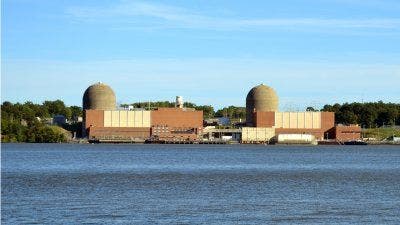
CORTLANDT, NY — Patch readers, politicians and pundits are weighing in on Entergy's decision to close the Indian Point nuclear power plants by 2021 under a deal unveiled Monday between the company, New York state and environmental watchdog Riverkeeper.
Located in northwest Westchester County, Indian Point Energy Center is a three-unit nuclear power plant. The evacuation zone includes parts of Orange, Putnam, Rockland and Westchester counties, just up the Hudson River from New York City.
Indian Point Unit 2 opened in 1974, and Unit 3 opened in 1976. The Unit 1 reactor was permanently shut down in 1974. The plant’s operating licenses expired in 2013 for Unit 2 and in 2015 for Unit 3; Entergy has been seeking renewal since 2007, fiercely opposed by Riverkeeper and the state.
Find out what's happening in Peekskill-Cortlandtfor free with the latest updates from Patch.
Patch readers spoke out on the subject on Facebook, and there the reaction leaned to the negative:
- Charlie M: That portion of its contribution to our power needs being removed. Jobs lost? I guess the powers that be know what they are doing.
- David G: Too little too late. It has not been needed for nearly 20 years. It will take too long to go away and even longer to allow the waste material a safe passage away from the lower Hudson Valley.
- Greta C: Why are they there? CLOSE.
- Robbie C: Let's see, 1000 people losing their jobs, school taxes going up, radioactive material sitting there for years, no plans to replace it, higher electric bills. All because there is a one in a zillion chance of a disaster.
- Keith O: It's a disgusting political move by the incompetent governor
Local officials were absolutely furious, both about the closure and the secret nature of the negotiations.
Find out what's happening in Peekskill-Cortlandtfor free with the latest updates from Patch.
"I am shocked by the Governor's proposal and I am very concerned about the effect it will have on the employees of Entergy, their families, as well as the loss of tax revenue which the local school district and municipalities significantly rely on," said Assemblywoman Sandra Galef. "Over the next few weeks I would assume the Governor will bring elected officials together that represent the communities impacted by this proposal to determine what course of action needs to be taken to protect the employees and the loss of local taxes. I am committed to working hard to resolve the potential problems that may come with this proposal."
State Senator Terrence Murphy called on Cuomo to come to the communities affected to "explain exactly how we will safely store and protect spent fuel rods here for the next century, find replacement power for a quarter of our region's energy needs, and fund the gigantic holes this move blows into the local budgets for the town of Cortlandt, village of Buchanan and the Hendrick Hudson and Peekskill City school districts over the long-term. The idea that we can just ask 1,000 workers to relocate some place else is also wholly inadequate."
Cortlandt Supervisor Linda Puglisi said, "I only learned from a New York Times article entitled 'Indian Point Nuclear Power Plant to Close' that these plants will close in 2020 and 2021. As the elected Town Supervisor where this major industry is located Cortlandt and Buchanan should not have heard about this major news from a newspaper article. We should have been notified as a courtesy prior to this public announcement."
Buchanan Village Mayor Theresa Knickerbocker said, "I am asking for bipartisan support at a federal, state and local officials. Fortunately we have always had support of our local state representatives like Senator Terrence Murphy and Assemblywoman Sandy Galef. Asking for support so that our beautiful community does not become a ghost town like so many other communities when an industry leaves."
Peekskill Mayor Frank Catalina said, "I agree with my fellow colleagues that this will be a total disaster for the area. I only hope the Governor has a contingency plan for this area to replace Entergy but I am skeptical."
Farther way, reactions were different, mostly.
“Indian Point has long posed a grave threat to the safety and well-being of those living not only in the Lower Hudson Valley but to the nearly 18 million residents within a 50-mile radius, including New York City," said Congresswoman Nita M. Lowey (D-Rockland/Westchester). "Since 2002, I have advocated shutting down the plant, and as Ranking Member of the House Appropriations Committee, I will work to ensure the federal government assists in the safe closure of Indian Point.”
New York Attorney General Eric T. Schneiderman pointed out that his office had been leading the state's challenge to the re-licensing for six years.
“This agreement puts in place several important safety provisions that go beyond federal requirements to ensure that Indian Point operates as safely as possible as it transitions to a timely shut down," he said. "These measures include new requirements for safer storage of spent nuclear fuel at the plant, increased inspections to address faulty and deteriorating bolts throughout the facility, and $15 million in new funding from Entergy to support the environment in the Hudson River and neighboring communities.
"Indian Point never should have been built near so many people," said Assemblywoman Amy Paulin (D-Scarsdale). "As plans for the plant’s closing progress, we must have a blueprint in place to address a multitude of issues: reliability — making sure the lights in the areas Indian Point serves stay on, prioritizing clean energy, and an environmentally safe shutdown. Most importantly, as the highest taxed area in the state, with among the highest cost of electricity, finances must be in place to ensure that ratepayers do not bear the burden of this change and that communities are subsidized for their losses in taxes."
But Richard Thomas, Mayor of Mount Vernon, disagreed. “Indian Point operated safely and generated clean, carbon-free power for over 60 years. It was one of the only plants to keep our lights on after Superstorm Sandy put millions in the dark. New Yorkers significantly benefited from the plant's decarbonized baseload power on both ends of the temperature spectrum, keeping electricity affordable and reliable when hydro sources froze or gas prices spiked.
"Immediate policy actions are vital. A jobs exodus followed the premature shutdown of Shoreham Nuclear Plant in Shoreham, NY and Long Islanders are finding it difficult to dig out of the billions of debt it left behind. This phenomenon is not exclusive to New York. Higher energy prices and higher pollution rates are currently storming Southern California after the unexpected closure of the San Onofre Nuclear Generating Station in San Diego. These indicators affirm the urgency of state and local stakeholders to assess all options to stem job losses, property tax impacts, protect air quality, as well as ensure electric affordability and grid stability. This includes embracing small modular reactors and expanding our ports and pipelines to strengthen our energy independence.
"Among my concerns is replacing the lost power with more fossil fuel facilities. That will threaten the lives of our residents as well as the region. We need to be assured that the process going forward is measured and open to community input.
"Too often majority-minority communities disproportionately suffer from increased pollution while wealthier communities breathe hassle-free. Closing the environmental justice gap must also be part of the search for 2,000 megawatts of clean, carbon-free electricity. I look forward to partnering with state leadership to design and implement sustainable solutions to create jobs, enhance the environment, and responsibly make New York energy ready so Indian Point can go offline with minimal consequences."
But Rockland Legislators Alden H. Wolfe and Harriet Cornell hailed the agreement. Cornell, who chairs the Legislature’s Environmental Committee, said the list of problems at the plant stretches back decades.
“Without the watchful eyes of these dedicated watchdogs over the last 40-plus years, who knows what might have happened,” Cornell said.
Both Wolfe and Cornell praised the efforts of all involved in closing the nuclear power facility.
“It has taken decades of advocacy from the grassroots level to Gov. Cuomo’s office,” Wolfe said. “That hard work is finally paying off – for the betterment of everyone in the region.”
Both legislators said they had long backed the effort to shut down the plant, which is home to two aging nuclear reactors. They listed problems including unplanned or emergency shutdowns; spiked concentrations of tritium-contaminated water leaking into groundwater; the spilling of 3,000 gallons of oil into the beloved Hudson River; leaking fuel pods; and metal fatigue that led to missing or damaged bolts on Unit 2, where one out of every four bolts was affected.
Cornell said the continuing problems at Indian Point paint a clear picture of what the deteriorating plant has become: aged infrastructure that can’t be relied upon when it comes to the health and well-being of the public and the environment.
By 2030, 50 percent of New York State’s power mix is to include renewables such as wind, solar, geothermal and hydroelectric power. Wolfe has asked the state Public Service Commission not to consider nuclear power generation as “clean” energy or to include it in the state’s milestones.
Indian Point can produce about 2,000 megawatts of power, but new reports indicate that the New York Power Authority doesn’t purchase electricity from Indian Point anymore, as it has found cheaper electricity elsewhere. Wolfe also pointed out that Indian Point’s energy generation largely benefits residents of New England, not New York State.
According to published reports this week, Wolfe and Cornell said, current expansions of New York’s energy grid, such as new hydropower transmissions, will add about 1,000 megawatts of new power, and that an additional 700 megawatts is already available.
The energy angle was of particular interest to some.
The announcement, with the Governor’s accompanying assurance of no net increase in greenhouse gas emissions, presents an opportunity for the state, said the New York Solar Energy Industries Association. "As more power is brought online to offset the 2,000MW capacity of the plant, it is important that we draw on solar generation to fill the gap."
As one of the organizations that helped to negotiate the historic closure of the Diablo Canyon nuclear reactors in California with a renewable energy/greenhouse gas-free replacement portfolio, Friends of the Earth urged Cuomo to do the same in New York.
Get more local news delivered straight to your inbox. Sign up for free Patch newsletters and alerts.