Arts & Entertainment
Irvington Photographer Wins Prize in Beaux-Arts Finale
Plucky cancer survivor is honored for excellence in photography.
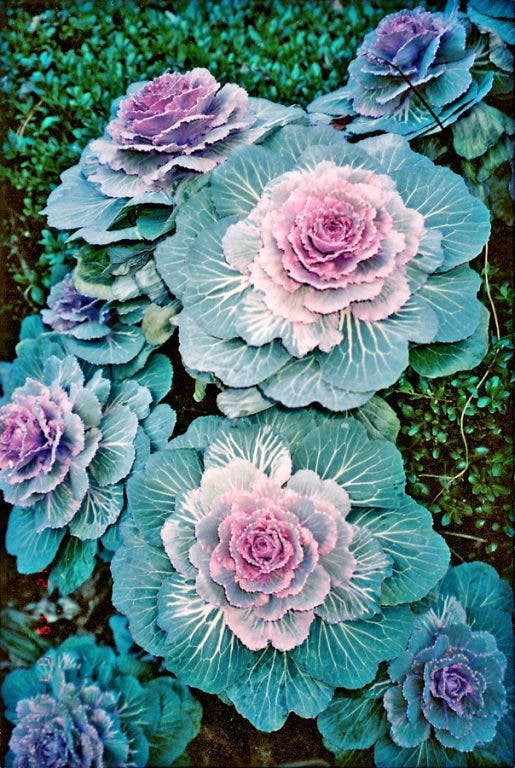


Madlyn Walton hasn’t let throat cancer stop her.
The Irvington resident, who speaks with the aid of a mechanical device after many surgeries for throat cancer, speaks also through her award-winning photography.
To the eight or nine previous art honors she's received since 1985, —not to mention a place on the winning team in the —she has added Second Prize for Photography in the Beaux Arts Finale at the Women's Club of Bronxville.
Find out what's happening in Rivertownsfor free with the latest updates from Patch.
In order to participate in the show at all, Walton had to win first-prize in one of the local Westchester Women’s Club shows, and Walton had done just that at the Women's Club of Dobbs Ferry in the spring.
“Photography for me is a raison d’etre, and keeps me looking outward at the world instead of inward,” she said. “It also keeps me in touch with other people who are looking at the same things, but in a different way than I am. It's interesting to share with them. Diane Arbus wrote ‘A photograph is a secret about a secret,’ and I believe that. The photographer is saying something through what they've just seen and they try to tell you what their feelings are, in addition to what they've just photographed.”
Find out what's happening in Rivertownsfor free with the latest updates from Patch.
When asked about her working method, Walton said, “When I see something interesting I go back several times to look at the variety of light. Somewhere along the line I make a decision about when I will go back to photograph it.”
She has gone to France nine or ten times, traveling extensively throughout the country. “I kept wanting to go back, because the light is so different [from here] and every part of France is so different from the others. My favorites are Burgundy, for its landscapes and towns, and the Loire Valley, for the way in which people who are not wealthy keep the outside of their homes. They decorate them in small ways that make them so charming—such as birds in cages, plants all over the steps, their way of putting lace curtains in the windows and their way of whitewashing houses. Even though these are not expensive places, it shows their pride of place.”
Walton first had surgery in 1998. “I developed cancer of the throat, and I came to rely on photography even more than I had in the past as a way of looking at the world more closely," she said. "It gives me the opportunity to focus on the beauty and the positive aspects of the world. It also reinforces the fact that solitude can be a good thing, not just a negative.”
She has had 21 surgeries altogether and speaks with the help of a mechanical device, which looks like a microphone, but actually produces the sound like a reed instrument, she said, as she holds it to her throat and talks by pushing air through it. She had tried an implanted version—but it wouldn't stay in place—which made it dangerous to her health.
Walton found her avocation in 1975 when she worked for a man who just gotten a Nikon. She borrowed it one day to photograph her sheepdog.
It was fall, and every photo came out, she said, “outstandingly wonderful.” Her boss encouraged her, explaining that it was very unusual to get such good results the first time using an all-manual SLR camera. Soon after, her husband bought her the same camera as a gift, and she used it for many years. Now Walton is about to transition to digital equipment.
Photography has been useful to Walton in more pragmatic ways as well. She worked as an occupational therapist from 1975 to 2004, at “most of the major hospitals in the Westchester area” and also had a private practice in White Plains. She photographed people doing exercises in her office that she wanted them to do at home, and she would make them a little booklet to take home so that they could study the nuances of what they needed to do. She also used it as an aid during a period of time when she was sculpting—photographing her work in progress and studying the photos to see what she needed to do next.
The winter scene that won her the second prize in the Beaux Arts show was taken in the wooded area near her Irvington home. It was the first time she saw the trees like this, she said, “bent over with the weight of the snow, looking like a family of all different sizes.”
She saw in the scene, she said, symbols of “the demons we all have. It's very inspirational that…at some time, they will clear away. They may haunt you, but they can't do it forever.”
Edward Hopper's paintings have influenced Walton, she said, because they are realistic but also have so much personal feeling. The color photography of National Geographic magazine was another thing that nurtured her artistic eye. She took outdoor classes through the county with Tony Gerjian, and attended the Camera Club at Westchester Community College. Walton also does watercolors—usually basing projects on her own photos. She studied watercolor at the White Plains County Center art group, through Intervillage classes, and in Tarrytown.
When Walton photographed the swan pictured in the gallery above, she used her old Nikon, which she estimates must weigh about three pounds—quite difficult for the petite photographer who describes herself as “five-feet tall on a good day."
Perhaps that was why the swan got the best of her, though only momentarily—
“It attacked me, got me down on the ground with its widespread wings and it did the same to my dog until we were both able to run. I saw that there was a nest of cygnets, newborn swans, and the mother was protecting them. Both I and my dog were covered with mud, but I got my pictures. Luckily I didn't ruin my camera; I would absolutely do it again.”
Clearly this photographer is in it for the long run.