Politics & Government
Cleveland-Elyria Has the 9th Worst Rate of Poverty Concentration Among Metro Areas: Report
The Brookings Institution studied the "intersection between poverty and place," and the results were not good for the Cleveland-Elyria area.


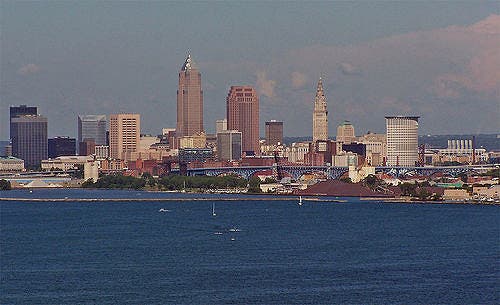
CLEVELAND, OH — In a new study by the Brookings Institution, the Cleveland-Elyria area was ranked as having the 9th worst rate of concentrated poverty among large metro areas in the United States.
The study titled "U.S. concentrated poverty in the wake of the Great Recession," defined Cleveland-Elyria as the metro area made up of land in Lake, Lorain, Medina, Geauga and Cuyahoga Counties.
The report found that the share of the poor population living in areas that have a poverty rate equal or greater than 20 percent was 62.7 percent in Cleveland-Elyria. This means that well over half of the poor population has become packed in to specific areas and neighborhoods throughout the metro area. In 2000 the share was 54.3 percent and in 2005-2009 the share was 56.4 percent.
Find out what's happening in Clevelandfor free with the latest updates from Patch.
Here's the Brookings Institution's definition of concentrated poverty:
Poor individuals and families are not evenly distributed across communities or throughout the country. Instead, they tend to live near one another, clustering in certain neighborhoods and regions
Find out what's happening in Clevelandfor free with the latest updates from Patch.
The study analyzed the concentration of poverty after the dot-com bubble of the early 2000s and the Great Recession of 2008, when the housing market collapsed. Nationwide, poor people were being concentrated to specific areas, and the problem was especially bad for Cleveland-Elyria.
From 2010-2014 the concentrated poverty rate was 28.2 percent, which ranked as the 9th worst in the country. Among the black poor the numbers were even worse, at 45.2 percent. One explanation for the increased concentration of poverty in Cleveland-Elyria is the increased concentration of poverty in inner-ring suburbs such as Cleveland Heights and East Cleveland. After the Great Recession, the concentration of poverty was no longer an inner city issue.
The concentration of poverty is not caused solely by an increase in the number of people living in poverty, according to the study. While the two statistics are related, the concentration of poverty focuses on "the intersection between poverty and place." The opportunities afforded to people who live in areas of high poverty are significantly worse than those living in areas with a lower concentration of poverty, according to the Brookings report.
The intersection between poverty and place matters. Poor neighborhoods come with an array of challenges that negatively affect both the people who live in those neighborhoods—whether they themselves are poor or not—as well as the larger regions in which those neighborhoods are located.1 Residents of poor neighborhoods face higher crime rates and exhibit poorer physical and mental health outcomes. They tend to go to poor-performing neighborhood schools with higher dropout rates. Their job-seeking networks tend to be weaker and they face higher levels of financial insecurity.
- Brookings Institution
The Brookings Institution used data from the American Survey from both 2005-2009 and 2010-2014 as well as data from the 2000 decennial census to compile its report.
Here are the top ten metros with the worst rates of poverty concentration from 2010-2014 according to the Brookings study:
- McAllen-Edinburg-Mission, Texas: 52.3 percent
- Fresno, California: 43.8 percent
- Toledo, Ohio: 34.9 percent
- Syracuse, New York: 32.4 percent
- Detriot-Warren-Dearborn, Michigan: 32.0 percent
- Bakersfield, California: 31.7 percent
- Memphis, Tennessee-Missouri-Arkansas: 31.1 percent
- Milwaukee-Waukesha-West Allis, Wisconsin: 30.1 percent
- Cleveland-Eyria, Ohio: 28.2 percent
- El Paso, Texas: 27.5 percent
[Photo courtesy of Bruce Fingerhood via Creative Commons]
Get more local news delivered straight to your inbox. Sign up for free Patch newsletters and alerts.