Politics & Government
Former University Of Texas Graduate Student Released From Iranian Jail [UPDATED]
Physicist Omid Kokabee has languished behind bars in Iran for five years after being arrested for 'communication with a hostile government.'


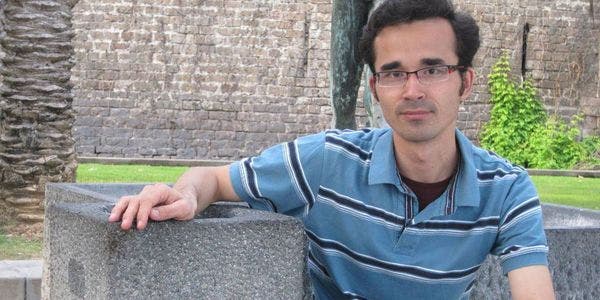
AUSTIN, TX -- A former University of Texas at Austin graduate student jailed while visiting family has been released after five years in prison, according to Iranian officials.
The Washington, D.C.-based National Iranian American Council confirmed the news Tuesday on their website. In late April, Patch reported on a rally staged by some 60 UT students and faculty calling for the release of Omid Kokabee, a physicist who was imprisoned in Iran on what supporters categorized were false charges of revealing Iranian security secrets.
Languishing in an Iranian jail for five years, Kokabee's ordeal worsened after being stricken with cancer but denied treatment -- heightening the urgency among his supporters to call for his release. Outside the Robert Lee Moore engineering hall on campus, Kokabee's supporters gathered with flyers bearing the graduate student's likeness and buoyed by a letter they secured from university president Gregory L. Fenves adding his voice in the form of a letter to Iranian officials asking for the man's release.
Find out what's happening in Austinfor free with the latest updates from Patch.
"NIAC welcomes the release of Iranian physicist Omid Kokabee, who was granted parole by an Iranian court after serving five years in prison for charge of communication with a hostile government," National Iranian American Council officials wrote on their website.
Still in Iran, Kokabee re-activated his Twitter account shortly after his release to convey the good news. His post-imprisonment post adheres to the word-limit rigors of Twitter, yet was powerfully eloquent in its two-word brevity: "Hello, world!"
Find out what's happening in Austinfor free with the latest updates from Patch.
Hello, World!
— Omid Kokabee (@Kokabee) August 30, 2016
In a subsequent post, he thanked his attorney for tirelessly working to secure his release. Kokabee noted his association with the lawyer has grown from a client-attorney relationship to true friendship given his freedom from imprisonment.
Saeed Khalili, my lawyer & now a true friend with great professional & personal dedication through all these years. pic.twitter.com/Esch6HwSwt
— Omid Kokabee (@Kokabee) August 31, 2016
Despite the good news, NIAC officials said they continue to be concerned over the plight of other Iranian Americans detained in the Middle East country.
"NIAC remains deeply concerned about human rights violations in Iran, including the recent rise in detentions of Iranian Americans and other Iranian dual citizens," officials wrote. "Recent reports that detained Iranian-Canadian professor Homa Hoodfar’s health continues to diminish as she languishes in solitary confinement are particularly alarming. NIAC reiterates its call on Iran’s government to release all prisoners of conscience who remain unjustly prisoned and to uphold its human right obligations."
As the NIAC reiterated in its post, Kokabee was pursuing his PhD at the University of Texas at Austin when he visited Iran to visit family in 2011 when he was seized by authorities while attempting to fly back to the United States. Kokabee was initially charged with “gathering and colluding against national security” but was acquitted on those charges.
Later, Kokabee was charged and convicted for communicating with a hostile government and sentenced to ten years -- "...without any evidence presented against him," NIAC officials noted. "In a letter from prison, Kokabee expressed his belief that he was imprisoned because he had declined several invitations to work on Iranian military and intelligence projects."
Although gladdened by the news of Kokabee's release, the NIAC condemned Iran's violations of human rights, expressing those views on its website.
"Kokabee’s imprisonment and the mistreatment he suffered are appalling and contradictory to Iran’s international human rights obligations," officials wrote. "Kokabee was reportedly denied access to adequate health services throughout the course of his imprisonment despite severe health problems, including kidney stones.
During the April rally on campus, Navid Yaghmazadeh, a PhD student and the event's organizer, said he believes Kokabee's imprisonment led to the cancer diagnosis.
"We've gathered to tell Omid we are supporting him," Navid Yaghmazadeh, a Ph.d student at UT and the event's organizer, said at the time. "All the charges we have seen are false charges, and we're asking for a fair trial. What we're asking is for him to get the immediate medical care he needs."
NAIC officials agreed with the assessment, as detailed in their Tuesday post.
"The lack of adequate care likely contributed to his eventual diagnosis of kidney cancer," officials wrote. "In April, he was granted temporary medical leave after undergoing kidney surgery. His lawyer, Saeed Khalili has stated that Iran’s judiciary has now provided Kokabee with 'conditional freedom' for the remainder of his ten year sentence; having already served more than one third of his sentence, Kokabee was eligible for parole as dictated by Iranian law.
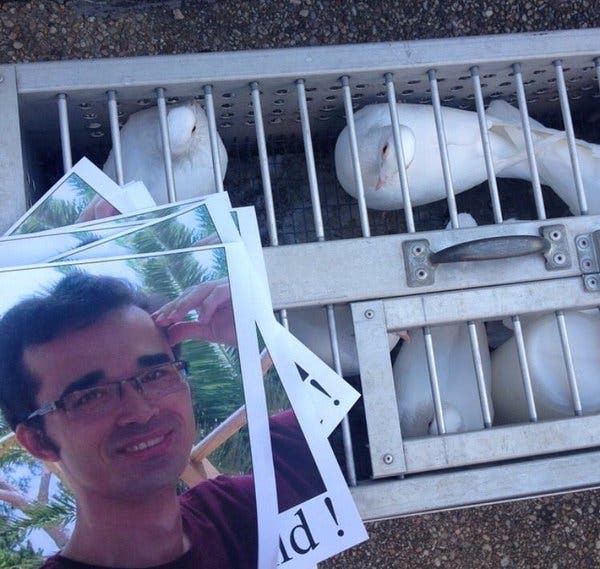
>>> Photo of Omid Kokabee courtesy of National Iranian American Council, used with permission; all other photos by Tony Cantu
Get more local news delivered straight to your inbox. Sign up for free Patch newsletters and alerts.