Crime & Safety
Pilot In Texas Hot Air Balloon Crash Killing 16 Had Taken Drug Cocktail Before Liftoff
Government records indicate Alfred Nichols, 49, was taking numerous drugs, including the highly addictive opioid oxycodone.


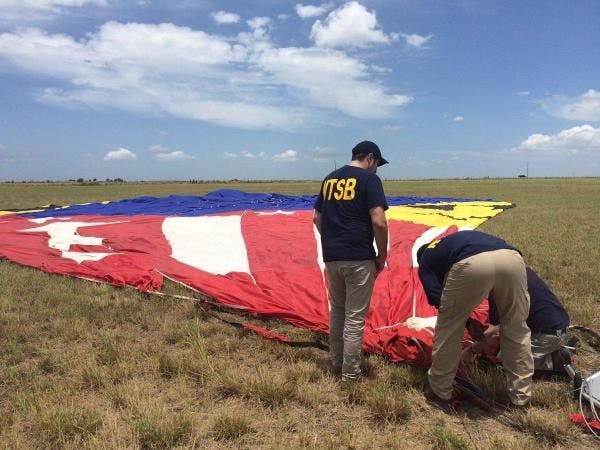
LOCKHART, TX — The pilot of a hot air balloon that crashed near Austin in July had taken a cocktail of prohibited prescription drugs prior to liftoff before the aircraft struck power lines, killing him and 15 others, according to a published report on Friday.
Citing government documents, Bloomberg reported that Alfred "Skip" Nichols had ingested the dangerous mix of drugs that included the opiate painkiller oxycodone. A highly addictive opioid chemical very similar to heroin, oxycodone is largely considered to represent ground zero of the opioid addiction crisis across North America. In addition to providing pain relief, oxycodone yields side effects that include euphoria, feelings of relaxation and hyperventilation.
Earlier reports of the tragedy detailed Nichols' past history with drugs and alcohol — leading to five convictions for DWI and three for drug offenses — casting a spotlight on the largely unregulated air balloon industry that enabled Nichols to navigate hot air balloons for profit in the first place.
Find out what's happening in Austinfor free with the latest updates from Patch.
The July 30 hot air balloon crash claimed the life of 15 sightseeing passengers in addition to that of the 49-year-old pilot. A previous National Transportation Safety Board hearing lay bare the lax set of regulations for hot air balloon operators that opened up a virtual loophole allowing Nichols to work as a pilot despite his past drug and alcohol convictions.
The balloon Nichols was piloting hit high-power lines near Lockhart, located less than 30 miles south of Austin and 70 miles northeast of San Antonio. The collision caused the balloon to burst into flames and plunge to the ground, yielding the highest death toll in a single aviation accident in the U.S. since 50 people died in a 2009 commuter plane crash near Buffalo, New York.
Find out what's happening in Austinfor free with the latest updates from Patch.
As they continue their probe, investigators are trying to determine how Nichols was allowed to operate the balloon even after serving two prison terms for drug and alcohol violations and under treatment for medical conditions that normally would have disqualified him from flying, Bloomberg reported.
The Federal Aviation Administration (FAA) regulating the industry has thus far declined to add tightened rules on hot air balloon flights, Bloomberg noted. This despite an NTSB formal recommendation in 2014 calling for safeguards in place to protect passengers of tour airplanes and helicopters.
Findings indicate that Nichols suffered multiple medical maladies, including type II diabetes, depression and chronic pain from fibromyalgia, Bloomberg reported, that should have disqualified him from flying. As part of his treatment, Nichols was taking 13 prescription medicines, many of which render pilots as disqualified from flying, the news agency reported.
A toxicology test found seven different drugs in Nichols’ blood and urine banned by the FAA, including oxycodone and the sedative diazepam, commonly known as Valium. According to NTSB documents, such drugs can impair brain function and inhibit motor controls.
>>> Read the full story at Bloomberg
Image via NTSB
Get more local news delivered straight to your inbox. Sign up for free Patch newsletters and alerts.