Politics & Government
Trump Travel Ban: Court Upholds Restraining Order, Allows Entry From Banned Countries
A restraining order against Trump's travel ban executive order will remain in place, a panel of federal judges has decided.


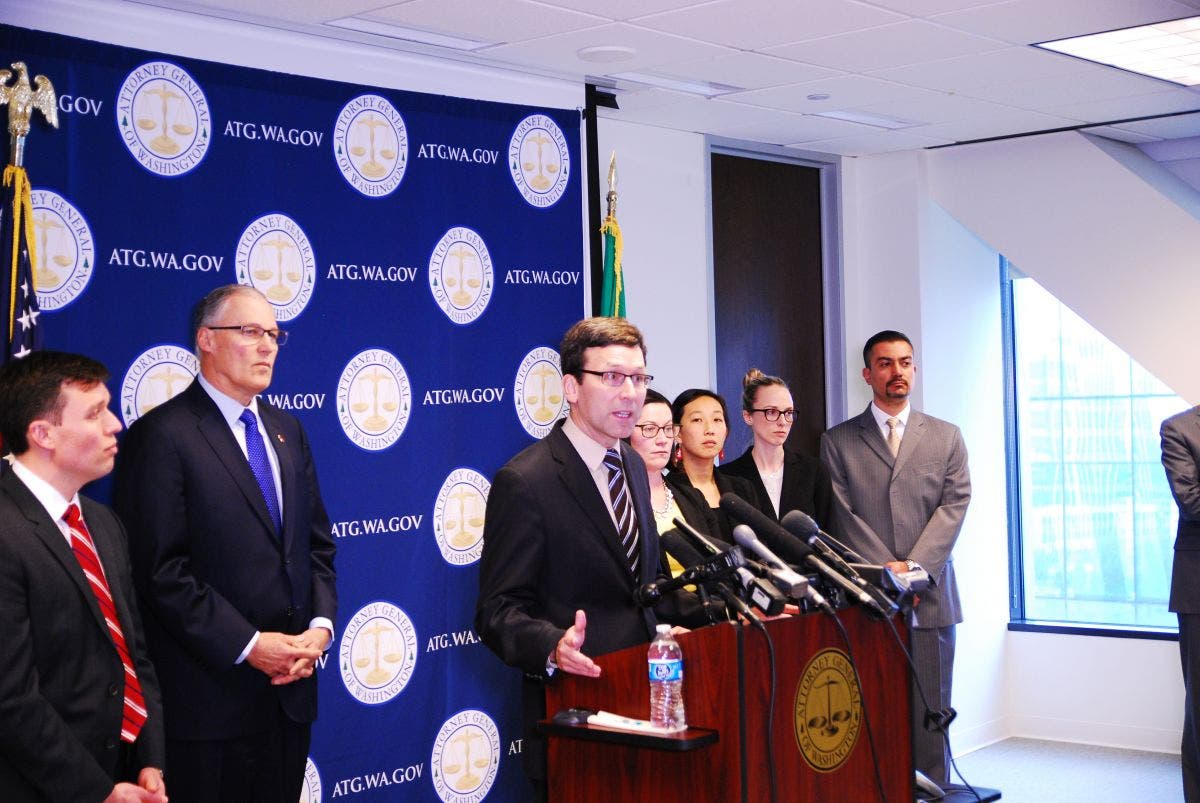
SAN FRANCISCO, CA - The Ninth Circuit Court of Appeals in San Francisco on Thursday rejected the federal government's bid to reinstate President Donald Trump's travel ban executive order, which prevented travel to the U.S. from seven majority-Muslim countries.
Although the decision is a blow for the Trump administration, the matter may not be over; it's possible the administration will ask the Supreme Court to look at the matter. The decision by the Ninth Circuit panel, comprised of judges who were appointed by one Republican and two Democrats, was unanimous.
Find out what's happening in Seattlefor free with the latest updates from Patch.
The ruling means that travelers from the seven countries in the executive order - Syria, Sudan, Somalia, Libya, Iran, Iraq, and Yemen - can continue to travel to the United States. Refugees from Syria and other countries may also enter the U.S.
"It's a complete win. We could not have written the opinion any better ourselves," Washington Attorney General Bob Ferguson said on NPR shortly after the decision.
Find out what's happening in Seattlefor free with the latest updates from Patch.
DENIED. UNANIMOUS. PER CURIUM.
— WA Attorney General (@AGOWA) February 9, 2017
Reviewing the decision with Noah. pic.twitter.com/bdSn4esxr1
— WA Attorney General (@AGOWA) February 9, 2017
Trump responded on Twitter on Thursday shortly after the decision came out.
SEE YOU IN COURT, THE SECURITY OF OUR NATION IS AT STAKE!
— Donald J. Trump (@realDonaldTrump) February 9, 2017
Trump adviser Kellyanne Conway appeared on Fox News after the decision and said that the ruling will give the administration the opportunity to argue the merits of the executive order in court.
"It's an interim ruling and now we're fully confident we'll get our day in court," Conway said.
Last Friday, Seattle U.S. District Court Judge James L. Robart granted Washington Attorney General Bob Ferguson a temporary restraining order suspending Trump's executive order nationwide. The restraining order is temporary until a lawsuit brought by Washington and Minnesota to repeal the executive order completely is heard in court. That lawsuit will continue to move forward.
On Saturday, the federal government asked the Ninth Circuit to stay Robart's decision. A three-judge panel assembled to handle the issue - including judges William C. Canby Jr., Michelle T. Friedland, and Richard R. Clifton - heard arguments from both sides on Tuesday. The judges questioned both sides heavily.
A key piece of the Thursday ruling was the court's view of the Trump administration's argument that Robart did not have the authority to rule on the executive order. The government argued that the president has "unreviewable authority to suspend the admission of any class of aliens." The panel did not look at that argument favorably.
"There is no precedent to support this claimed unreviewability, which runs contrary to the fundamental structure of our constitutional democracy," the decision reads.
The government in its appeal to the Ninth Circuit also appeared to be trying to bargain. It asked the court to reinstate the ban, but only covering travelers who are "temporarily abroad now or who wish to travel and return to the United States in the future."
Washington Solicitor General Noah Purcell argued on Tuesday that the ban harms state economies, and that the ban was, in effect, Trump fulfilling a campaign promise to ban Muslims from the U.S. In legal filings, Purcell has pointed at comments made by Trump about banning Muslims, as well as a comment he made before signing the executive order that the U.S. would prioritize Christian refugees from the seven affected countries.
Meanwhile, the judges pointed out that the government had not provided any examples of terrorist or criminal acts perpetrated by travelers form the seven countries outlined in the ban.
Since the restraining order went into effect, scores of travelers have successfully entered the U.S. from the banned countries. Trump has used Twitter to assail Robart - a George W. Bush appointee - calling him a "so-called" judge and saying his decision has "open[ed] up our country to potential terrorists and others that do not have our best interests at heart."
Trump's ban, originally signed Jan. 27, caused widespread chaos. Travelers from the seven countries - and some refugees - were halted at airports across the country and either detained or sent back to where they originated from. Scores of travelers were affected, including green card holders and others with valid visas.
In response, protesters gathered at airports form Sea-Tac to JFK in New York City. The American Civil Liberties Union won a temporary injunction against the order on Jan. 28, blocking some deportations. On Jan. 29, Trump Chief of Staff Reince Priebus announced on a news talk show that green card holders would be allowed to travel to the U.S.
Ferguson filed his lawsuit - with support from companies like Amazon, Microsoft, and Expedia - on Jan. 30. Later that week, Minnesota Attorney General Lori Swanson joined the suit.
Check back for updates on this story.
Image via Attorney General Bob Ferguson
Get more local news delivered straight to your inbox. Sign up for free Patch newsletters and alerts.