Politics & Government
AL Inmate's Death Penalty Gets Green Light From Supreme Court
He might not even remember his crime, but the Supreme Court says he can still get the ultimate punishment.

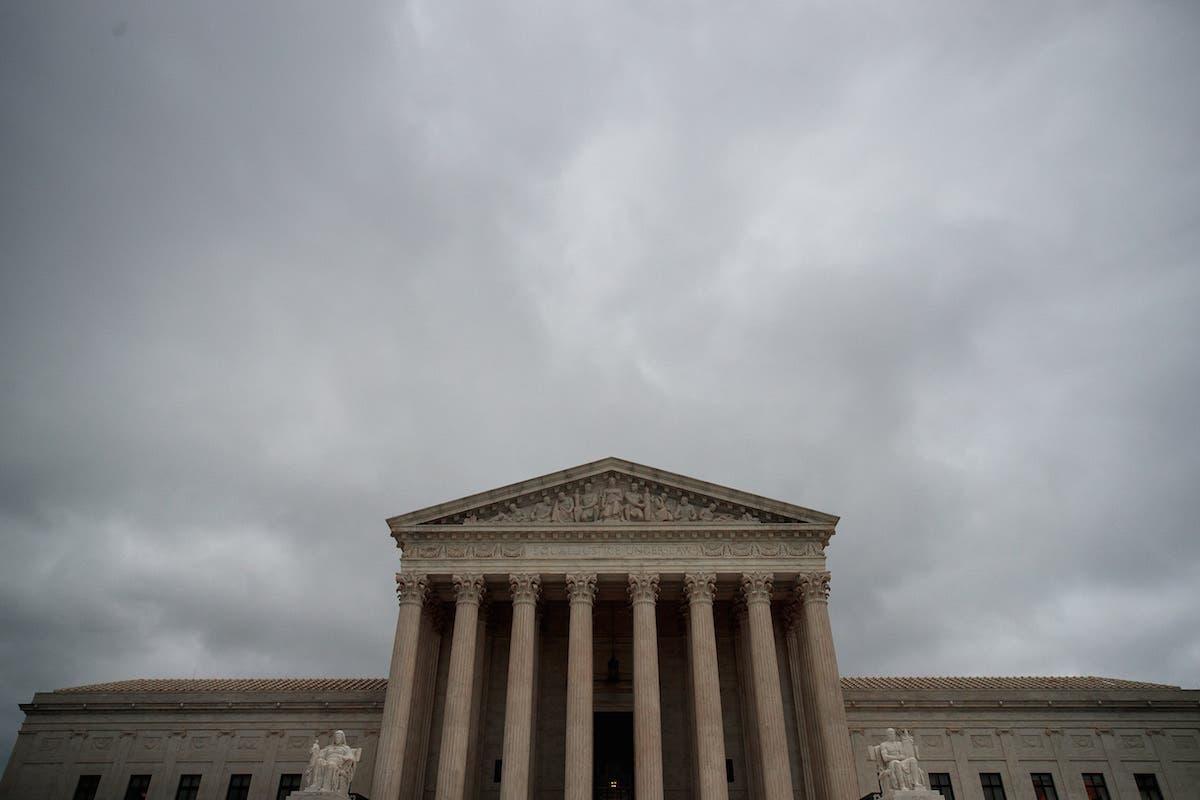
WASHINGTON, DC — The Supreme Court ruled Monday that an Alabama man may still face the death penalty, even if he can't remember committing the crime that earned him the sentence.
The 11th U.S. Circuit Court of Appeals had blocked the execution 0f Vernon Madison, who was convicted of killing a cop in 1985. The lower court found him to be incompetent and ineligible for the death penalty because he a series of strokes left him without memory of his crime or understanding of the punishment.
But in an unsigned ruling, the justices of the highest court found that the damage to his brain does not not warrant suspending his sentence. The ruling said Madison "recognizes that he will be put to death as punishment for the murder he was found to have committed," even if he doesn't remember the killing itself.
Find out what's happening in Across Alabamafor free with the latest updates from Patch.
The court noted that federal courts' review of Madison's case is constrained because of a 1996 law that was intended to limit federal judges' second-guessing of state court decisions. State courts upheld Madison's death sentence, and the Supreme Court, applying the 1996 law, said those decisions should be respected.
"Under that deferential standard, Madison's claim ... must fail," the court wrote.
The justices have never ruled on whether someone who doesn't remember his crime can be executed.
Madison was convicted of killing Mobile police Officer Julius Schulte, who had responded to a domestic call involving Madison. Prosecutors said Madison crept up and shot Schulte in the back of the head as he sat in his police car.
Find out what's happening in Across Alabamafor free with the latest updates from Patch.
Madison has been on death row "nearly half his life," Justice Stephen Breyer noted in a separate opinion in which he renewed his call for the court to consider the constitutionality of the death penalty.
Attorneys from the Equal Justice Initiative who are representing Madison argued that his health declined during his decades on death row and that strokes and dementia have left him frequently confused and disoriented.
The appellate court in May halted Madison's execution seven hours before he was scheduled to die by lethal injection. A divided U.S. Supreme Court maintained the stay.
Photo by Drew Angerer/Getty Images