Schools
Arizona State University: ASU School Of Social Work Director Looks Back At 4 Years In The Job
James Herbert Williams plans to keep a full schedule that includes editing two books and traveling to Africa once he concludes his four ...

Mark J. Scarp
April 20, 2021
Find out what's happening in Phoenixfor free with the latest updates from Patch.
James Herbert Williams plans to keep a full schedule that includes editing two books and traveling to Africa once he concludes his four years as director of the Arizona State University School of Social Work this summer.
“Prior to coming to ASU I had several collaborations in eastern and southern Africa, and I would like to reconnect with my African colleagues. I spent the last decade working with tribes in Africa on conflict mediation and sustainable development,” Williams said.
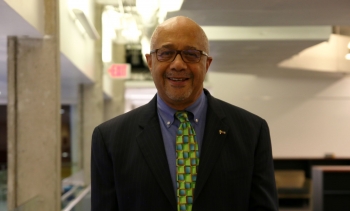
James Herbert Williams returns to teaching and scholarship when he steps down as director of ASU's School of Social Work July 1, 2021.
Download Full Image
Find out what's happening in Phoenixfor free with the latest updates from Patch.
His successor, Elizabeth Lightfoot, steps into the school director position July 1 from the University of Minnesota.
Williams returns to full-time teaching and scholarship as one of four editors of a book about the “Grand Challenges for Social Work,” a 10-year initiative to address significant health, social, economic and environmental problems impacting society. The profession’s focus on these 13 grand challenges should “move the needle” on identifying positive solutions to ameliorate these problems.
Williams is a board member and executive committee member of the Grand Challenges for Social Work. During his tenure, the School of Social Work has been very active with GCSW. The book is actually the second edition of one published at the start of the 10-year period five years ago. It will examine what’s been accomplished at the mid-point of the initiative, he said.
Williams is also editing a second book with his colleagues from the University of Houston; the University of California, Los Angeles; and Howard University, based on a co-sponsored four-part symposium, “Social Work, White Supremacy and Racial Justice.”
“The events of last summer reminded us (of) the need to hold the social work profession accountable for its racist history by providing a space for social workers to present their scholarship,” he said.
Williams said the school has made “some tremendous strides” since his arrival at ASU in 2017 from the University of Denver.
Since then the school has risen to No. 25 out of 296 accredited Master of Social Work programs in the United States in annual rankings by U.S. News & World Report, meaning the school is in the top 10%, Williams said. Four ASU faculty members are members of the prestigious American Academy of Social Work and Social Welfare.
The school's faculty and student populations are larger today and it offers a more expansive online program. A new Master of Social Work degree program is based in Yuma, Arizona, at the request of students who wanted a local in-person program, not an online one.
“People call it launching a program, but it’s really increasing community capacity,” he said of the Yuma Master of Social Work curriculum. “If you hold a program in Phoenix, graduates won’t leave the big city.”
The school, based at the Watts College of Public Service and Community Solutions, also succeeded in bringing a Master of Social Work program back to ASU’s West campus.
“Its presence is expanding our footprint, not just in the Valley but throughout the state,” Williams said of the program’s multiple locations.
Williams said he is particularly pleased that Professor Neil Websdale and the Family Violence Center he heads moved to ASU last fall from Northern Arizona University.
“(The center's) research and community engagement complement the work of the Office of Gender-Based Violence. Having FVC and OGBV increases our national recognition for innovation and high-quality scholarship in the areas of family violence and gender-based violence,” he said.
Williams also said he worked to make sure everyone employed at the school, whether tenured, tenure-track or fixed-term faculty or staff members, understands the school’s mission and knows how each is making important contributions to that mission.
He also said he has worked to make the School of Social Work a more student-centered, student-friendly school.
“This is a challenge, given our size, our multiple sites and research productivity,” Williams said. “We created more student-supportive programs.”
Looking forward, Williams said he believes the school has a very strong future. Labor statistics are predicting a growing need for social workers, he said, yet in the wake of the Black Lives Matter movement, much turmoil has surfaced in the profession in the past year.
“There are divisions in our profession who say we need to reassess our involvement with the child welfare system or our partnering with the police,” Williams said. “A self-assessment has occurred: We are asking, 'Who are we? How do we interact with other institutions and professions?' Those are big questions and big conversations we need to have.”
He said other big issues face the profession as well, in education, student debt, diversity of the school’s students and keeping its graduates in the profession.
In addition are salary issues — whether an MSW graduate will be paid a livable family wage.
“They come in with all the best intentions about what they want to accomplish – but given the cost of higher education, quality assurance and gatekeeping will be an important part of our profession,” Williams said.
This may not necessarily mean adapting to a model of measuring outcomes similar to those in the medical profession, he said, “but we have to show that what we’re doing actually works, otherwise, who’ll invest in it? Will this family be at a better place than when we started working with them?”
Williams said he’s confident in the future of social work because he’s seen in younger scholars that “our profession is in very good hands. They’re very well trained, more intentional and willing to address the big issues.”
Some days have been better than others, but Williams said throughout his time as director he always started his morning looking forward to going to his office.
“Academia is such a privileged profession. You get to spend your day with very bright people and you get to choose what research questions you want to investigate,” he said. “It has been a great opportunity to serve as director. I will miss my colleagues from being the director.”
Williams said he deeply appreciates the school’s administrative team and support staff.
“When you’re a leader you need to have people around you who take care of you. You don’t always need it from them, but it’s there when you need it,” he said. “I’m fortunate from my time at ASU to have a wonderful group of colleagues. You only can have accomplishments if you have the right people whom you put in the right place for them to succeed.”
Since the beginning of the pandemic, Arizona State University has played an integral part in the state’s public health response to the novel coronavirus. From developing and administering a saliva-based COVID-19 test to contact tracing and, more recently, vaccine distribution and site management.
As part of the wider university efforts on campus and in the community, students have had unprecedented opportunities to get involved and gain hands-on experience, too.

Edson College nursing students have had the opportunity to actively participate in the state's public health response to the pandemic.
Download Full Image
So far, more than 400 hundred students in ASU’s Edson College of Nursing and Health Innovation have participated in sample collection at university COVID-19 testing sites and have given thousands of COVID-19 vaccines to Arizonans at various distribution sites around the valley.
“It’s wonderful to be a part of the solution and to feel as though you’re making a difference to assist in any way that you can,” said Salina Bednarek, director of Edson College’s prelicensure programs. “We know the workforce here has been incredibly taxed, and being extra hands for these nurses and for all of our health care partners has been so meaningful. This has been an incredibly rewarding experience for our students.”
It’s also been an enlightening one, particularly for Brooke Taylor. A junior studying nursing at Edson College, Taylor has participated in vaccine distribution as part of her clinical experiences for course credits.
In late February, Taylor and seven other nursing students were at the Dignity Southeast Pod at Chandler-Gilbert Community College doing vaccinations, checking people in and helping in any way they could that day.
“It was great to be there, to interact with the public, to actually put into practice what we’re learning in class and to be able to provide such an important service by giving them the COVID-19 vaccine,” Taylor said.
Brooke Taylor, junior nursing student
During one such experience, Taylor says the day was flowing nicely and after a break for lunch, she was getting ready to return to vaccinating people. That’s when she heard a call for someone who knows American Sign Language.
“I turned around and could see that people were gesturing in their car, and I could tell they couldn’t hear,” she said.
Taylor didn’t hesitate, “I just signed to them and said, ‘Do you need someone who knows sign language?’ And they were like, ‘Yeah,’ and so I went over and was able to help check them in and I was able to give her the vaccine as well, which was pretty cool.”
Her willingness to immediately step up to help this family did not go unnoticed.
Clinical Instructor Christine Rozsavolgyi, who was overseeing the group of students that day, said watching this in real time filled her with pride.
“I watched the couple’s faces light up that someone was able to communicate with them who truly cares. It was especially touching because Brooke jumped in without hesitation, whereas some students tend to be shyer. I can honestly say she made a real impact on the patients, and the staff was very impressed as well,” said Rozsavolgyi.
For Taylor, the moment didn’t seem that significant at first. As the child of a deaf adult, she grew up signing. ASL was her first language, so when she saw the couple struggling to communicate she didn’t think twice about trying to help.
“Initially it was just kind of like, whatever, I don’t see what the big deal is. I know ASL and I’m used to translating for my mom, especially in health care situations. So of course I was going to do what I could to help. But then, a few minutes later, I turn around and I’m relying on family members to translate Spanish for me,” she said.
What Taylor recognized after those back-to-back experiences was that even though family members can translate for health care workers, they shouldn’t have to. These quick interactions demonstrated up close the lack of accessibility some families face when seeking care and the need for solutions.
“This is just one example of a barrier to health care for people in terms of communication, and this is only one population and there’s so many out there. So we, as future nurses and health care providers, need to be mindful of that and try to learn together how to approach these kinds of situations,” Taylor said.
She knows there are groups advocating for accessibility across the health care system and is grateful for those efforts, which will help both her mom and her future patients.
One of the ways Taylor is working toward a solution is to be an even more active ally through deepening her knowledge of the community she will eventually serve.
“Spanish is actually a language I’ve been wanting to learn, so after this experience, I went home and downloaded Duolingo to help me start on that,” she said.
And while she knows becoming trilingual won’t solve everyone’s challenges when it comes to accessing health care, it will improve the quality of care she’ll be able to provide for some and that’s a step in the right direction.
This press release was produced by Arizona State University. The views expressed here are the author’s own.