Schools
Arizona students are helping shape their educational experience
The Arizona Department of Education's Student Advisory Council is giving students a voice in the government.


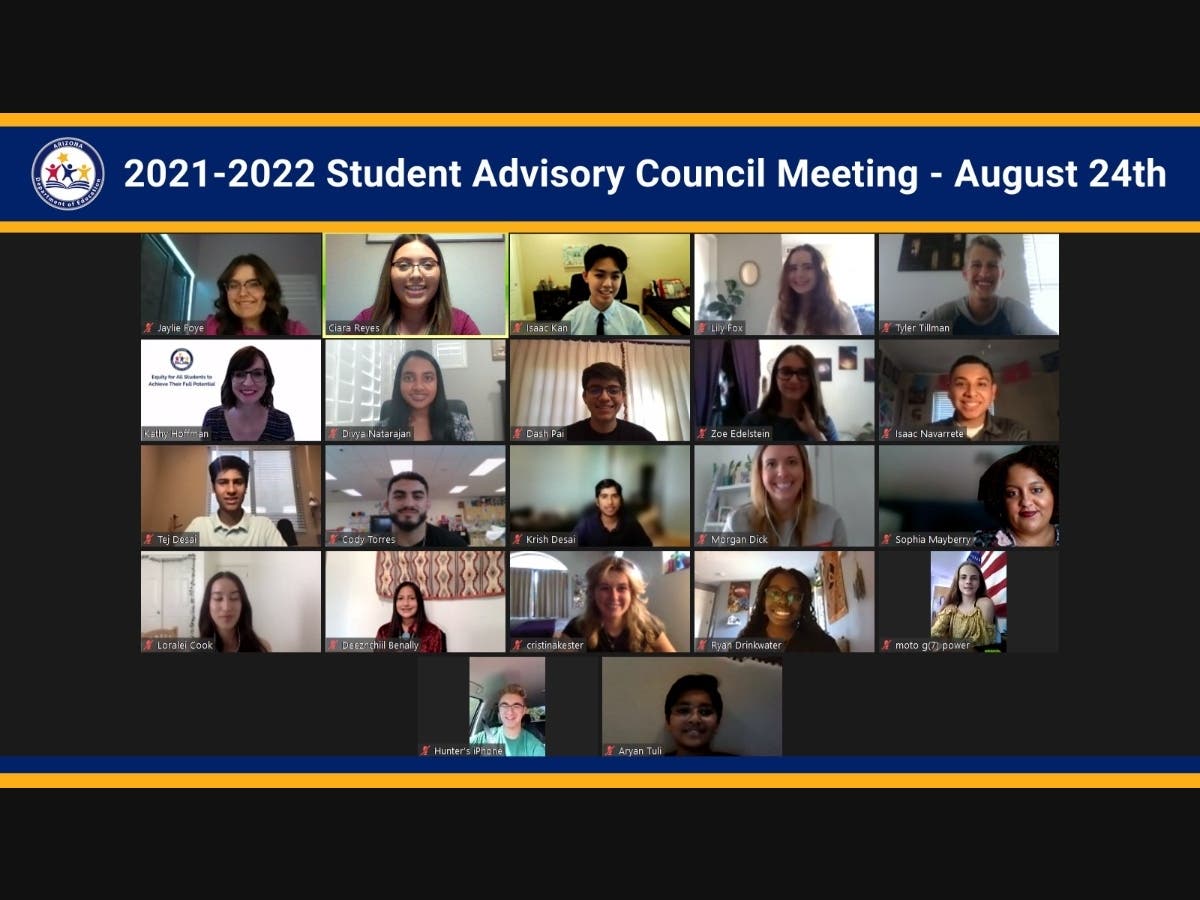
The third cohort of Arizona’s Student Advisory Council is already getting to work, advocating for student needs such as mental health and equal access to advanced education programs at the state level.
Kathy Hoffman, the Arizona Superintendent of Public Instruction, created the council in 2019 as
an outlet for students to share their experiences in the school system with the board of
education. 15 students ranging from fifth to twelfth grade participated in the council’s first year,
increasing to 20 students the following year.
Students within the council have various opportunities to inform the board of their ideas for
improvements, including speaking at monthly board meetings. During the Sept. 27th meeting,
Tej Desai, a junior at Paradise Valley High School, Lily Fox, a sophomore at McClintock High
School, and Jade Kuan, a senior at University High School, spoke on various issues they have
noticed within their school communities.
Find out what's happening in Phoenixfor free with the latest updates from Patch.
Desai and Kuan said that schools need to update their teaching of cultural backgrounds and
mental health, respectively. Desai noticed an increase in minority populations in the U.S. and a
lack of education about their cultures, while Kuan found that the mental health resources
provided in schools do not meet the needs of students coming out of the pandemic.
Desai suggested an expansion of the current music and arts programs to include instruction on
ethnic music and art, as he found that elementary-age children engaged most positively with
this medium.
“It was evident that these students had never truly been exposed to something like this before, I
saw their hands shoot up with questions … This truly emphasizes the urgency and importance
of cultural awareness,” he said.
Find out what's happening in Phoenixfor free with the latest updates from Patch.
Kuan brought forth various ideas to increase mental health awareness and provide resources in
schools, like holding assemblies aimed at raising awareness, hiring more mental health
professionals and updating the health curriculum to include information about mental health.
Kuan emphasized that in-school access to these resources is important in order to eliminate the
stigma surrounding mental health and to help underserved students who might not otherwise
receive mental health support.
Fox said testing for the gifted education program in Arizona should be reformed to diversify the
gifted population in schools. She said that her middle school consisted of about 80% students of
color, but the gifted program did not reflect this.
“About 95 of the gifted students were white and middle class, only about a third of us were
women, and I was one of three girls in my engineering class of 25,” Fox said.
She cited inconsistencies in identifying behavior that may indicate a student is eligible for the
gifted program as the problem. In order to remedy these inconsistencies, Fox proposed that the
state adopt “universal gifted testing,” so that all students have a chance to test into the program,
rather than only those selected by teachers and administrators.
In addition to the Student Advisory Council, Hoffman runs four other advisory councils that focus
on issues within specific communities. The Latinx, African American and Indian Education
Advisory Councils focus on the needs of their respective communities, while the Equitable and
Inclusive Practices Advisory Council covers a wide variety of backgrounds across Arizona.
The Latinx and African American Advisory Councils began accepting student council members
in 2019 — one high school student and one college student apiece. Prior to this, the existing
councils were exclusively made up of educators, Department of Education staff and Arizona
community members.
“Students provide a unique perspective about how policies impact the day-to-day life of students
on the ground in our schools,” the Department of Education said in a statement. One example
they provided is of students on the Latinx Advisory Council, who might provide the perspective
of being undocumented or having a mixed-status family in Arizona.
The councils do not have many established goals and agendas yet, as they reconvened for this
academic year very recently, however, one of the goals of the Student Advisory Council is to
hold the first AZ Student Summit, “a town hall type forum for Arizona students to propose ideas
on how to better Arizona schools,” according to a statement from the Department of Education.