Neighbor News
Art, Empowerment & Love: Free Arts and Florence Crittenton Support Tee
Art, Empowerment & Love: Free Arts and Florence Crittenton Support Teens Affected by Teen Dating Violence
By Courtney Denevi, BCBA, LBA, LCSW, Courtney Pratt, LPC, and Matt Sandoval, LMSW
National Teen Dating Violence Awareness Month (TDVAM) is observed each February to raise awareness about teen dating violence and provide resources for survivors. This initiative aims to educate communities, support victims, and promote healthy relationship behaviors among adolescents.
Violent relationships during adolescence can have severe and lasting consequences, increasing the risk of substance abuse, eating disorders, risky sexual behavior, and future experiences of domestic violence. Without proper support or preventive measures, dating violence may persist beyond adolescence and into adulthood.
Find out what's happening in Phoenixfor free with the latest updates from Patch.
Each year, nearly 1.5 million high school students across the United States experience physical abuse from a dating partner. However, many teens do not report these unhealthy behaviors due to fear or reluctance to confide in family and friends. According to data from the CDC, Domestic Violence Services, and Love is respect, approximately 1 in 10 teens has experienced sexual dating violence, including physical harm such as hitting, slapping, or other forms of abuse by a romantic partner. Unhealthy, abusive, or violent relationships negatively impact a teens’ development, leading to a higher likelihood of depression, anxiety, and antisocial behaviors such as lying, bullying, or aggression. Additionally, exposure to dating violence is associated with an increased risk of suicidal thoughts.
Here are some warning signs of teen dating violence:
Find out what's happening in Phoenixfor free with the latest updates from Patch.
· Withdrawing from family and friends
· Constantly communicating with their partner through text, calls, or emails
· Giving up hobbies or activities that were once important to them
· Declining academic performance or frequent school absences
· Experiencing pressure from their partner regarding decisions, activities, or appearance
· Feeling anxious about upsetting their partner
· Frequently apologizing for or justifying their partner’s behavior
· Unexplained injuries or attempts to conceal bruises or marks
· Having a partner who is extremely jealous or possessive
· Showing signs of depression or anxiety
· Having a partner who exhibits abusive behavior toward others or animals
· Suddenly changing their style of dress
It is important to recognize that these are warning signs to be aware of, but they do not necessarily indicate that a teen is in an abusive relationship. Some of these behaviors may also be part of the natural changes that occur during adolescence. However, if multiple signs are present or if there are concerns about a teens’ well-being, it may be beneficial to seek guidance from a trusted adult or professional.
Florence Crittenton provides critical support for vulnerable girls and young women in Arizona and is one of the few organizations offering gender-specific services. The organization operates a residential facility in midtown Phoenix, offering a therapeutic environment for youth who have experienced trauma, physical and sexual abuse, neglect, stigmatization, domestic and sexual violence, abandonment, homelessness, exploitation, addiction, and mental illness.
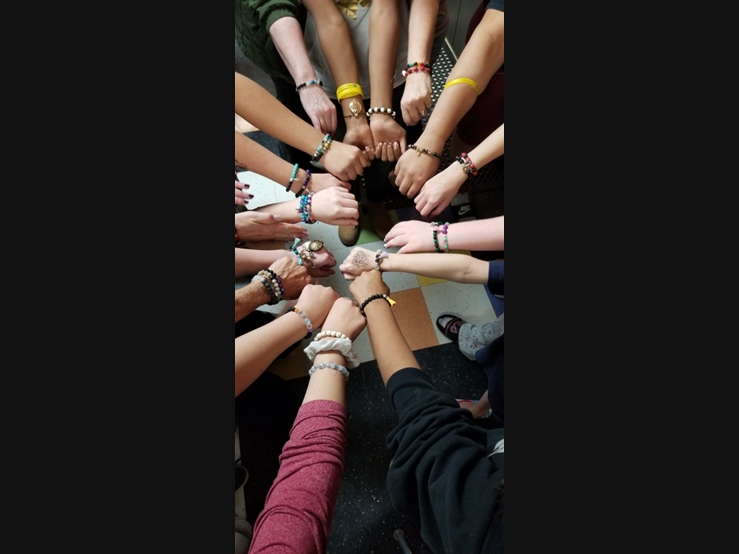
Florence Crittenton and Free Arts have worked together to offer trauma-informed art activities with trained adult mentors for over twenty years. Free Arts partners with youth serving agencies to provide trauma-informed art activities that transform trauma to resilience. Together, the partnership demonstrates an essential way communities can support those who experience teen dating violence through trauma-informed mentoring programs. The data backs this up! Social science data clearly show that adolescent well-being outcomes are improved when teens have relationships with caring adults. Roles like teacher, coach, and mentor create stress-lowering relationships between teens and adults. Connections like these can provide safety and acceptance for those who have experienced adversity and trauma. The program partnership emphasizes how art + mentors = resilience.
Participating in the arts with mentors allows adolescents who have experienced adversity or trauma to participate in a fun and relaxing atmosphere. In this experience, intentional art allows everyone to feel the care of others and foster self-compassion. Participating in art programs will enable people to access feelings and support while building skills and dreams of their future.
You can support this cause by volunteering as a mentor, donating to these nonprofits, and sharing how art heals and mentoring works for everyone!
For more information please check out our websites, https://www.flocrit.org and https://freeartsaz.org