Health & Fitness
Coronavirus: Phoenix Hospitals Lack Beds To Handle Patient Influx
Even with moderate coronavirus infection rates, Phoenix needs to expand patient beds three times over the next year to care for patients.


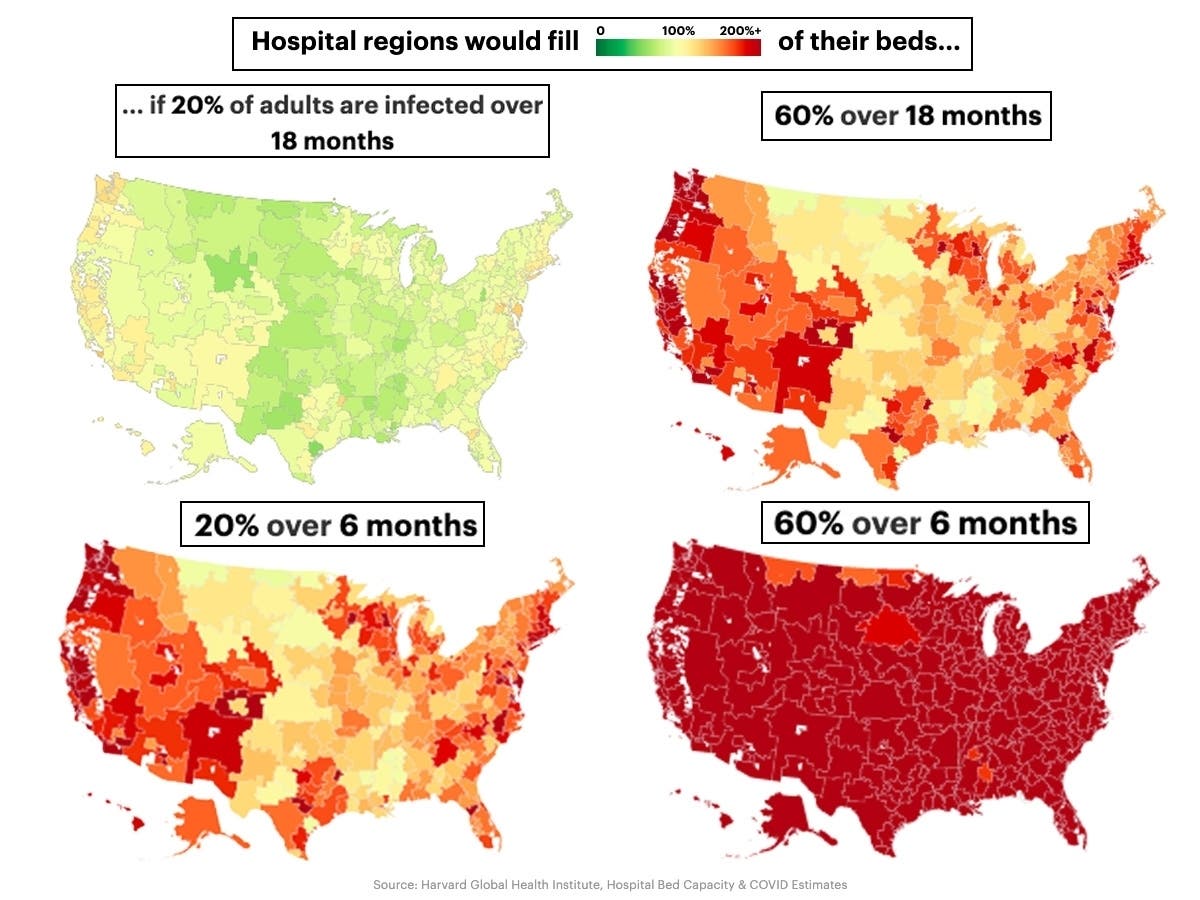
PHOENIX, AZ — Hospitals in the Phoenix metropolitan area could be overwhelmed with an influx of patients infected with the new coronavirus, and even under a “moderate” outbreak would need to expand capacity, according to a new report from ProPublica that uses data compiled by the Harvard Global Health Institute.
The report underscores an acute shortage of hospital beds nationwide and lack of preparedness for an onslaught of patients with COVID-19, the illness caused by the new virus. If 40 percent of the adult population contracts the illness over the next year, Phoenix would especially need additional intensive care beds to accommodate a projected 230,000 patients, according to the data.
In most scenarios, "vast communities in America are not prepared to take care of the COVID-19 patients showing up," said Dr. Ashish Jha, director of the health institute and leader of a team of researchers that developed the analysis.
Find out what's happening in Phoenixfor free with the latest updates from Patch.
For the latest on the new coronavirus in Phoenix, sign up for real-time news alerts and morning newsletters from Phoenix Patch.
Nationally, 6,519 cases of COVID-19 have been confirmed as of Wednesday morning, 21 of them in Arizona, according to a Johns Hopkins University real-time coronavirus case tracker. There have been 115 coronavirus-related deaths, none in Arizona.
Find out what's happening in Phoenixfor free with the latest updates from Patch.
Under the Harvard team’s definition of a “moderate scenario” — where 40 percent of the adult population contracts the disease over a 12-month period — 98.8 million Americans would develop a coronavirus infection, though many will have mild or no symptoms, and will not have their diagnoses confirmed by tests, according to the ProPublica report. Slightly more than a fifth of all cases will require Slightly more than a fifth of all cases will require hospitalization. (That's roughly the average number of patients requiring hospitalization for COVID-19 in other countries.)
The number of hospital beds nationwide would need to double over that 12-month period, either by freeing up existing beds or adding new ones. The situation is more acute in Phoenix.
From ProPublica:
In 2018, Phoenix had 6,980 total hospital beds, of which 63 percent were occupied, potentially leaving only 2,570 beds open for additional patients. The bed count includes 960 beds in intensive care units, according to data from the American Hospital Association and the American Hospital Directory. Intensive care units are best equipped to handle the most acute coronavirus cases.
The Phoenix region has a population of 3.7 million people, 15 percent of whom are over the age of 65. The experience in other countries has shown that elderly patients have significantly higher hospitalization and fatality rates from the coronavirus.
Under 40 percent of the adult population contracts the disease over 12 months, Phoenix, would be among the regions that would need to expand capacity.
How Prepared Are Tucson Hospitals For Coronavirus?
It is estimated that about 8 percent of the adult population would require hospital care. In a moderate scenario where 40 percent of the population is infected over a 12-month period, hospitals in Phoenix would receive an estimated 230,000 coronavirus patients. The influx of patients would require 7,670 beds over 12 months, which is three times the number of available beds in that time period. The Harvard researchers' scenarios assume that each coronavirus patient will require 12 days of hospital care on average, based on data from China.
In the Phoenix region, intensive care units would be especially overwhelmed and require additional capacity. Without coronavirus patients, there are only 420 available beds on average in intensive care units, which is four times times less than what is needed to care for all severe cases.
How Ready Are Phoenix Hospitals?
This is how many hospital beds will be needed in the Phoenix area if infections are spread out over six months, 12 months or 18 months:
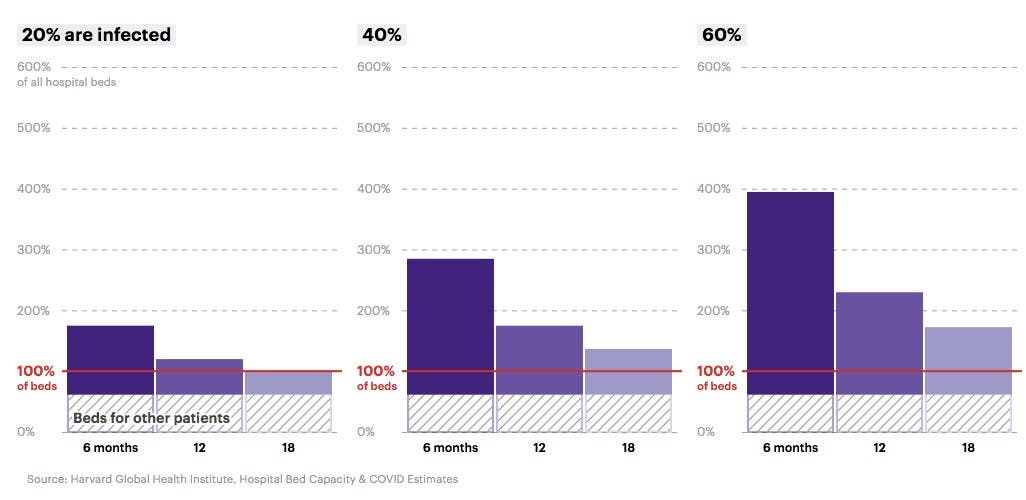
For the analysis, Jha and his team selected various rates of infection and modeled hospital capacity for each over three time periods, six months, 12 months and 18 months. The infection rate scenarios are based on estimates from leading epidemiologist Dr. Marc Lipsitch, head of the Harvard T.H. Chan School of Public Health’s Center for Communicable Disease Dynamics, who made the projections of how many people globally would be infected. (Read more about the methodology here.)
By modeling the data over the three time periods, the scenarios illustrate how much the nation could “flatten the curve” with social measures to ensure hospitals have greater capacity to care for coronavirus patients.
“The way to permanently stop new cases from setting off long chains of transmission is to have each case infect considerably less than one case on average,” Lipsitch said. “The numbers will go down. There will still be little outbreaks, but not big ones.”
ProPublica, a Patch Partner, is a nonprofit newsroom that investigates abuses of power and other public concerns. Click here to see ProPublica’s full story and specifics about hospitals in your area.
Get more local news delivered straight to your inbox. Sign up for free Patch newsletters and alerts.