Politics & Government
Arizona Senate Midterm Election: Sinema-McSally Race Called
Closely watched U.S. Senate midterm race between two congresswomen — Democrat Kyrsten Sinema and Republican Martha McSally — now called.


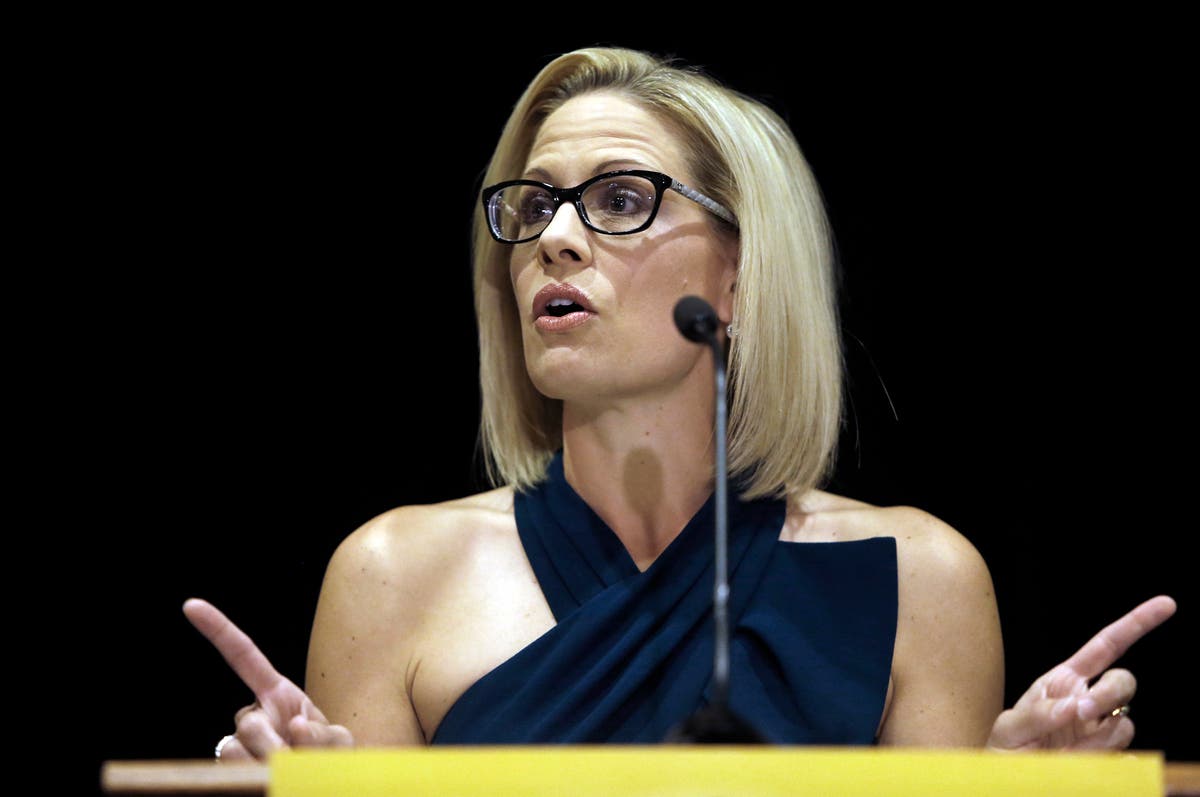
PHOENIX, AZ — Democratic Congresswoman Kyrsten Sinema will become the first woman Arizona voters have elected to the U.S. Senate after the closely watched race was called in her favor Monday night. As of 5 p.m. Monday, Sinema was leading Republican Congresswoman Martha McSally by 38,197 votes after swamping the Republican in her home district in the Tucson area.
The race was called by The Associated Press, The New York Times, CNN and other news organizations that said McSally’s deficit in the Republican-leaning state was too large to erase.
Sinema not only makes history as the first woman senator in the state’s 106-year history, but also is the the first openly bisexual senator in U.S. history. She is the first Democrat Arizona has elected to the Senate since 1988.
Find out what's happening in Phoenixfor free with the latest updates from Patch.
“I am so honored that Arizonans chose our vision of a better Arizona, and now it's time to get to work," Sinema told supporters gathered in Paradise Valley Monday, The Arizona Republic reported. "Arizonans had a choice between two very different ways forward. One focused on fear and party politics, and one focused on Arizona and the issues that mattered to Arizona families."
McSally tweeted her congratulations to Sinema. “I wish her success,” McSally wrote. “I’m grateful to all those who supported me in this journey. I’m inspired by Arizonans’ spirit and our state’s best days are ahead of us.”
Find out what's happening in Phoenixfor free with the latest updates from Patch.
Congrats to @kyrstensinema. I wish her success. I’m grateful to all those who supported me in this journey. I’m inspired by Arizonans’ spirit and our state’s best days are ahead of us. pic.twitter.com/tw0uKgi3oO
— McSally For Senate (@MarthaMcSally) November 13, 2018
Republicans had hoped to hold on to the seat, which is being vacated by Sen. Jeff Flake, who said his criticism of President Trump made his re-election impossible.
Flake also congratulated Sinema.
"Congratulations to @kyrstensinema on a race well run, and won," Flake tweeted. It’s been a wonderful honor representing Arizona in the Senate. You’ll be great."
Sinema’s victory narrows Republicans’ margin in the Senate to four seats (51-47). Two more Senate races — one in Florida, where a recount was ordered, and the other in Mississippi, where a Nov. 27 runoff election will decide the winner — remain unresolved.
The "blue wave" Democrats predicted in response to Trump's unorthodox presidency didn't materialize entirely as planned, but the slow roll of wins has given the party plenty to celebrate.
Trump was quick to claim victory for his party on election night. But the Democrats, who hit political rock bottom just two years ago, have now picked up at least 32 seats in the House — and lead in four more — in addition to flipping seven governorships and eight state legislative chambers.
The overall results in the first nationwide election of the Trump presidency represent the Democratic Party's best midterm performance since Watergate.
"Over the last week we've moved from relief at winning the House to rejoicing at a genuine wave of diverse, progressive and inspiring Democrats winning office," said Ben Wikler, Washington director of the liberal group MoveOn.
The blue shift alters the trajectory of Trump's next two years in the White House, breaking up the Republican monopoly in Washington. It also gives Democrats stronger footing in key states ahead of the next presidential race and in the redrawing of congressional districts — a complicated process that has been dominated by the GOP, which has drawn favorable boundaries for their candidates.
Trump and his allies discounted the Democratic victories on Monday, pointing to GOP successes in Republican-leaning states.
"Thanks to the grassroots support for @realDonaldTrump and our party's ground game, we were able to #DefyHistory and make gains in the Senate!" Republican National Committee Chairwoman Ronna McDaniel tweeted, citing Senate wins in Indiana, Missouri, North Dakota and Tennessee, among others.
Indeed, just once in the past three decades had a sitting president added Senate seats in his first midterm election. But lost in McDaniel's assessment was the difficult 2018 Senate landscape for Democrats, who were defending 10 seats in states Trump carried just two years ago.
Democratic National Committee Chairman Tom Perez said in an interview: "I believe in facts. And the fact of the matter is, the Democratic Party had a historic night at the ballot box — and we are not resting,"
He said, "Our goal was to compete everywhere, to expand and reshape the electorate everywhere — and that's exactly what we've done."
The Democrats found success by attracting support from women, minorities and college-educated voters. Overall, 50 percent of white college-educated voters and 56 percent of women backed Democrats nationwide, according to AP VoteCast, a wide-ranging survey of the electorate.
Democrats featured historic diversity on the ballot.
Their winning class includes Massachusetts' first African-American female member of Congress, Ayanna Presley, and Michigan's Rashida Talib and Minnesota's Ilhan Omar, the first two Muslim women to serve in Congress, along with Kansas' Sharice Davids, the first lesbian Native American.
They also won by running candidates with military backgrounds who openly embraced gun ownership, such as Pennsylvania Rep. Conor Lamb and Maine's Jared Golden, who is poised to win his contest because of the state's ranked-choice voting system.
The Democrats needed to gain 23 seats to seize the House majority. Once all the votes are counted, which could take weeks in some cases as absentees and provisional ballots are tallied, they could win close to 40.
Democrats have not lost a single House incumbent so far. Yet they defeated Republican targets such as Reps. Mike Coffman of Colorado, Barbara Comstock of Virginia, Carlos Curbelo of Florida and Dana Rohrabacher of California.
They could win as many as 19 House races in districts carried by Trump two years ago, according to House Democrats' campaign arm.
Ten House races remained too close for the AP to call as of Monday evening.
The Associated Press contributed reporting.
U.S. Sen.-elect Kyrsten Sinema, an Arizona Democrat, speaks after being declared the winner over Republican challenger U.S. Rep. Martha McSally on Monday, Nov. 12, 2018. Sinema won Arizona's open U.S. Senate seat in a race that was among the most closely watched in the nation, beating McSally in the battle to replace GOP Sen. Jeff Flake. (AP Photo/Rick Scuteri)
Get more local news delivered straight to your inbox. Sign up for free Patch newsletters and alerts.