Politics & Government
Bills, Bills And More Bills At California Legislature
Lawmakers have been back to work for a month and the legislative session is starting to pick up steam.

CALIFORNIA — They’ve been back for nearly a month, so it’s time for California lawmakers to deliver on some of their campaign promises.
Let’s get to the highlights from a busy Monday at the state Capitol (warning: prepare for quite a bit of déjà vu):
Find out what's happening in Across Californiafor free with the latest updates from Patch.
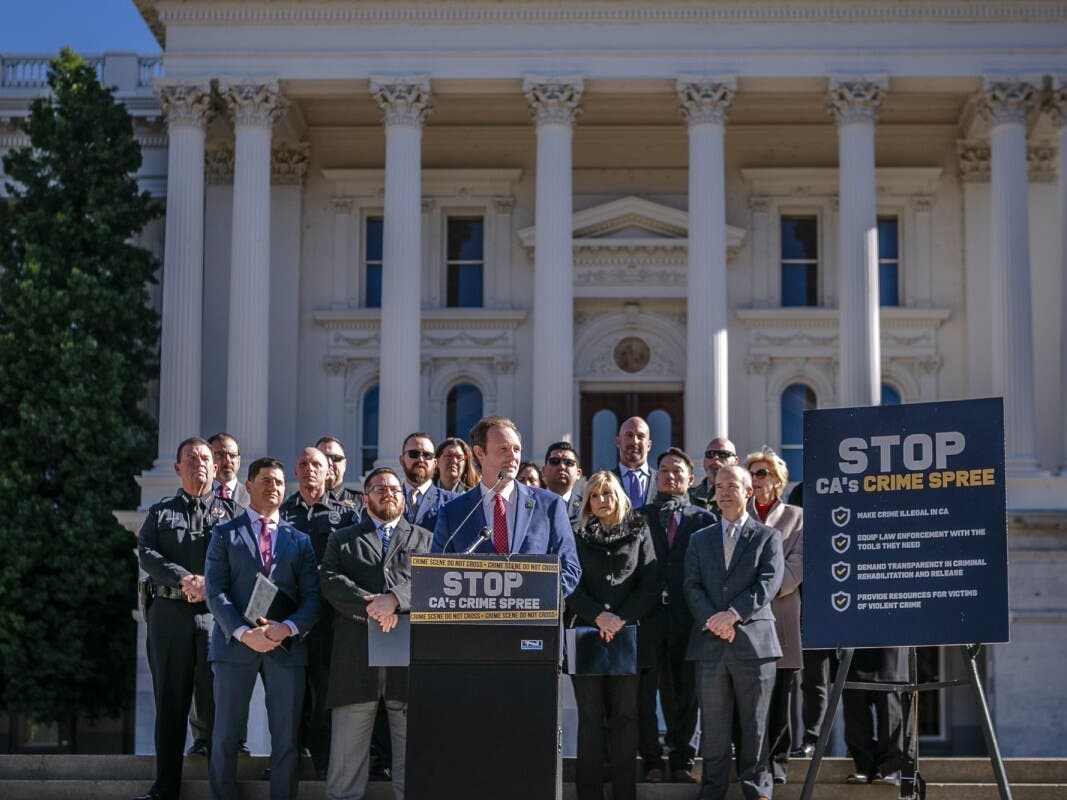
Public safety: Republican legislators unveiled a package of bills — acknowledging the recent mass shootings in Monterey Park and Half Moon Bay, as well as the deaths of two officers in Riverside County — but also bringing back some prior ideas.
The Assembly GOP caucus proposals include:
Find out what's happening in Across Californiafor free with the latest updates from Patch.
– Assembly Bill 328, by Riverside-area Assemblymember Bill Essayli, would reinstate the 10 or 20 years-to-life mandatory sentencing enhancement for using a firearm in the course of a violent crime
– AB 335 by Modesto-area Assemblymember Juan Alanis, would repeal Proposition 47, approved by voters in 2014 to reduce some theft and drug possession offenses from felonies to misdemeanors.
– AB 27, by Orange County Assemblymember Tri Ta would prevent courts from reducing sentences for those charged with felonies with a firearm.
– AB 75 by Assemblymember Josh Hoover, from Folsom re-ups an effort to increase penalties for serial theft offenses.
– AB 88 by Murrieta Assemblymember Kate Sanchez, would require district attorneys to notify crime victims of parole hearings.
– Granite Bay Assemblymember Joe Patterson proposed requiring more transparency into when and why inmates are being released early.
- Essayli: “We don’t need more gun control. We need crime control.”
While Assembly Republican leader James Gallagher of Chico said he believes there will be “bipartisan support for these reasonable reforms,” some GOP lawmakers acknowledged the reality that many of these bills won’t pass, noting that similar bills introduced by Democrats had failed, too.
Climate change: Democratic Sens. Scott Wiener of San Francisco, Lena Gonzales of Long Beach and Henry Stern from Calabasas introduced, or rather reintroduced, a package of bills.
Wiener put forward SB 253, the Climate Corporate Data Accountability Act — a bill that failed last year to require corporations with more than $1 billion in revenue that operate in California to publicly disclose their greenhouse gas emissions. He said the bill would make corporations “a heck of a lot more interested in buying clean energy.”
- Wiener: “It gives large corporations two options: disclose your emissions publicly or stop doing business in California — and they won’t choose the latter.”
Gonzalez introduced SB 252, a proposal that was also blocked last year and that seeks to force the state’s public pension funds to divest from fossil fuels. Stern introduced SB 261, another measure that also failed last year. It requires companies that earn more than $500 million in revenue to prepare climate-related financial risk reports.
The climate efforts come in the midst of negotiations to cover a projected $22.5 billion budget deficit. Newsom has proposed cutting $6 billion from the $54 billion, five-year climate package he pushed through last year.
Wait, even more happened Monday:
Natural gas bills: The Senate Republican Caucus fired off a letter to the California Public Utilities Commission demanding it offer financial relief to families facing skyrocketing bills when it meets this week.
- “Californians are facing natural gas bills that are double and even triple their usual cost. These high gas bills add to the financial hardships Californian families are already facing, such as rising inflation and high cost of living.”
Media access: State Sen. Nancy Skinner, a Berkeley Democrat, introduced legislation to restore media access to California prisons and jails, as well as opening access to prisons for legislators and other state officials for effective oversight.
- Skinner: “California used to allow the news media much greater access to state prisons, enabling us to learn more about prison conditions. But for the past three decades, California prisons have been among the least transparent in the nation.”
CalMatters covers the Legislature: CalMatters offers guides to keep track of your lawmakers, explore its record diversity, make your voice heard and understand how state government works. We also have Spanish-language versions for the Legislature’s demographics and the state government explainer.
Other Stories You Should Know
1
Clinics await mpox money

Fresno resident Gonzalo Garcia receives the monkeypox vaccine on Aug. 24, 2022. Photo by Larry Valenzuela, CalMatters/CatchLight Local
It hasn’t just been the threat of COVID hanging over our lives. Last year, another infectious disease emerged — monkeypox, later renamed “mpox” to lessen the stigma.
But while the federal state of emergency ends today (and Newsom also ended the state’s version), community clinics and LGBTQ health centers that opened mass vaccination sites are still waiting for reimbursement from the state and federal governments. And that wait for potentially millions of dollars isn’t likely to end soon, CalMatters health reporter Kristen Hwang writes.
The Legislature released $41 million in emergency funding for mpox response efforts last year, half of which has stayed with the state Department of Public Health. Approximately $1.4 million went to community organizations helping directly with vaccine efforts, but organizations say it’s not nearly enough to cover their costs.
- Ward Carpenter, chief health officer with the Los Angeles LGBT Center: “This was everything we did for probably three months. We were barely able to keep our urgent care visits open for non-mpox related things.”
After California reported its first mpox case in Sacramento last May, an isolated travel-related infection quickly became a statewide outbreak. It peaked in August at 145 cases in one day, according to state data. In the most recent data, there were only two cases reported on Jan. 10. Still, more than 5,700 total cases have been reported in California, the most of any state, including the country’s first death. And officials have not set an end date for California’s mpox emergency.
- Carpenter: “The virus isn’t gone. It’s not surging right now, but it’s not gone, so we’re at risk of a resurgence.”
Meanwhile, the White House told Congress Monday that the federal COVID state of emergency will end on May 11. That’s more than two months after California’s own state of emergency is set to expire. At last count, California has recorded more than 11 million COVID cases and 99,000 deaths.
2
Newsom on his ‘why’

Gov. Gavin Newsom visits businesses across the street from where a mass shooting took place in Monterey Park on Jan. 23, 2023. Pablo Unzueta for CalMatters
These days, Gov. Newsom is just as likely to talk to a national news anchor as answer questions from the Capitol press corps.
Or be a guest on a podcast on leadership hosted by Bob Myers, general manager of the Golden State Warriors, in the NBA team’s locker room.
In the 38-minute video segment out today on “Lead by Example” from Omaha Productions, Newsom talks to Myers about how sports gave him more confidence to overcome dyslexia and a lisp growing up — and helped him learn the value of hard work: “My entire life is desperate not to be laughed at, embarrassed.”
The governor also discusses how he took a leadership role on gay marriage as San Francisco mayor — “It was the most ennobling and extraordinary thing” — though it carried some political risk.
With any difficult decision, Newsom said he asks: “What’s your why?” For him: “Standing up for ideals and striking out against injustice.”
He also said that political leadership, and life, is often about showing up, being persistent and facing challenges and overcoming “stupid decisions,” alluding to his infamous mask-less dinner at the French Laundry restaurant during COVID restrictions.
- Newsom: “I made some damn mistakes. But you also own the mistakes…I’m not trying to model perfection.”
While he again criticized the “cruelty” of Republican governors of “exploiting” migrant children to make a political point, he said Democrats are losing the messaging battle: “Narrative is dominating facts.”
Asked by Myers about the legacy he wants to leave his children, Newsom said he hopes they learn empathy, respect and honor and want to make the world a better place.
- Newsom: “If I can leave any of that as an example — a shred of that in their lives to the example that is my life — man, I’ll feel like my life was worth living.”
CalMatters Commentary
CalMatters columnist Dan Walters: At least a half-dozen high-impact measures are likely to appear on the 2024 California ballot, generating multi-million-dollar campaigns for and against.
California’s rural and inland regions have been left behind, and while the state has set aside billions to support regional growth, more work is needed to ensure those resources are used wisely, argue Bill Emmerson and Gil Garcetti of the Little Hoover Commission.
CalMatters.org is a nonprofit, nonpartisan media venture explaining California policies and politics. Sign up for our newsletters and follow us on Facebook, Twitter and Instagram.