Politics & Government
CA Can't Ban Indoor Church Service, Supreme Court Says
California can't bar indoor church services amid the coronavirus pandemic, justices said, but it can ban singing and chanting.


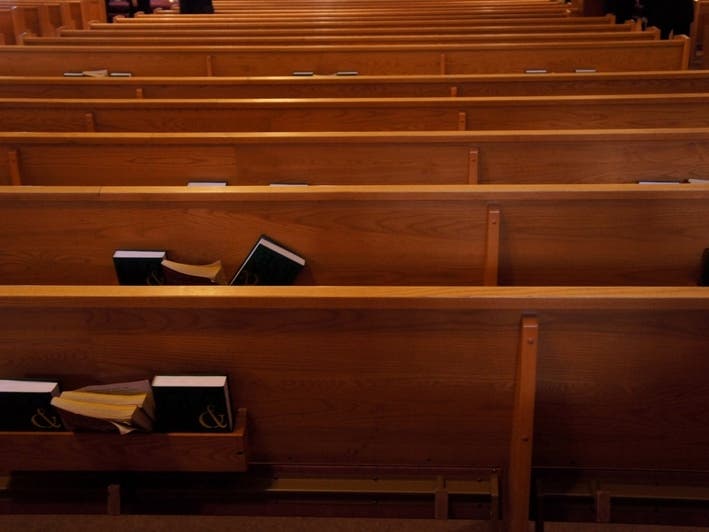
CALIFORNIA — Californians will be able to attend worship indoors again after the Supreme Court ruled Friday that the state can't enforce a ban on indoor church services set in place by Gov. Gavin Newsom to mitigate the spread of coronavirus.
However, the court said that the state may temporarily keep its ban on singing and chanting indoors, and attendance can be capped at 25 percent. The decision came down after two Golden State churches sued over coronavirus restrictions.
In a 6-3 vote late Friday, justices cited the Constitution's protection of the free exercise of religion.
Find out what's happening in Across Californiafor free with the latest updates from Patch.
"When a State so obviously targets religion for differential treatment, our job becomes that much clearer, " the court said. "As the Ninth Circuit recognized, regulations like these violate the First Amendment unless the State can show they are the least restrictive means of achieving a compelling government interest."
Justice Neil Gorsuch accused the state of singling out religious sectors over others such as transportation depots and shopping malls where people are often seen crowding together.
Find out what's happening in Across Californiafor free with the latest updates from Patch.
"[California] touts its mild climate, too, suggesting that worshippers might enjoy more space out-doors," Gorsuch wrote in a statement." Yet, California is not as concerned with the close physical proximity of hairstylists or manicurists to their customers, whom they touch and remain near for extended periods."
Gorsuch also said that the ban on singing was unfair when comparing worship to the entertainment industry.
"...if Hollywood may host a studio audience or film a singing competition while not a single soul may enter California’s churches, synagogues, and mosques, something has gone seriously awry," Gorsuch wrote.
Justice Amy Coney Barrett debuted her first opinion since she was appointed by former President Donald Trump, joined by Justice Brett Kavanaugh. Barrett mosty agreed with Gorsuch, but would vote to uphold the singing ban.
"Of course, if a chorister can sing in a Hollywood studio but not in her church, California’s regulations cannot be viewed as neutral," Barret wrote. "But the record is uncertain, and the decisions below unfortunately shed little light on the issue."
Chief Justice John Roberts said he would vote to uphold the singing ban for now, health experts to science to determine its risk level.
"The state has concluded, for example, that singing indoors poses a heightened risk of transmitting Covid-19," Roberts wrote. "I see no basis in this record for overriding that aspect of the state public health framework."
Dissenting from the decision, Justice Elena Kagan, said that the court was forcing California to "ignore its experts' scientific findings," maintaining that there are 'good reasons why the Constitution “principally entrusts the safety and the health of the people' to state officials, not federal courts.
Kagan's statement was backed by fellow Democratic Justices Sonia Sotomayor and Stephen Breyer.
Roberts wrote that federal courts owe "significant deference" to politically accountable officials in public health matters, but said that deference has its limits.
"The state's present determination — that the maximum number of adherents who can safely worship in the most cavernous cathedral is zero — appears to reflect not expertise or discretion, but instead insufficient appreciation or consideration of the interests at stake," Roberts wrote.
The two churches who sued Newsom over the ban, South Bay United Pentecostal Church in Chula Vista and Harvest Rock Church and Harvest International Ministry in Pasadena, celebrated the win Saturday morning.
"We are heartened by this order from the United States Supreme Court allowing South Bay to gather for worship this weekend while our case against Governor Newsom continues," said Charles LiMandri, special counsel for Thomas More Society, a national public interest law firm that worked with the Chula Vista church on the case. "... For decades, the Supreme Court has repeatedly recognized that an 'emergency does not increase granted power,' and they have specifically come down against excessive gubernatorial overreach during the current pandemic."
The City News Service contributed to this report.
Get more local news delivered straight to your inbox. Sign up for free Patch newsletters and alerts.