Health & Fitness
CA Considers Emergency Declaration Over Monkeypox
Top health officials in CA are scrambling to expand testing, vaccinations and garner more information about the monkeypox virus.


CALIFORNIA — In the midst of another summertime coronavirus surge, Californians have been met with another viral threat, the monkeypox-virus.
Although the virus is less contagious and is rarely fatal, cases are increasing in the Golden State. Still, officials are undecided as to whether a statewide emergency should be declared.
"We're looking carefully to decide whether we need to do an official declaration of emergency," Dr. Tomás Aragón, director of the California Department of Public Health said at a briefing with reporters. At the moment, the state is “really mobilizing the tremendous resources and infrastructure that we built for COVID, and using it now for monkeypox.”
Find out what's happening in Across Californiafor free with the latest updates from Patch.
Aragón urged that the state is focused on improving access to the vaccine and acting with "utmost urgency" to slow the spread of the virus.
San Francisco declared a public health state of emergency Thursday in respond to multiplying cases across the city. The city has reported at least 281 people with monkeypox and those figures look to climb in the coming weeks, authorities announced. As of Saturday, no other California city had declared an emergency.
Find out what's happening in Across Californiafor free with the latest updates from Patch.
Statewide, 786 probable and confirmed monkeypox cases had been reported as of Thursday. As of Thursday, the state expanded its testing capacity to accommodate 1,000 tests a week.
While monkeypox is rarely deadly, the lesions and blisters caused by the virus are painful, and they can prevent swallowing or bowel movements if in the throat or anus.
“We are getting just a very high volume of folks who are calling with very real fear and anxiety, and people who are calling in very real pain. Those who do have monkeypox and are struggling to get access to treatments,” said Tyler TerMeer, chief executive officer of the San Francisco AIDS Foundation.
The monkeypox virus spreads through prolonged and close skin-to-skin contact, including hugging, cuddling and kissing as well as sharing bedding, towels and clothing. The virus can infect anyone engaging in sexual activity.
People generally recover within weeks and infections are rarely fatal, according to health officials.
California officials noted rhetoric aimed at the LGBTQ+ community in its monkeypox briefing on Friday, decrying the claim that men having sex with other men were more at risk than other populations.
"Our team is also committed to reducing stigma among the LGBTQ community, which has been singled out and treated unfairly because of this outbreak. No single individual or community is to blame for the spread of any virus," state officials wrote in a release.
Members of the LGBTQ+ community have become ourtraged with the stagnant rollout of the vaccine from government at all levels.
They've expressed frustration over the inability to get the vaccine and fears they're being abandoned yet again in a public health crisis, much as they were with HIV and AIDS.
The problem has been a national shortage of vaccine. On Friday, the state's two U.S. senators sent a letter to Health and Human Services Secretary Xavier Becerra urging him to provide at least 600,000 additional doses of the monkeypox vaccine to his home state.
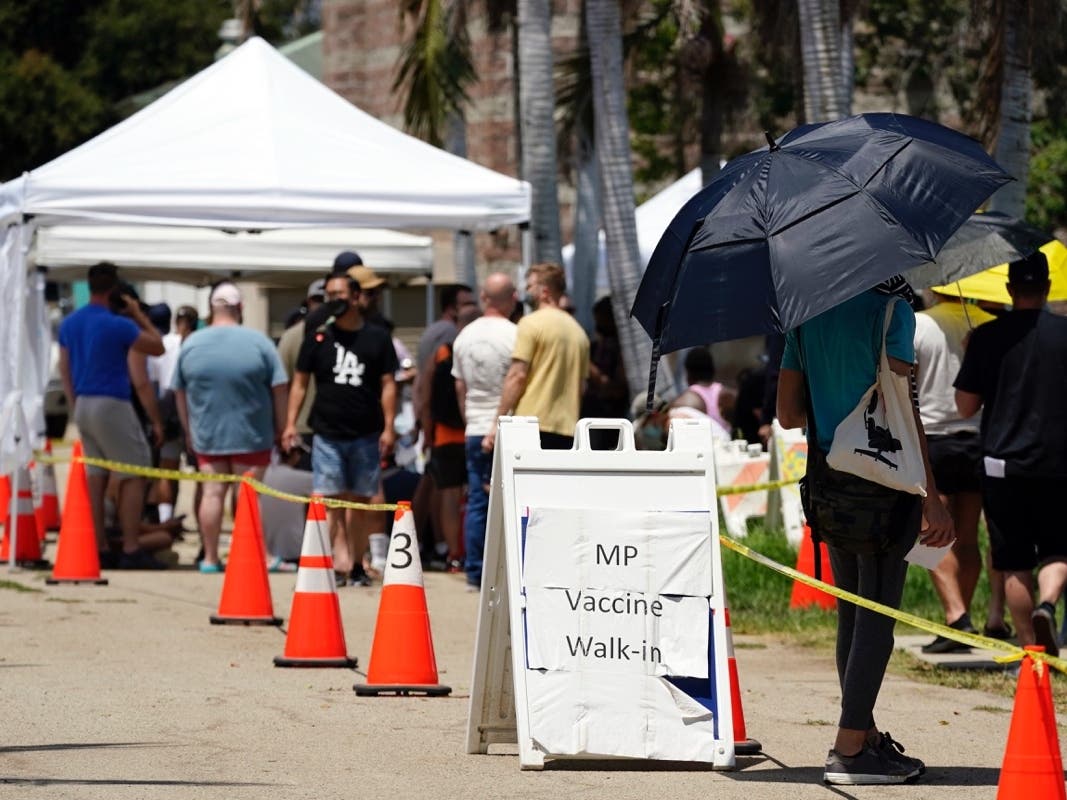
Last week, officials urged the federal government to amp up supply to the monkeypox vaccine — JYNNEOS — as "quickly as possible." California leaders said they needed an additional 600,000 to 800,000 doses. As of Thursday, the state had 25,000 doses that would be made available to at-risk population, CDPH officials said.
Health officials confirmed that the state was confirmed to receive another 72,000 doses, plus another 48,000 for Los Angeles County.
A spokesperson for the office of California Gov. Gavin Newsom said the state has also contacted the manufacturer directly, with discussions continuing on vaccine supplies, logistics, and how California could get additional doses.
“We’re not even close to where we need to be,” said Newsom last week in an interview with KTVU-TV.
California Sen. Scott Wiener (D-San Francisco) urged the state to declare an emergency, which would provide greater flexibility around testing and vaccinations. But he also noted Friday that state leaders have acted with an appropriate sense of urgency.
"At this point, I think local, state, federal, we’re all rowing in the same direction. We just all need to row faster because we have a limited window of time to control this outbreak," he said.
The Associated Press contributed to this report.
Get more local news delivered straight to your inbox. Sign up for free Patch newsletters and alerts.