Crime & Safety
CA Fires 2020: Golden State Sees First 1M Acre Single Wildfire
The state's largest ever fire season surpassed a 4M acre milestone this week. Here's everything we know about wildfires burning across CA.


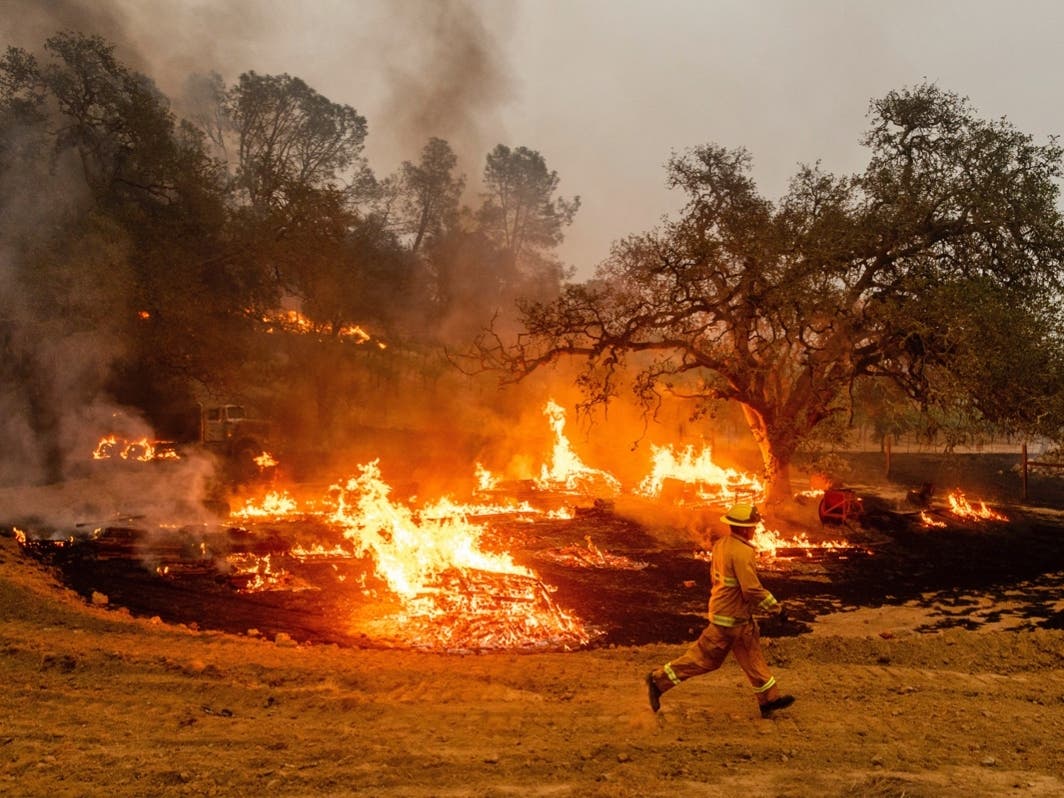

CALIFORNIA — The Golden State recorded not one but two grim wildfire milestones for the history books over the past two days. The August Complex Fire became California's first 1 million-acre wildfire Monday; and more than 4 million acres have now burned across the entire state — scorching more than double the acreage of any other fire season in state history.
More than 16,600 firefighters were working Monday to suppress 23 major wildfires and one new fire of concern in Amador County. The Lambert Fire was burning 7 miles Southeast of Rancho Murieta and had burned 21 acres with 10 percent containment Monday.
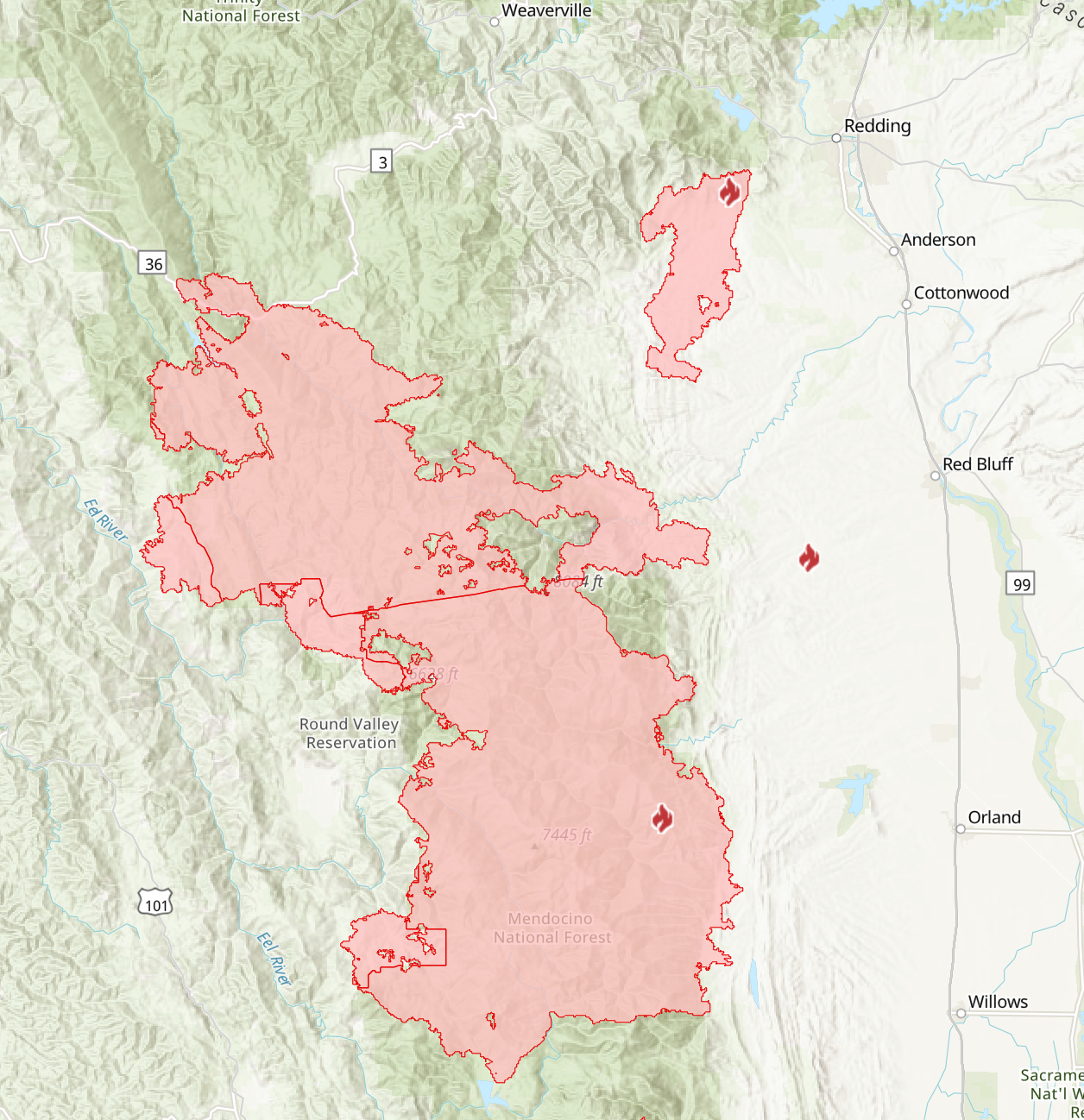
The August Complex Fire was already California's largest wildfire in state history, but it smashed another record as it grew to 1,002,097 acres over the weekend. The massive blaze has been smoldering since Aug. 17 from the Mendocino National Forest, all the way up to the Shasta Trinity National Forest, threatening a mega merger with the Zogg Fire, burning less than 10 miles away.
Find out what's happening in Across Californiafor free with the latest updates from Patch.
The Zogg Fire, burning near Redding, has scorched 56,305 acres, but fire crews made good progress on containment over the weekend, holding the blaze at 76 percent.
So far, more than 8,687 known structures have been lost across the state, and 31 people have died.
Find out what's happening in Across Californiafor free with the latest updates from Patch.
Temperatures will remain unseasonably warm Monday across the state, with little humidity in sight. Winds will continue to push through the west edge of Sacramento Valley, the North and East Bay and Southern California's mountain ranges. Firefighters remain vigilant for more sparks as these conditions persist.
Fortunately, seasonal temperatures are expected to cool the state by the end of the week, with a chance of rain in the north.
"California historically experiences some of the most devastating wildfires in the months of September and October," Cal Fire said Monday.
A dry landscape, combined with persistent and historically high temperatures this year, have kept the state in an extended fire season. California may be in for a dry winter as La Nina conditions have been forecast, which could keep the state in a relatively warm and arid weather pattern.
California's largest ever fire season may not be over until November.
As fire crews made good progress on containing the Zogg Fire, first responders were still struggling to save the state's wine country, where the devastating Glass Fire has consumed more than 1,235 structures.
Aided by dry and warm air, the Glass Fire burned actively overnight and has scorched 65,580 acres with 30 percent containment.
The fire has also destroyed historic landmarks and famed wineries along Silverado Trail, nestled within Napa Valley.
A 120-year-old home at Tofaneli Vineyard and the 41-year-old Chateau Boswell Winery were lost to the flames last week. It was still too early to tell at this point how many landmarks and businesses were reduced to ash in the fast-moving fire, but some business owners did report on social media last week that their establishments were still standing.
The Glass Fire has consumed countless homes, sending tens of thousands fleeing from their communities in Napa and Sonoma counties throughout the week. Fortunately, no new evacuation orders have been issued since Thursday, with some evacuation orders reduced to warnings in areas of Sonoma County and parts of Santa Rosa.
The entire city of Calistoga was evacuated a week ago as incoming flames threatened to engulf the city. More than 5,000 people in Calistoga were forced to flee.
Although no cause has been determined for the Zogg and Glass fires, last weekend's dry heat wave is largely to blame.
The orphaned mtn lion rescued from the #ZoggFire has a name: Captain Cal....named after @CAL_FIRE's mascot.
Our vet staff is treating Captain Cal's injured feet today. He's been eating & looks much better than he did when he arrived. We'll keep you posted on how he's doing! pic.twitter.com/L4T3Xg6CdN
— Oakland Zoo (@oakzoo) October 2, 2020
This historic fire year points to what Cal Fire, environmental scientists and some politicians have been warning all along: climate change.
Gov. Gavin Newsom has repeatedly urged constituents and fellow politicians in his daily news briefings to look at the data behind rising temperatures in California and how temperatures have contributed to the growth of fire seasons over the years.
"Data and science are not beliefs," Newsom said during a mid-September news conference. "You have to acknowledge facts."
In 2020 alone, some 8,300 fires have incinerated 4 million acres.
And since Aug. 15, when a series of unseasonal dry lightning storms ignited dozens of major fires, the state has been breaking records for acres burned at a rapid pace.
SEE ALSO: Historic Chateau Boswell Winery Burns Down; More Landmarks Lost
Thirty-three members of California's congressional delegation, including Rep. Judy Chu, House Speaker Nancy Pelosi and House Minority Leader Kevin McCarthy, wrote a letter to President Donald Trump last week urging him to support Newsom's request for a Major Disaster Declaration to respond to the wildfires raging in California, including the Bobcat Fire, which is burning in Chu's district.
Cal Fire offers a website to help people prepare for and prevent wildfires. Ready For Wildfires can be accessed here.
READ MORE: SEE ALSO: Wildfire Smoke Could Affect Pregnant Women Disproportionately
As fire season rages on, new records continue to be set.
Cal Fire says these new records have been recorded this season:
- 5 of the Top 20 largest wildfires in California History have occurred in 2020.
- Largest Wildfires - #1 August Complex, #3 SCU Lightning Complex, #4 LNU Lightning Complex, #5 North Complex, and #6 Creek Fire.
- Most Destructive - #5 North Complex, #10 LNU Lightning Complex, #11 CZU Lightning Complex, and #17 Creek Fire.
- Deadliest Wildfires - #5 North Complex and #20 LNU Lightning Complex.
SEE ALSO: Discovery Channel Partners With Cal Fire In New Series

Here's more on some of the major fires burning as of Monday, via Cal Fire:
**CALFIRE Incidents**
Zogg Fire, Shasta County (more info…)
Southwest of Redding
*56,305 acres, 76% contained
*4 Fatalities
*Evacuation orders in place
*CAL FIRE Team 2 in command.
Glass Fire, Napa and Sonoma County (more info…)
4 miles east of Calistoga
*65,580 acres, 30% contained
*Evacuation orders in effect and additional evacuations in progress
*CAL FIRE Team 3 in command.
Butte/Tehama/Glenn (BTU/TGU) Lightning Complex, multiple Counties (more info…)
Butte, Tehama and Glenn Counties
*19,609 acres, 97% contained
*14 structures destroyed
*While no growth is expected, fire suppression repair work is ongoing.
**Unified Command Incidents**
Martindale Fire, Los Angeles County (more info…)
Bouquet Canyon, Northeast of Santa Clarita
*230 acres, 98% contained
*Unified Command USFS and Los Angeles County FD.
Creek Fire, Fresno County (more info…)
Northeast of Shaver Lake (Sierra National Forest)
*322,089 acres, 48% contained
*Evacuations in place
*Heavy tree mortality in the area
*852 structures destroyed
*CAL FIRE Incident Management Team 1 in unified command with USFS Great Basin Team 1.
SQF Complex, Tulare County (more info…)
3 miles east of Giant Sequoia National Monument
*158,058 acres, 65% contained
*Evacuations in place
*232 structures destroyed
*CAL FIRE Incident Management Team 6 in unified command with USFS Team 2.
**Coordinated Command Incidents**
August Complex, Tehama County (more info…)
Colusa, Glenn, Lake, Mendocino, Tehama and Trinity Counties
Elk Creek and Stonyford area (Mendocino National Forest)
*1,002,097 acres, 54% contained
*South Zone 543,114 acres
*North East Zone 260,078 acres
*North West Zone 64,069 acres
*West Zone 134,836 acres
*1 fatality
*159 structures destroyed
*Includes multiple fires including the Elkhorn, Hopkins, Willow, Vinegar, and Doe fires
*Pacific North West Team 2 in command of the South Zone
*Alaska Incident Management Team 1 is in command of the North Zone
*CAL FIRE Incident Management Team 5 is in unified command on the West Zone.
**Federal Incidents**
North Complex, Plumas County (more info…)
Northeast of Oroville to southwest of Quincy (Plumas National Forest)
*318,724 acres, 83% contained
*15 fatalities
*2,342 structures destroyed
*Evacuations in place
*Includes the Bear and Claremont Fire.
Snow Fire, Riverside County (more info…)
Snow Creek Rd, west of Palm Springs
*6,254 acres, 95% contained.
El Dorado Fire, San Bernardino County (more info…)
West of Oak Glen (San Bernardino National Forest)
*22,744 acres, 93% contained
*1 fatality
*10 structures destroyed
*California Interagency Incident Management Team 13 in command.
Slater Fire, Siskiyou County, (more info…)
5 miles North of Happy Camp (Klamath National Forest)
*155,096 acres, 62% contained
*2 fatalities
*Evacuation orders in place.
Devil Fire, Siskiyou County, (more info…)
5 miles north of Upper Devil’s Peak (Klamath National Forest)
*8,631 acres, 27% contained.
Bobcat Fire, Los Angeles County (more info…)
North of Duarte (Angeles National Forest)
*115,758 acres, 88% containment
*Evacuations in place.
Dolan Fire, Monterey County (more info…)
Hwy 1, 10 miles south of Big Sur (Los Padres National Forest)
*124,924 acres, 91% contained
*Structures threatened
*California Interagency Incident Command Team 15 in command.
Bullfrog Fire, Fresno County (more info…)
SE of Bullfrog Lake (Sierra National Forest)
*1,185 acres, 50% contained.
Fork Fire, El Dorado County, (more info…)
15 miles northeast of Pollock Pines (El Dorado National Forest)
*1,667 acres, 70% contained.
Apple Fire, Riverside County (more info…)
Oak Glen/Cherry Valley (San Bernardino National Forest)
*33,424 acres, 95% contained.
Red Salmon Complex – Humboldt County (more info…)
14 miles northeast of Willow Creek (Shasta-Trinity National Forest)
*132,065 acres, 34% contained.
Blue Jay Fire, Mariposa County (more info…)
Yosemite National Park Wilderness
*5,335 acres, 50% contained.
Wolf Fire, Tuolumne County (more info…)
Yosemite National Park Wilderness
*1,092 acres, 60% contained.
Slink Fire, Mono County (more info…)
2 miles west of Coleville (Humboldt-Toiyabe National Forest)
*26,759 acres, 86% contained.
Moraine, Tulare County (more info…)
Sequoia and Kings Canyon National Parks Wilderness
*694 acres, 70% contained.
Rattlesnake, Tulare County (more info…)
Sequoia and Kings Canyon National Parks Wilderness
*4,471 acres, 30% contained.
**Extended Attack**
Lambert Fire, Amador County
7 miles southeast of Rancho Murieta
*21 acres, 10% contained
Get more local news delivered straight to your inbox. Sign up for free Patch newsletters and alerts.