Crime & Safety
CA Fires 2020: Fire Danger Elevates With Weekend Heat Dome
Everything we know about California's largest ever fire season. See an interactive map of all fires burning across the state, Sept. 23.


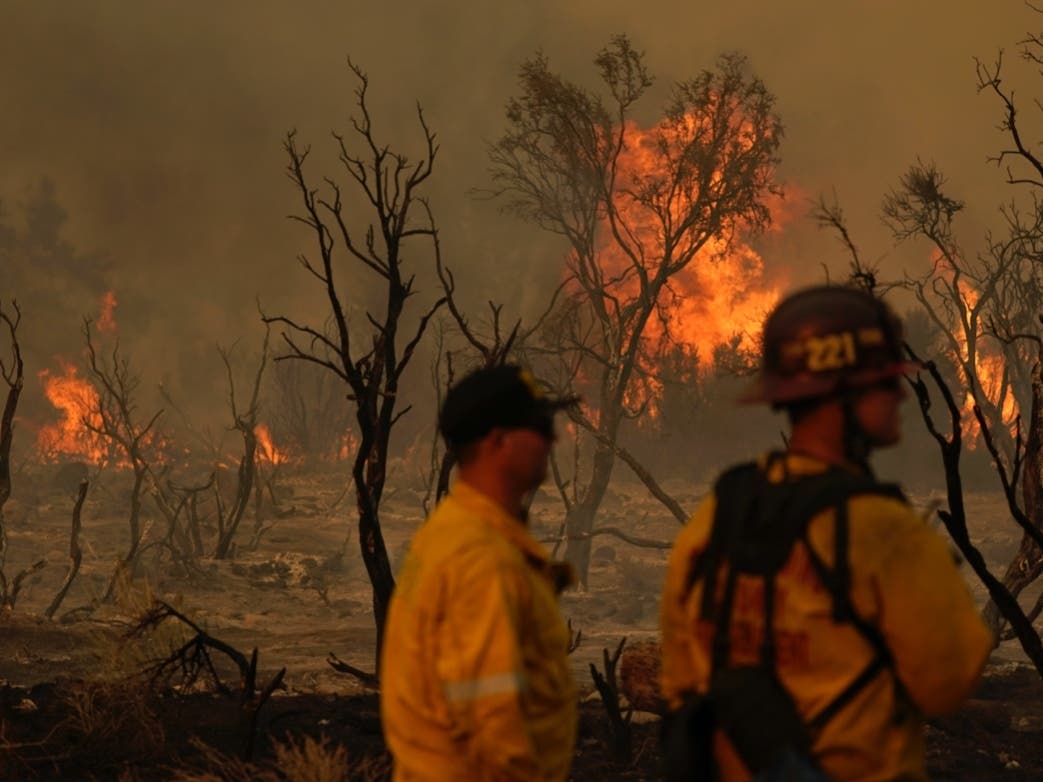

CALIFORNIA — Just as firefighters gained full control Tuesday over the CZU Complex Fire, one of the most destructive fires in California history, crews braced for another round of escalated wildfire danger as a searing heat pattern was expected to return to the Golden State this weekend.
A high-pressure heating pattern is forecast to envelope the West Coast starting Saturday, bringing the closer-to-normal seasonal temperatures experienced this week to an abrupt end.
More than 18,200 firefighters were on the front lines Wednesday, racing to subdue some 26 plus fires before the Santa Ana and diablo winds were predicted to arrive alongside another possible heat dome.
Find out what's happening in Across Californiafor free with the latest updates from Patch.
More than 3.6 million acres have already burned in this record-breaking fire season.
Fire experts will also closely monitor gusty and dry conditions during a fire weather watch expected to hit Saturday morning in the northern reaches of the state. The weather pattern will persist through Monday, affecting areas in and around East Bay Hills, North Bay, Sacramento Valley and Sierra Foothills.
Find out what's happening in Across Californiafor free with the latest updates from Patch.
"Any fires that develop will spread rapidly in the hot, dry and windy weather," the National Weather Service said.
While Californians in coastal regions experienced some reprieve from unhealthy air this week, fires raging across the state threatened to shroud skies later in the week. With both the Creek and North Complex Fires still smoldering, inland communities remained trapped in unhealthy air quality.
Tuesday marked the first day of fall, but Cal Fire officials warned residents not to let their guard down despite cooling temperatures in some regions. Critical fire weather and dry La Niña conditions are expected to keep the state dry through winter.
California's largest-ever fire season has claimed at least 26 lives, adding another fatality after a Hotshot firefighter was killed while fighting the El Dorado Fire. At least 35 people have died collectively in the fires raging across the West Coast.
We want to take the time to reflect on the 26 lives that have been lost this year in the wildfires. As we continue to battle these large and devastating fires we are keeping them and their families in our thoughts. pic.twitter.com/XCAbWkBkgj
— CAL FIRE (@CAL_FIRE) September 22, 2020
Charles Morton, 39, a Big Bear Interagency Hotshot squad boss, died Thursday while engaged in suppression operations on the blaze, according to an announcement from San Bernardino National Forest officials.
"Charlie was a well-respected leader who was always there for his squad and his crew at the toughest times," said U.S. Forest Service Chief Vicki Christiansen. "Our hearts go out to Charlie's loved ones, coworkers, friends and the Big Bear Hotshots. We will keep them in our thoughts and prayers."
READ MORE: Hotshot Killed In Inland Empire's El Dorado Fire Identified
More than 18,200 firefighters were on the ground battling 26 major fires Tuesday as well as 22 smaller fires.
Since the beginning of the year, more than 8,000 wildfires have scorched 3.6 million acres, setting a new record for the state.
In comparison, 2018 saw a total of 5,316 fires that only burned 157,000 acres.
More than 6,600 structures were reportedly incinerated by the catastrophic firestorms, with many more damaged — and that number continues to rise daily.
The West Coast has already experienced one of its worst fire seasons in terms of acreage burned, as more than 5 million acres have burned collectively. On Monday morning, more than 31,860 first responders were on the front lines battling 54 major wildfires across California, Oregon and Washington, according to the National Interagency Fire Center.
Ever hear of a smokenado? It is 2020 after all. #smokenado #2020worstyear @bumblesnot pic.twitter.com/Gwo4Wa8HHy
— John Gregory (@abc7johngregory) September 20, 2020
Cal Fire said Sunday the state historically experiences its most devastating wildfires in September and October and that the state likely won't see the end of this year's fire season until the end of November.
As striking images of smoldering Joshua trees and blood orange skies circulated online over the weekend, more than 50 fires raged across the western states.
The Bobcat Fire, raging in the mountains northeast of Los Angeles, surpassed 109,000 acres Tuesday with 17 percent containment, destroying homes and a famed nature center, Devil’s Punchbowl Natural Area, which attracts some 130,000 visitors per year, The Associated Press reported.
Smoke plumes from fires smoldering across the West Coast shrouded the entire continent last week, prompting concerns of widespread hampered respiratory health amid the global COVID-19 pandemic. Saturday, that same smoke was forecast to reach Europe, traveling almost 5,000 miles, the European Union's Copernicus Atmosphere Monitoring Service reported.
For our fire “Word of the Day” ever wondered what we mean by “containment” when it comes to fire management? Here is a great explanation.https://t.co/LsrRwfqbOA pic.twitter.com/R9IvCDQcjW
— Forest Service NW (@ForestServiceNW) September 20, 2020
Data from CAMS also revealed that fire activity in 2020 has been "tens to hundreds of times more intense than the 2003–2019 average in the US in general."
A Cedars-Sinai lung specialist warned the public Thursday to stay indoors as much as possible to limit exposure to ash and smoke from area wildfires that are causing gloomy skies throughout California.
"It's very unhealthy," he said. "People should stay indoors when they can, close their windows and run their air conditioning." Masks — particularly N95 masks — are also helpful, he said.
READ MORE: Expert: Stay Inside To Avoid Ash, Smoke Exposure During Wildfires
And as record-breaking amounts of carbon dioxide and particulate-matter pollution were released into the atmosphere from the fires, climate change became a major point of contention last week for politicians.
President Donald Trump left California after dismissing the urgency and validity of rising climates. But Newsom continued to assert his stance on the issue repeatedly at his afternoon news briefings.
"Data and science are not beliefs," Newsom said Wednesday. "You have to acknowledge facts."
SEE ALSO: Climate Change: CA Smoke Predicted To Reach Europe This Weekend
The Bobcat Fire exploded over the weekend, with 44 mph winds fanning flames to scorch 20,000 additional acres just over Saturday and Sunday.
But firefighters appeared to be getting the upper hand on the Bobcat Fire, which is now one of the largest wildfires in Los Angeles County history.
The 113,307-acre Bobcat Fire is now 38 percent contained. As thousands of Californians witnessed their homes burn to the ground in 2020's massive wildfire season, Cal Fire recommended that homeowners take steps to "harden" their homes.
SEE ALSO: Firefighters Gain Ground On Monster Bobcat Fire
The agency said it recently published a low-cost retrofit list with improvements that can shield a home from wildfire embers. For more information, homeowners can read more here.
The state's skies began to clear Friday from days of a constant smoky atmosphere, but officials have warned that fire season is far from over.
The state's fire activity was significantly elevated in mid-August amid a series of dry thunderstorms, pushing the state into peak fire season earlier than previous years.
It's not unusual to see fires in August; however, fire season in California and across the West is beginning earlier and ending later each year, according to Cal Fire. The length of fire season has increased by about 75 days across the Sierras and seems to correspond with an increase in the extent of forest fires across the state, according to Cal Fire.
"It's not that we're seeing more fire, it's that the fires are able to burn at a bigger size with more destruction," Daniel Berlant, a public information officer for Cal Fire, said in a video in late August.
The National Interagency Fire Center has predicted La Niña conditions for this fall, which could deliver a very dry winter with little rain in California. So, this fire season could very well persist well into November.
#CreekFire Northeast of Shaver Lake in Fresno County remains 289,695 acres and 32% contained. Unified Command: @FresnoCoFire, @Sierra_NF and @FresnoSheriff https://t.co/o0mBFpHxOw pic.twitter.com/gxR41P7Bdc
— CAL FIRE (@CAL_FIRE) September 23, 2020
Democratic governors of all three of the Western states with massive fire seasons underway have repeatedly emphasized that rising climates were to blame for the catastrophic fire season in each state.
Trump disagreed a week ago Monday, saying, "I don't think science knows, actually."
The president told officials last week that forest management was to blame for the catastrophic fire season, not climate change; however, Newsom was swift to remind the president that 57 percent of forest lands are federally owned.
During that fire briefing, Wade Crowfoot, California secretary for Natural Resources, urged Trump to acknowledge California's rising summer and winter climates each year, insisting that the rapid shift needed to be addressed as a key factor in this year's wildfire season.
"That science is going to be key," Crowfoot said to the president. "If we ignore that science and sort of put our head in the sand and think it's all about vegetation management, we're not going to succeed together, protecting Californians."
Trump’s further suggestion, that the planet is going to start to unexpectedly cool, is at odds with reality, experts say.
“Maybe there is a parallel universe where a pot on the stove with the burner turned to high ‘starts getting cooler.’ But that is not our universe,” said Stanford University climate scientist Chris Field.
Democratic presidential candidate Joe Biden lashed at Trump, saying the moment requires “leadership, not scapegoating” and that “it’s clear we are not safe in Donald Trump’s America."
“This is another crisis, another crisis he won’t take responsibility for,” Biden said. He said that if voters give “a climate denier” another four years in the White House, “why would we be surprised that we have more of America ablaze?”
READ MORE: Kamala Harris Returns To The Golden State To Assess Wildfires
Sen. Kamala Harris, the Democratic vice presidential nominee, arrived in her home state the following morning to assess the wildfires.
Harris was briefed alongside Newsom on the catastrophic 2020 wildfire season at Pine Ridge School in Auberry, California.
"Spent time surveying a burn site with @GavinNewsom in an area that has been devastated by the recent wildfires in California," Harris tweeted that day. "I’m incredibly grateful for the courage of our brave firefighters and those who have come near and far to help those fleeing the destruction."
The community is nestled 30 miles outside of the city of Fresno and was devastated by the Creek Fire, which is the 12th largest in California history, according to Cal Fire. The fire has burned 220,025 acres and was 18 percent contained Wednesday.
The fires are threatening to become another front in Trump’s re-election bid, which is already facing hurdles because of the coronavirus pandemic, joblessness and social unrest. Biden, in his own speech Monday, said the destruction and mounting death toll across California, Oregon and Washington require stronger presidential leadership, and he labeled Trump a “climate arsonist,” The Associated Press reported.
California Attorney General Xavier Becerra also weighed in on the topic of climate change last week, urging that it is a public health emergency.
"The toll of the natural disaster we face from unprecedented wildfires is increasingly measured in human life," Becerra tweeted. "How many wake-up calls do our nation's leaders need to take climate action?"
Animation showing how smoke from the wildfires on the west coast of the US is affecting areas as far away as New York, and even northern Europe
Read @FinancialTimes' @lesliehook's fascinating article https://t.co/qOLZ1JTi8M@QGIS #gistribe #dataviz #ddj pic.twitter.com/4j6Kk135iN
— Steven Bernard (@sdbernard) September 17, 2020
In light of an understaffed fire season that overwhelmed firefighters, Newsom signed AB 2147 into law, allowing former inmates an opportunity to expunge their records and pursue a career in fire. Those convicted of certain violent or sex crimes will not be eligible.
READ MORE: Newsom Signs Bill Allowing Former Prisoners To Become Firefighters
California officials said the state is facing some of the worst fires to ever impact the West Coast.
"This year’s fire season has been a record-breaking year, in not only the total amount of acres burned, but 6 of the top 20 largest wildfires in California history have occurred in 2020," Cal Fire said in its daily fire briefing memo.
The August Complex, which started Aug. 17 during a lightning storm, is now officially the largest fire recorded in California history, according to Cal Fire. The fire was initially 37 separate blazes, but after fire officials reclassified the Elkhorn and Hopkins fires, the complex had collectively burned an astounding 832,891 acres, with 20 percent containment Monday.
It has burned more than 26 structures and caused one known death.

The SCU Lightning Complex, which started Aug. 18, is now the third-largest fire ever in California. It's burned more than 396,624 acres in parts of Santa Clara, Alameda, Contra Costa, San Joaquin and Stanislaus counties as of Thursday. The fire was not expected to grow anymore but crews were working Saturday to maintain suppression lines.
Now the fourth-largest fire in California, the LNU Lightning Complex started Aug. 17, is now the ninth most destructive wildfire in state history. It has burned through parts of Napa, Sonoma, Lake, Yolo and Solano counties. It's burned more than 363,000 acres. Five people have been killed in that complex, and another five injuries have been reported. The fire was not expected to grow any further but crews were working Saturday to maintain suppression lines.
SEE ALSO:
Coming in at the 10th-largest fire is the North Complex, burning in Plumas, Butte and Yuba counties. Three people have died in that fire, which started Aug. 18.

Here's more on some of the major fires burning as of Wednesday, via Cal Fire:
LNU Lightning Complex, multiple North Bay counties (more info…)
Napa, Lake, Sonoma, Colusa, Solano, and Yolo Counties
*363,220 acres, 98% contained
*Hennessey (merged fires) 305,651 acres, 96% contained
*Wallbridge 55,209 acres, 95% contained
*1,491 structures destroyed
*5 fatalities
*While no growth is expected, fire suppression repair work is ongoing.
SCU Lightning Complex, multiple Easy Bay counties (more info…)
Contra Costa, Alameda, Santa Clara San Joaquin, Merced, and Stanislaus Counties
*396,624 acres, 98% contained
*20 fires in the complex, several have merged together
*222 structures destroyed
*While no growth is expected, fire suppression repair work is ongoing.
CZU Lightning Complex, San Mateo and Santa Cruz Counties (more info…)
*86,509 acres, 100% contained
*Multiple fires
*1,490 structures destroyed
*1 fatality
**Unified Command Incidents**
Snow Fire, Riverside County (more info…)
Snow Creek Rd, west of Palm Springs
*6,254 acres, 67% contained
*Mandatory evacuations in progress
*Unified Command CAL FIRE and USFS
READ MORE: 6,013-Acre Snow Fire Reaches 38% Containment Near Palm Springs
North Complex, Plumas County (more info…)
Southwest of Susanville (Plumas National Forest)
*301,404 acres, 75% contained
*15 fatalities
*1,784 Structures destroyed
*Evacuations in place
*Includes the Bear and Claremont Fire
*CAL FIRE Team 4 is in unified command with US Forest Service IMT Team 4
Creek Fire, Fresno County (more info…)
Northeast of Shaver Lake (Sierra National Forest)
*289,695 acres, 32% contained
*Evacuations in effect
*Heavy tree mortality in the area
*855 structures destroyed
*CAL FIRE and US Forest Service in unified command
*CAL FIRE Incident Management Team 1 with Great Basin Team 1 in command
El Dorado Fire, San Bernardino County (more info…)
West of Oak Glen (San Bernardino National Forest)
*22,601 acres, 68% contained
*Evacuations in place
*California Interagency Incident Management Team 11 in unified command with CAL FIRE, Yucaipa Fire Department and San Bernardino County Fire Department
READ MORE: Crews Gaining Upper Hand On Deadly El Dorado Fire
Butte/Tehama/Glenn (BTU/TGU) Lightning Complex, multiple Counties (more info…)
Butte, Tehama and Glenn Counties
*19,609 acres, 97% contained
*14 structures destroyed
*While no growth is expected, fire suppression repair work is ongoing.
SQF Complex, Tulare County (more info…)
25 miles north of Kernville (Sequoia National Forest)
*144,600 acres, 33% contained
*Castle and Shotgun Fires merged into this complex
*CAL FIRE Incident Management Team 6 in unified command
Dolan Fire, Monterey County (more info…)
Hwy 1, 10 miles south of Big Sur (Los Padres National Forest)
*128,416 acres, 46% contained
*Structures threatened
*CAL FIRE is in unified command with Type 1 NW Team 2 (Allen)
**Coordinated Command Incidents**
August Complex, Tehama County (more info…)
Elk Creek and Stonyford area (Mendocino National Forest)
*859,966 acres
*South Zone 485,591 acres, 50% contained
*North Zone 259,850 acres, 35% contained
*West Zone 91,430 acres, 45% contained
*Decreased acreage due to mapping by USFS
*1 fatality
*Includes multiple fires including the Elkhorn, Hopkins, Willow, Vinegar, and Doe fires
*A California Interagency Incident Management Team and Great Basin Team in command
*CAL FIRE Incident Management Team 3 & 5 are deployed on the West Zone of the complex
**Federal Incidents**
Fox Fire, Siskiyou County (more info…) NEW
*2,188 acres, 43% contained
*Evacuations in place
Slater Fire, Siskiyou County, (more info…)
5 miles North of Happy Camp (Klamath National Forest)
*150,856 acres, 24% contained
*2 fatalities
*Evacuation orders in place
Devil Fire, Siskiyou County, (more info…)
5 miles north of Upper Devil’s Peak (Klamath National Forest)
*7,458 acres, 18% contained
Bobcat Fire, Los Angeles County (more info…)
North of Duarte
Angeles National Forest
*113,307 acres, 38% containment
*Evacuations in progress
Bullfrog Fire, Fresno County (more info…)
SE of Bullfrog Lake, Sierra National Forest
*900 acres, 20% contained
Fork Fire, El Dorado County, (more info…)
15 miles northeast of Pollock Pines (El Dorado National Forest)
*1,667 acres, 70% contained
*Evacuation orders remain in place
Valley Fire, San Diego County (more info…)
Near Alpine (Cleveland National Forest)
*17,093 acres, 95% contained
*CAIIMT 15 in command
Lake Fire, Los Angeles County (more info…)
Southwest of Lake Hughes
Angeles National Forest / Los Angeles County Fire Department
* 31,089 acres, 96% contained
Apple Fire, Riverside County (more info…)
Oak Glen/Cherry Valley (San Bernardino National Forest)
*33,424 acres, 95% contained
Red Salmon Complex – Humboldt County (more info…)
14 miles northeast of Willow Creek (Shasta-Trinity National Forest)
*104,667 acres, 28% contained
Blue Jay Fire, Mariposa County (more info…)
Yosemite National Park Wilderness
*4,061 acres, 40% contained
Wolf Fire, Tuolumne County (more info…)
Yosemite National Park Wilderness
*900 acres, 25% contained
Woodward Fire, Marin County (more info…)
3 miles southwest of Olema (Point Reyes National Seashore)
*4,929 acres, 97% contained
Slink Fire, Mono County (more info…)
2 miles west of Coleville (Humboldt-Toiyabe National Forest)
*26,752 acres, 84% contained
Moraine, Tulare County (more info…)
Sequoia and Kings Canyon National Parks Wilderness
*575 acres, 70% contained
Rattlesnake, Tulare County (more info…)
Sequoia and Kings Canyon National Parks Wilderness
*2,078 acres, 0% contained
**Extended Attack Wildfires**
These are wildfires that go beyond the initial attack, but are not major incidents.
Shackleford Fire, Siskiyou County (more…)
Southwest of Quartz Valley Reservation
*50 acres, 100% contained
Get more local news delivered straight to your inbox. Sign up for free Patch newsletters and alerts.