Business & Tech
CA Residents Should Adjust Budgets Amid Record Inflation
Here's how much Californians should adjust their budgets amid a record inflation surge.


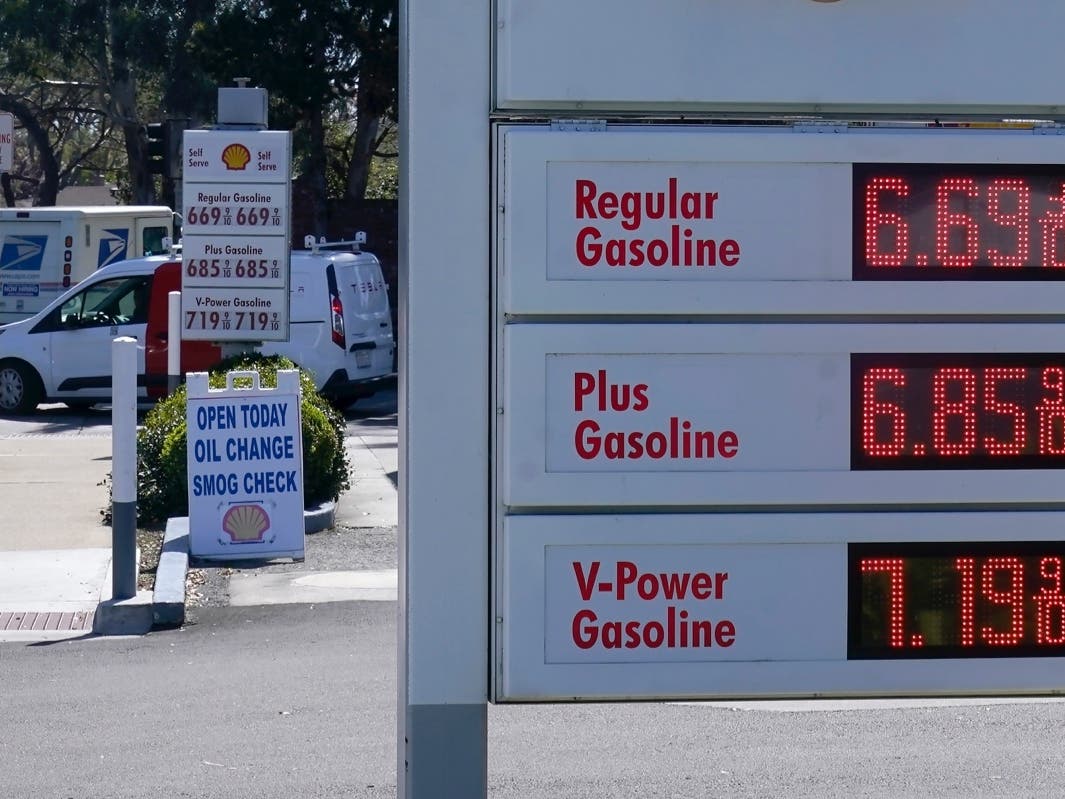
CALIFORNIA — As everything from gas prices to groceries continues to surge in California, inflation has hit a new 40-year high, jumping 8.5 percent over the previous 12 months, according to a new Labor Department report released Tuesday.
The news spells out more uncertainty for California households already feeling the pinch of rising costs for necessities.
Inflation has been steadily rising for months for a variety of reasons, ranging from a bottlenecked supply chain and increased consumer demand to volatility in global food and energy markets worsened by Russia’s war in Ukraine, The Associated Press reported.
Find out what's happening in Across Californiafor free with the latest updates from Patch.
The escalation of energy prices, a potential threat to the economy's long-term durability, has led to higher transportation costs for the shipment of goods across the economy, which, in turn, has contributed to higher prices for consumers.
The squeeze is being felt particularly hard at the gas pump and especially in the Golden State, where the average gas price for a gallon of regular gas was $5.74 on Tuesday.
Find out what's happening in Across Californiafor free with the latest updates from Patch.
"That’s an extra dollar per gallon that I’m paying to get into the city to work," Jason Emerson of Oakland, California, said as he loaded groceries into his car. "And then, you know, we have the tolls that just went up this past year a dollar. My eggs are a dollar more as well. So everything’s going up at least a dollar, which, you know, adds up."
Ryan Sweet, a senior economist with Moody Analytics, told CNBC in March that inflation costing Americans $296 more a month was "going to get worse before it gets better."
In fact, Americans haven’t managed such high inflation since 1981, and the 1.2 percent increase in the consumer price index from February to March was the biggest month-to-month jump since 2005.
And with gas prices that have increased 48 percent over the past year and food costs up 10 percent, budgeting for inflation becomes evermore important.
Estimates vary on how much extra money California residents should build into their household budgets through the end of the year. Bloomberg News did the math, saying households should plan to spend $5,200 more this year, or $433 a month, for the same "consumption basket."
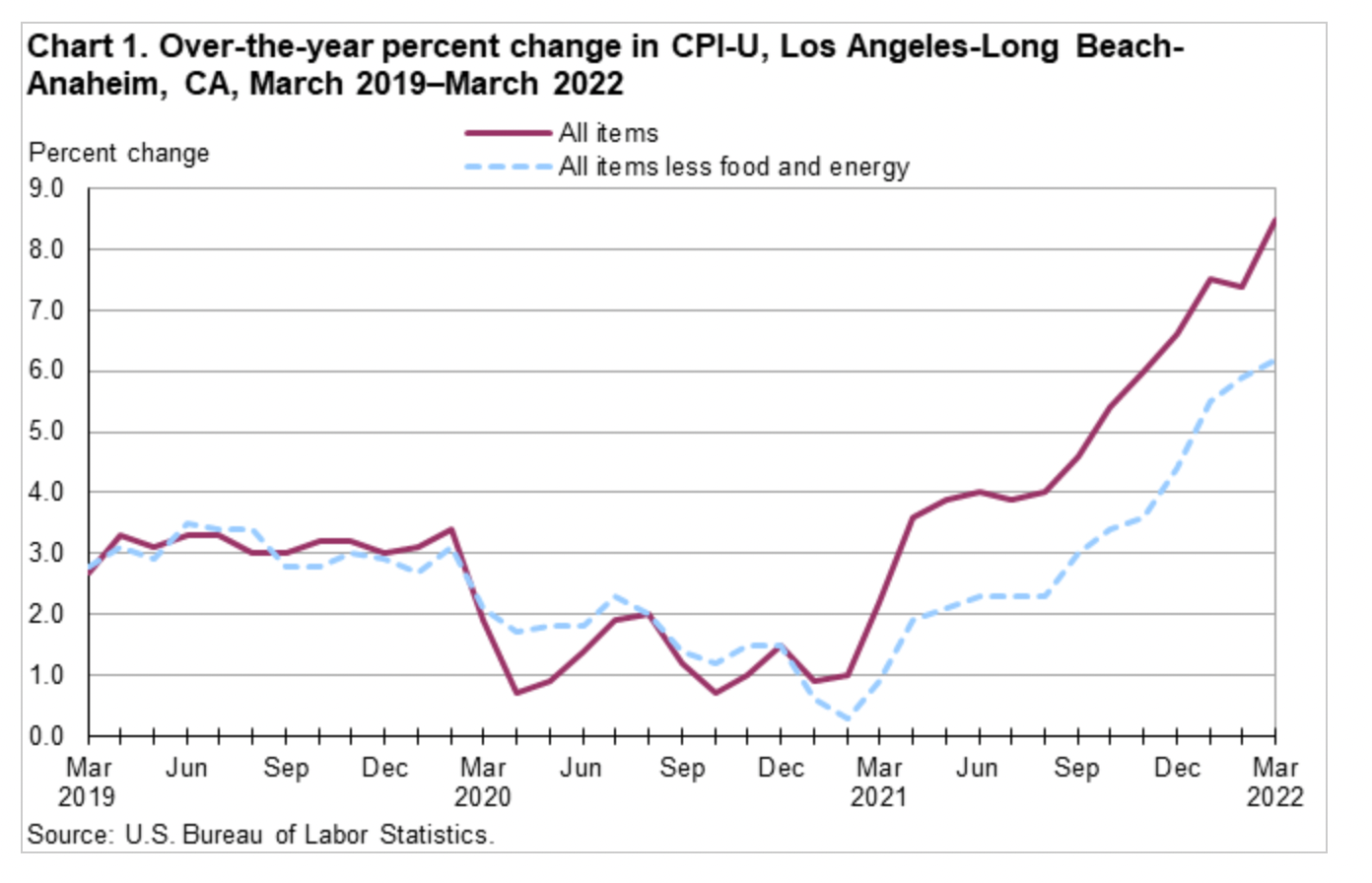
In the Southland, food prices surged 8.5 percent since March of last year. Alcoholic beverages surged 5.9 percent since last year and housing prices raised 5.9 percent since last year. The price of meats, poultry, fish and eggs went up 10.3 percent since last year, according to the U.S. Bureau of Labor Statistics.
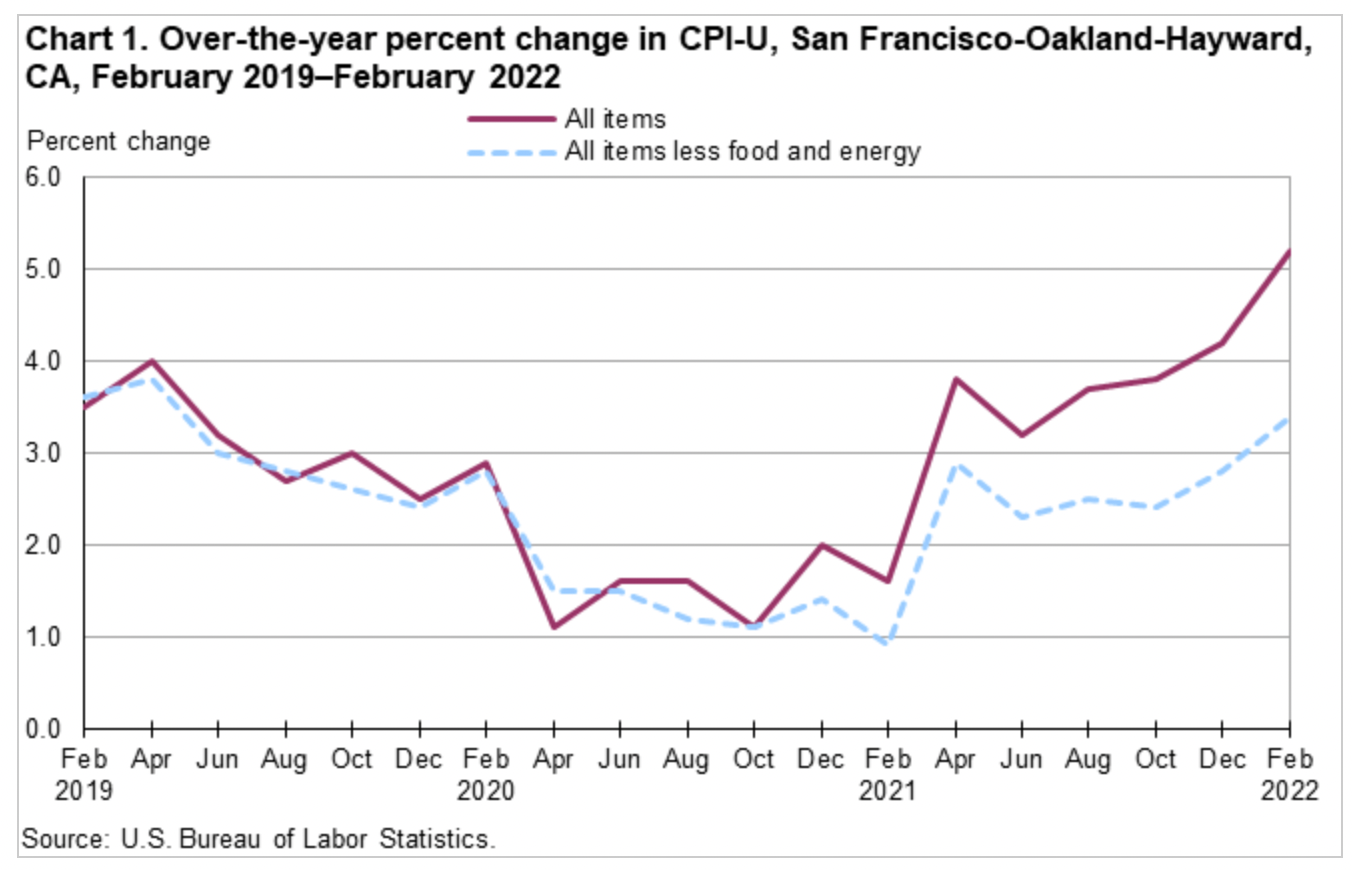
In Northern California, the most recent data set from February showed that food prices increased 9 percent, housing prices surged 2.4 percent and alcoholic beverage prices rose 1.3 percent from February of last year. The price of meats, poultry, fish and eggs raised 10.7 percent.
Analyses by the Penn Wharton Budget Model and Wells Fargo showed low- and middle-income U.S. households are hurt the most by inflation. The Wells Fargo study, cited by CNBC, showed the middle class is being hit the most; and within that group, Hispanics and Latinos have the steepest jump in living costs.
There’s no way to know exactly how much prices will rise, though the Labor Department’s past consumer price index reports portend continued inflation.
One way to keep track of how much more you’re paying is through a Bureau of Labor Statistics inflation calculator. Say your monthly household budget was $4,982 in March 2021; a year later, you’d need $8,129.09 to pay the same bills.
“This is really harmful for people on fixed incomes,” Carol Ehlers, a human sciences specialist with the Iowa State University Extension and Outreach, said in a news release recommending the inflation calculator as an effective budget-building tool.
“Higher prices mean families need to be more strategic about their spending and find ways to stretch their income. Budgeting for periods of higher inflation challenges families to rethink the way they spend and determine which expenses they potentially can reduce or eliminate,” Ehlers said.
Analysts and others who spoke to CNBC offered some tips on keeping household budgets on track, including combining errands in one trip to save on gas, searching for apps and digital coupon sites, and canceling or renegotiating subscription services.
Also, experts said, it’s important to check the household budget weekly to see what costs are increasing the most and where budgets can be trimmed.
The Associated Press contributed to this report.
Get more local news delivered straight to your inbox. Sign up for free Patch newsletters and alerts.