Politics & Government
COVID-19 State Of Emergency Ends In California
The termination comes just days after the state reached the grim milestone of 100,000 deaths related to the virus.


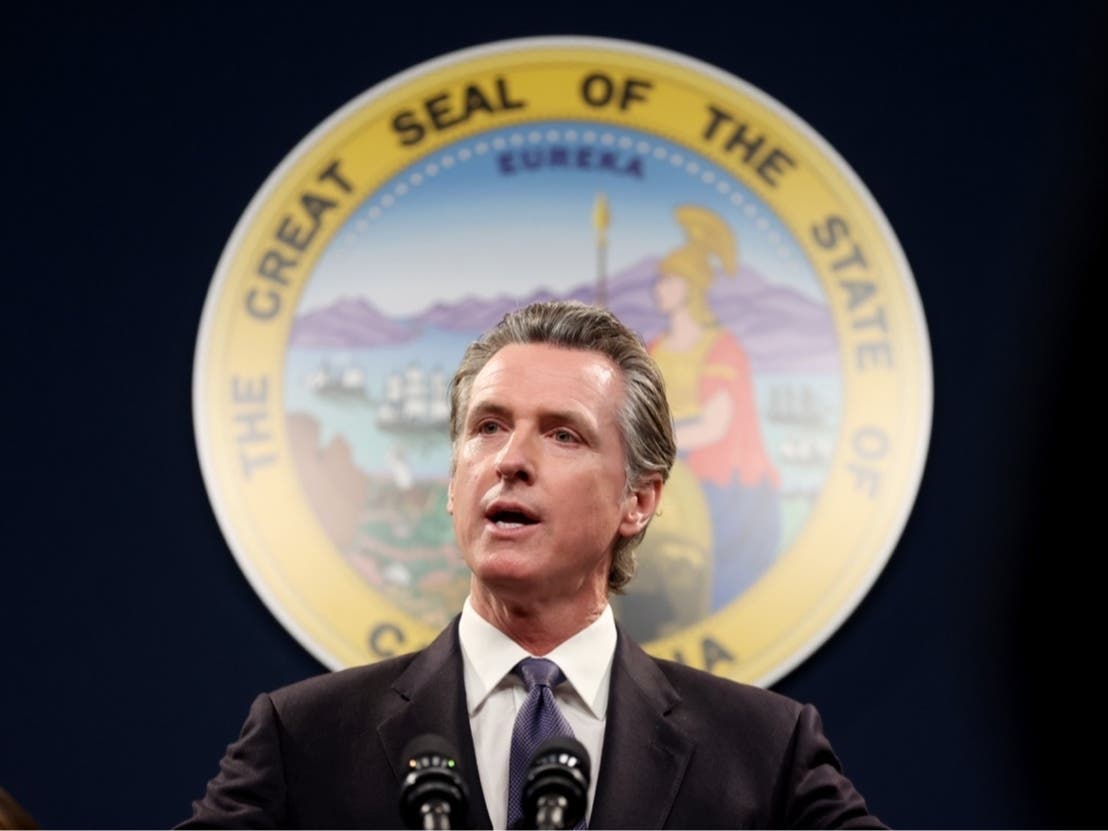
SACRAMENTO, CA — California’s COVID-19 State of Emergency came to an end Tuesday. It was terminated by Gov. Gavin Newsom, as previously announced in October.
“The state’s SMARTER Plan will maintain California’s operational preparedness to address the next phase of the COVID-19 pandemic,” according to a news release from the governor’s office.
“Additionally, COVID-19 vaccines, testing, and treatment continue to be available at sites within local communities across the state.”
Find out what's happening in Across Californiafor free with the latest updates from Patch.
The termination comes nearly three years after Newsom issued the nation's first statewide stay-at-home order and just days after California reached the grim milestone of 100,000 deaths related to the virus.
In the announcement, Newsom focused on the state’s death rate, among the lowest in the nation, and touted how California administered over 88 million vaccines — vaccinating nearly 73 percent of the population. Newsom also noted that the state’s GDP contracted less and grew faster than that of the U.S. as a whole between 2019 and 2022, and added that, on average, California students experienced less learning loss than the rest of the nation.
Find out what's happening in Across Californiafor free with the latest updates from Patch.
As California's emergency winds down, such declarations continue in just five other states — including Texas — signaling an end to the expanded legal powers of governors to suspend laws in response to the once mysterious disease. President Joe Biden announced last month the federal government will end its own version on May 11.
The end of California's order will have little to no effect on most people as Newsom has already lifted most of the state's restrictions, like those that required masks, closed beaches and forced many businesses to close. It offers a symbolic marker of the end of a period that once drastically altered the lives of the state's nearly 40 million residents.
Texas, meanwhile, hasn't had any major coronavirus restrictions for years, but Republican Gov. Greg Abbott keeps extending his state's emergency declaration because it gives him the power to stop some of the states' more liberal cities from imposing their own restrictions, like requiring masks or vaccines. Abbott has said he'll keep the emergency order — and his expanded powers — in place until the Republican-controlled Texas Legislature passes a law to prevent local governments from imposing virus restrictions on their own.
The conflicting styles show that, while the emergencies may be ending, the political divide is not — foreshadowing years of competing narratives of the pandemic from two potential presidential candidates in Newsom and Abbott.
Newsom has used his authority to make sure all of California's local governments had restrictions in place during the pandemic, even threatening to cut funding to some cities that refused to enforce them. While California's emergency declaration is ending, other local emergencies will remain in place — including in Los Angeles County, home to nearly 10 million people.
The Los Angeles emergency order encourages mask use in some public places like businesses and trains, and for residents who have been exposed to the virus. It will remain in effect for another month. On Tuesday, the Los Angeles County Board of Supervisors voted unanimously to end the order on March 31.
Many public health experts say it makes sense that California's order is coming to a close.
"Three years ago, if you ... got infected you were rolling the dice about dying," said Brad Pollock, chair of the Department of Public Health Sciences at the University of California, Davis. "What's happened in the three years now is we have vaccines, we have antiviral therapy, we have much more knowledge about how we take care of patients in terms of supportive care. Your risk of dying is a fraction of what it was.”
The Newsom administration's approach was to issue broad restrictions on what people could do and where they could go. California ended up faring better than other states, but did worse than some countries, like Sweden, said Jeffrey Klausner, professor of clinical population and public health sciences at the Keck School of Medicine at the University of Southern California.
"I think if we had better focused our resources on those most at risk, we probably could have avoided more deaths," he said.
The pandemic strained California's health care system, which has yet to fully recover, said Carmela Coyle, president and CEO of the California Hospital Association. She said hospitals remain overwhelmed — not from COVID patients, but from an influx of people returning to the health care system after staying away during the pandemic. She said a majority of California's hospitals are losing money, prompting fears some could close — just as a community hospital in the state's Central Valley did in December.
"While the state's COVID public health emergency is formally concluding, the health care system emergency remains," Coyle said.
Health care workers have felt the strain, too, working long hours among people infected with a highly contagious and potentially life-threatening disease. The strain has prompted a workforce shortage, with competing proposals to remedy it. The California Hospital Association is asking for a one-time infusion of $1.5 billion to help keep hospitals afloat. Labor unions, meanwhile, are backing a bill that would impose a $25 minimum wage for health care workers.
Meanwhile, local public health departments worry the end of the coronavirus emergency will mean a return to limited funding for their budgets, an issue exposed in the early days of the pandemic when many counties did not have enough people to respond to the crisis. Newsom signed a budget last year that will spend $200 million to help public health departments hire more workers. This year, he's proposing cutting nearly $50 million in public health workforce training programs, part of his plan to cover a projected budget deficit.
"Public health is dependent on their frontline workforce, and that frontline workforce has to be skilled and trained and educated," said Michelle Gibbons, president of the County Health Executives Association of California.
Overall, Newsom's budget proposal would sustain $300 million in public health spending, including $100 million for 404 new positions in the state Department of Public Health, including areas of workforce training and emergency preparedness and response. The money will "modernize state and local public health infrastructure and transition to a resilient public health system," said H.D. Palmer, spokesperson for the California Department of Finance.
The Associated Press contributed to this story.
Get more local news delivered straight to your inbox. Sign up for free Patch newsletters and alerts.