Health & Fitness
CA Prepares For the Flesh-Eating Parasite: Here's What to Watch For
CA health officials warned residents about the growing presensce of a parasitic fly that feeds off of living flesh in humans and animals.


The flesh-eating fly that California health officials warned about last fall has made it to U.S. soil.
The U.S. Department of Agriculture's Animal and Plant Health Inspection Service confirmed on June 3 the detection of New World screwworm in a bovine in Zavala County, Texas — the first time the parasitic fly has been found in U.S. livestock in decades, according to CNN.
The affected animal was a three-week-old calf, and larvae were found in its umbilical area, USDA said.
Find out what's happening in Across Californiafor free with the latest updates from Patch.
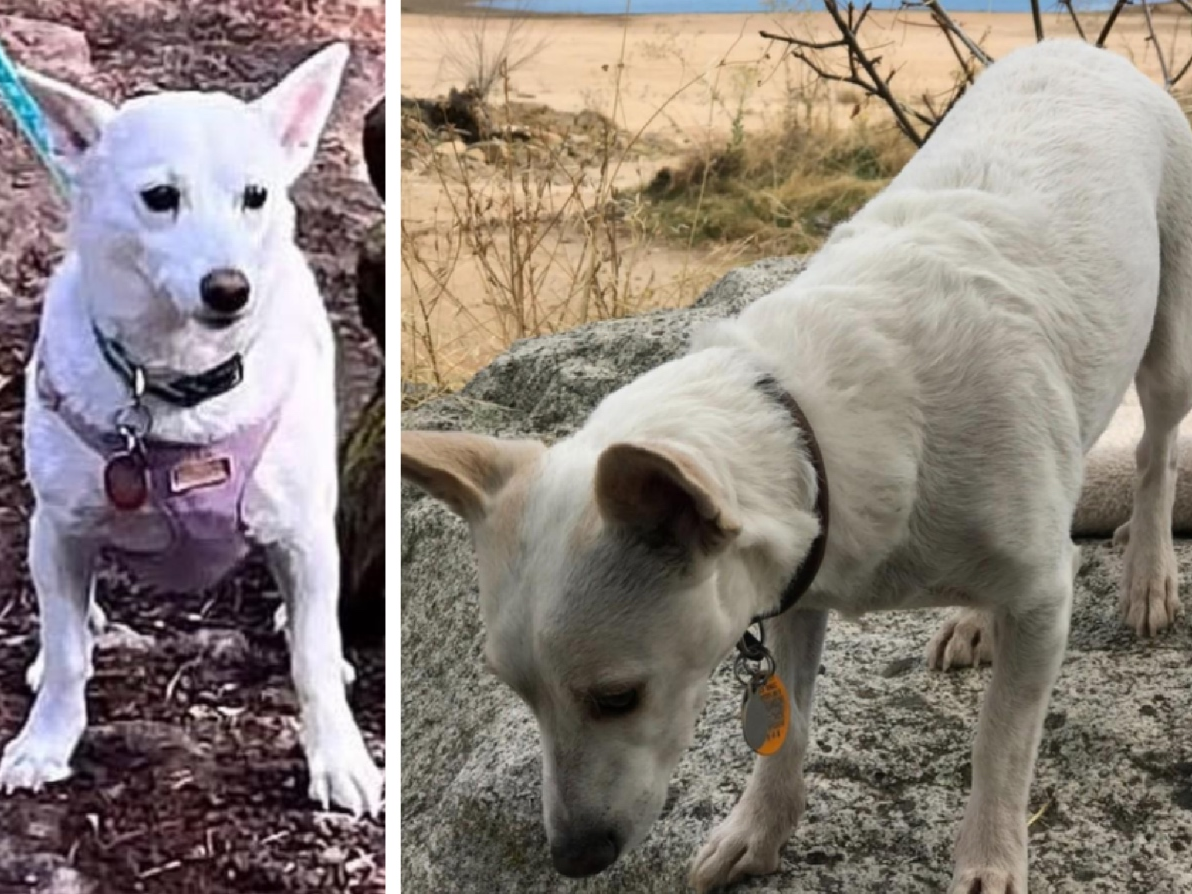
Since then, the outbreak has expanded: three more Texas cases have been confirmed — three calves and a goat across Zavala, La Salle, and Andrews counties — and a dog in neighboring Lea County, New Mexico, according to a letter sent to California veterinarians by Acting State Veterinarian Dr. Mandy Murray and subsequent federal updates. They are the first confirmed detections of NWS in animals in the continental United States since eradication.
The California Department of Food and Agriculture began active surveillance in October 2025 through a joint effort with USDA, deploying eight Swormlure traps along the Southern California-Mexico border — four each in Imperial and San Diego counties. The traps use an attractant that mimics the scent of animal wounds to lure adult screwworm flies.
Find out what's happening in Across Californiafor free with the latest updates from Patch.
"To date, more than 2,250 flies have been submitted and tested — all results have been negative for NWS," Jay Van Rein of the CDFA Office of Public Affairs told Patch.
California's Response
Since the Texas detection, CDFA has implemented enhanced entry requirements for animals moving into California from affected areas, including certificates of veterinary inspection confirming animals are free of NWS, official identification for traceability, wound inspections, and California entry permits. Border Protection Stations statewide are under increased monitoring, according to the CDFA.
Murray sent the letter directly to California's veterinary community on June 8, directing vets to increase vigilance for wounds or lesions in animals that have recently traveled from Texas, Mexico, or other NWS-affected areas, and to report any suspected cases to CDFA before treating the animal.
Veterinarians were also asked to advise clients traveling with companion animals to watch for wounds, maggots, fly eggs, or signs of discomfort after travel to or from NWS-affected areas.
Van Rein told Patch the CDFA had been conducting outreach to farmers, ranchers and veterinarians throughout the state for months.
As for when the parasite might reach California, Van Rein told Patch no timeline is predictable — but the state is not waiting.
"For months, we have been preparing for that possibility," Van Rein told Patch. "We will continue our active efforts, closely monitoring the situation, and we will be ready to respond if and when NWS comes to California."
He urged livestock owners not to be passive.
"We need the help of all California animal owners to keep this pest out of our state," Van Rein told Patch.
CDFA's primary concern is animal movement from affected areas, noting that while an adult screwworm fly typically travels only six to nine miles on its own, longer-distance spread is far more likely through the movement of infested animals or humans.
What It Is and Why It Matters
New World screwworm (Cochliomyia hominivorax) is a parasitic fly whose larvae burrow into the living flesh of warm-blooded animals. Unlike most flies that feed on dead tissue, this species targets living hosts — entering wounds as small as a tick bite and feeding from the inside out. Untreated infestations can be fatal within seven to 14 days, the CDFA warned.
The fly can affect livestock, pets, wildlife and, in rare cases, humans, the USDA said.
Van Rein noted that human cases are "incredibly rare, isolated, and cannot spread from person to person like a virus."
The pest does not pose a food safety risk, U.S. health officials said.
The U.S. eradicated New World screwworm in 1966 through a technique in which sterilized male flies are released into the environment to mate with females until the population collapses, according to ABC News.
The fly was then confined primarily to South America, Cuba, Haiti and the Dominican Republic — until a resurgence beginning in 2023 pushed it north through Central America and into Mexico, California health officials noted last October.
Since that resurgence, more than 185,000 animal cases and 2,100 human cases have been reported globally, according to The Associated Press.
The Texas Detection
The calf in Zavala County was confirmed positive after USDA's National Veterinary Services Laboratories in Ames, Iowa, tested a sample from the case in La Pryor, Texas, according to CNN.
Three additional Texas cases — three calves and a goat in Zavala, La Salle, and Andrews counties — and a dog in neighboring Lea County, New Mexico have since been confirmed, according to subsequent federal updates.
The first confirmation came one day after Agriculture Secretary Brooke Rollins announced that Mexican authorities had detected NWS in a goat in the state of Coahuila, roughly 25 miles south of the Texas border — the closest confirmed case to the U.S. before the Texas announcement, according to Hoosier Ag Today.
"USDA and Texas Animal Health officials are taking immediate action to contain and eradicate NWS from the area," Rollins said.
Federal Response
The USDA stated it had formed a unified Incident Command Team with the Texas Animal Health Commission, established a 20-kilometer infested zone around the detection, implemented quarantines and movement controls, and deployed ground release chambers for sterile flies in addition to the 4 million sterile flies per week already being released aerially in the area.
The USDA is also working to scale up sterile fly production, including plans to build a $750 million fly factory in Texas. The long-term goal is to have enough sterile flies to prevent the pests from returning in 2027 after winter kills off most of the current population, Agriculture Secretary Brooke Rollins said at a news conference at the U.S. Livestock Insects Research Laboratory in Kerrville, Texas, according to The Associated Press.
University of Florida entomologist Edward Burgess, who studies the fly, told The Associated Press that the sterile fly solution is still months away — and cautioned against reading too much into the current detection rate.
"When that first case is seen, everyone is being vigilant, and their eyes are on it more intensely," Burgess told The Associated Press. "And when you are looking for something, you are more likely to see it."
Canada temporarily suspended imports of cattle, horses and other livestock from Texas amid the outbreak, according to the AP.
Not everyone agrees the federal response is moving fast enough. Texas Agriculture Commissioner Sid Miller has proposed poison bait as a faster solution — a suggestion USDA has warned is unproven and potentially harmful to other species.
"What the hell is a good fly?" Miller told The Associated Press.
USDA's Dudley Hoskins, under secretary for marketing and regulatory programs, said federal models had anticipated the parasite could cross into the U.S. as early as 2025.
"Protecting our livestock industry is a national security issue of the utmost importance," Hoskins said.
What California Animal Owners Should Do Now
The CDFA recommends the following for all California livestock owners, ranchers, and pet owners:
- Check animals daily. Routinely inspect livestock, horses, poultry, and pets for signs of wounds or unusual fly activity.
- Treat wounds immediately. Keep any open wounds clean, treated, and covered to prevent flies from laying eggs.
- Monitor travel requirements. If moving animals into California, check the CDFA website frequently for updated entry or movement restrictions.
- Act fast if you suspect screwworm. Do not wait. Contact your local veterinarian or CDFA District Officeimmediately if you observe unusual larvae in an animal's wound.
Infested animals may present with enlarging, draining, foul-smelling wounds, weight loss, and signs of discomfort. Animals may isolate themselves. Wounds from tick bites, castration, dehorning, branding, shearing, or sore mouth in sheep are all potential entry points. Newborns are particularly vulnerable at the navel, CDFA says.
To report a suspected case, contact the CDFA Animal Health Branch at (916) 900-5002, the CDFA Sick Animal Hotline at (866) 922-2473, or USDA APHIS Veterinary Services at (916) 854-3950.
The Associated Press contributed to this article.
Get more local news delivered straight to your inbox. Sign up for free Patch newsletters and alerts.